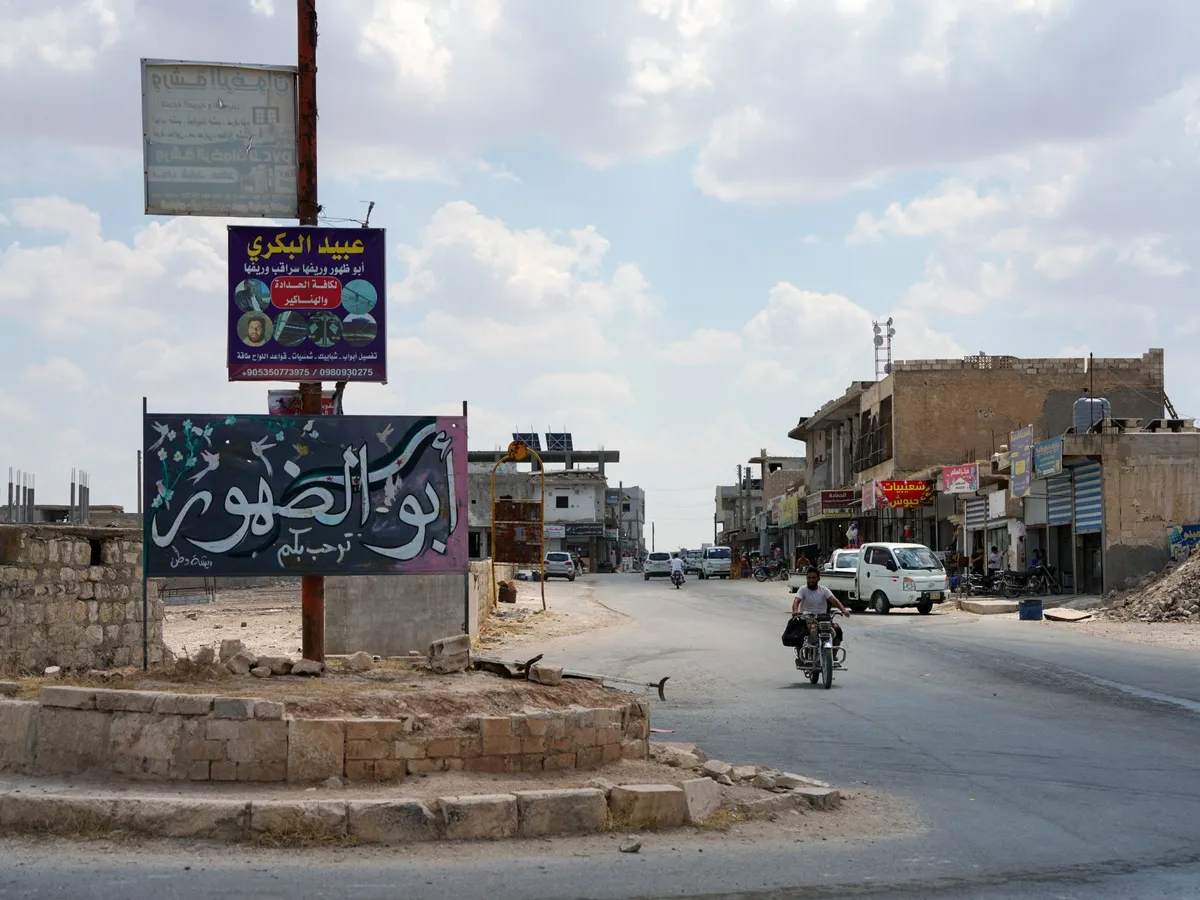
With Israeli elections approaching, analysts say PM Benjamin Netanyahu needs a new escalation, undermining deconfliction efforts with Syria.A man rides a motorbike in the town of Abu al-Duhur, Syria, August 18, 2026 [Stringer/Reuters]Published On 19 Aug 2026A day after a suspected Israeli attack on the Abu al-Duhur airbase near Idlib, northwest Syria, US Ambassador to Turkiye Tom Barrack has suggested creating a “deconfliction mechanism” between Turkiye, Syria and Israel. Barrack called the original attack – which he, along with the Syrian government, blamed on Israel – an “unnecessary escalation”.But despite the intervention from the US official, analysts believe the proposal may not be able to stop Israel, which has conducted regular attacks on Syria for years, and continues to occupy Syrian territory.Recommended Stories list of 3 itemslist 1 of 3Why White House envoys cannot sway Israel’s war leaderlist 2 of 3Lebanon no longer a safe haven for former Syrian regime officialslist 3 of 3Syria opens Assad-era nuclear programme to UN probeend of list“It is difficult to have a deconfliction mechanism [when] only one party [is] causing conflict in the first place,” Samy Akil, a senior adviser with Syria-report" class="entity-link entity-organization" data-entity-id="188942" data-entity-type="organization">The Syria Report, told Al Jazeera.Analysts and diplomatic sources say that Israel is the party holding back progress on talks and the easing of tensions with Syria, which is under a new government since the overthrow of former President Bashar al-Assad in December 2024. At the end of a more than decade-long war, Syria is now seeking better relations with the West.“Israeli-Syrian talks are stagnating because the ball is in Israel’s court and they don’t see a need to prioritise talks with Damascus currently,” Akil said.Turkiye and Israel trade verbal shotsUnder the former al-Assad regime, Israel often attacked Iranian-aligned targets or interests in Syria – including the Iranian consulate in Damascus in April 2024 – but avoided directly attacking Syrian state targets.That changed when al-Assad fled in the early hours of December 8, 2024. Israel attacked Syria’s military infrastructure around the country, aiming to cripple the new government’s military forces. It also threatened the post-Assad military with deploying forces south of Damascus.And since the fall of al-Assad, Israel has also shifted focus from Iranian influence in Syria to Turkish influence in the country. The Turks backed a number of anti-Assad rebel groups, many Syrians in exile spent considerable time in Turkiye, and Ankara has sought to build strong ties with Damascus and Syria’s new President Ahmed al-Sharaa.Analysts told Al Jazeera that Tuesday’s attack was in fact a message from Tel Aviv directed at the halls of power in Ankara.On Tuesday evening, the Israeli Prime Minister’s Office issued a statement that seemed to confirm that suspicion, while it stopped short of claiming responsibility for the actual attack.“Israel and Syria agreed to a status quo in security matters, which Syria was on the verge of breaching by permitting Turkish troops to deploy at an airbase near Aleppo,” the statement said.“Israel repeatedly warned Syria that such a deployment would pose a threat to Israel’s security. Syria chose to ignore these warnings.”Turkiye has slammed the Israeli account of events.“The untenable allegations put forward by the Israeli Prime Minister’s Office are intended to legitimise Israel’s unlawful airstrikes targeting Syria’s sovereignty and territorial integrity,” the Republic of Turkiye’s Directorate of Communications said.It also accused Israeli Prime Minister Benjamin Netanyahu of pursuing “expansionist and destabilising policies in the region ahead of the elections in Israel”.Israeli provocations in SyriaEnter US Ambassador Barrack and the idea of a deconfliction mechanism. This would act as a channel of communication between the concerned actors – Syria, Turkiye and Israel. It would be facilitated by the US, and would aim to prevent military escalations.The strategy appears to be similar to what the US is trying to build in Lebanon between Beirut and Tel Aviv. That deal is aimed at stopping Israeli attacks on Lebanon, disarming Hezbollah, and convincing Israel to withdraw troops from southern Lebanon. However, experts say these processes have yet to show results, largely because of Israel’s military superiority and the Netanyahu government’s willingness to undermine negotiations through unilateral military actions.For its part, the Syrian government has shown a strong willingness to find a solution with Israel, even if it has emphasised that it is not willing to agree to full normalisation.That is despite the Israeli landgrab of Syrian territory in the Golan Heights and Jabal al-Sheikh in December 2024, and the continued deployment of checkpoints that harass and at times kidnap Syrian citizens.Early on Wednesday morning, Israeli troops reportedly conducted a raid on Quneitra in southwestern Syria and abducted two people.Analysts say that for any deconfliction mechanism to work, all parties must be committed to working towards the goal.“In other words, at what point does a deconfliction mechanism provide added value when any sort of Syrian military buildup 300 kilometres [186 miles] away from Israeli borders is perceived as a threat?” Akil said, adding that Syria’s small Soviet-era air force would not “seriously pose a threat to Israel”.Netanyahu’s re-election escalationGalip Dalay, a senior research fellow at Chatham House, told Al Jazeera that for any mechanism to work, the US would need to apply pressure on Netanyahu’s government.Dalay said Netanyahu, who is running for re-election in October, is likely looking for an escalation with either Lebanon or Syria – or in Palestine – after US President Donald Trump pressured Israel to back down in the war on Iran.But earlier in August, Netanyahu explicitly rejected the Gaza disarmament plan announced by Trump, forcing it to be altered – and did not receive any public pushback from the US.“If the US puts proper pressure on Israel, they would listen,” Dalay said. “We saw this with Iran. It was the US who made the decision, and even though Netanyahu didn’t like it, they had to go along with the decision.”Dalay added: “The question is not only about if there is a need for a deconfliction mechanism in Syria; it is to what extent the US is willing to make it credible and functional, and if the US is willing to put pressure on Israel.”
SRCAl Jazeera
LANGEN
LEANCenter
WORDS1 008
ENT12
WED · 2026-08-19 · 17:12 GMTBRIEF NSR-2026-0819-103898
NSR-2026-0819-103898News Report·EN·Conflict
US pressure on Israel needed for peace in Syria
Following a suspected Israeli attack on Syria's Abu al-Duhur airbase, US Ambassador Tom Barrack proposed a deconfliction mechanism between Turkey, Syria, and Israel to prevent further escalation. Analysts suggest that with Israeli elections approaching, Prime Minister Netanyahu may be seeking a new escalation, undermining deconfliction efforts.
Justin SalhaniAl JazeeraFiled 2026-08-19 · 17:12 GMTLean · CenterRead · 5 min
Al JazeeraFIG 01
Reading time
5min
Word count
1 008words
Sources cited
2cited
Entities identified
12entities
Quality score
100%
§ 01
Briefing Summary
AI-generatedNEWSAR · AI
Following a suspected Israeli attack on Syria's Abu al-Duhur airbase, US Ambassador Tom Barrack proposed a deconfliction mechanism between Turkey, Syria, and Israel to prevent further escalation. Analysts suggest that with Israeli elections approaching, Prime Minister Netanyahu may be seeking a new escalation, undermining deconfliction efforts. The attack, blamed on Israel by the US and Syria, occurred after a shift in Israeli strategy from targeting Iranian interests to focusing on Turkish influence in Syria following the overthrow of Bashar al-Assad. Israel stated the attack was a response to Syria potentially allowing Turkish troops near Aleppo, a claim Turkey denies, accusing Israel of violating Syrian sovereignty. Despite Syria's willingness to improve relations, Israeli actions, including territorial occupation and abductions, are seen as hindering progress.
Confidence 0.90Sources 2Claims 5Entities 12
§ 02
Article analysis
Model · rule-basedFraming
Conflict
Diplomatic
Tone
Measured
AI-assessed
CalmNeutralAlarmist
Factuality
0.40 / 1.00
Mixed
LowHigh
Sources cited
2
Limited
FewMany
§ 03
Key claims
5 extracted01
US Ambassador to Turkiye Tom Barrack suggested creating a deconfliction mechanism between Turkiye, Syria, and Israel.
factualTom Barrack
Confidence
1.00
02
Analysts believe Israel is the party holding back progress on talks and easing tensions with Syria.
quoteAnalysts and diplomatic sources
Confidence
0.80
03
Israel shifted focus from Iranian influence in Syria to Turkish influence after the fall of al-Assad.
factualAnalysts
Confidence
0.70
04
Israel has conducted regular attacks on Syria for years and continues to occupy Syrian territory.
factualAl Jazeera analysis
Confidence
0.70
05
Tuesday's attack was a message from Tel Aviv directed at Ankara.
predictionAnalysts
Confidence
0.60
§ 04
Full report
5 min read · 1 008 words§ 05
Entities
12 identifiedKey playerOppositionContextPositiveNeutralNegative
People4
Organizations1
Locations6
§ 06
Keywords & salience
8 termssyria peace efforts
0.90
israeli attacks
0.80
deconfliction mechanism
0.70
us pressure
0.60
benjamin netanyahu
0.50
syrian government
0.50
turkish influence
0.40
bashar al-assad
0.40
§ 07
Topic connections
Interactive graph Network visualization showing 51 related topics
View Full Graph Person Organization Location Event|Click node to navigate|Edge numbers = shared articles