Tunisia has seen an uptick in protests as economic conditions in the country have deteriorated.Hundreds of protesters have taken to the streets of Tunisia’s capital to call for the ousting of President Kais Saied and the restoration of democracy.Protesters in Tunis said on Thursday that they reject “one-man rule” and “a slide towards dictatorship”, and urged the release of jailed opposition figures, activists and journalists.Recommended Stories list of 3 itemslist 1 of 3Tunisia’s body politic is in crisislist 2 of 3Tunisian wildfires expose failing infrastructure, community vulnerabilitieslist 3 of 3Beneath Tunisia’s silence, public anger simmersend of listThursday’s protest follows a similar one on July 25, which was scheduled to coincide with the anniversary of President Saied’s 2021 dismissal of the government and suspension of parliament. He began ruling by decree later that year and dissolved parliament in 2022.One demonstrator at Thursday’s march, activist Wissem Sghaier, said the country is “experiencing a complete collapse”, the Reuters news agency reported.Tunisians are facing mounting economic and cost-of-living pressures, with deteriorating public services and shortages of some basic goods and medicines.Tunisia’s inflation rate currently sits at 5.2 percent, according to the World Bank. Investment in the country has fallen precipitously, and Saied’s government has introduced a series of cost-saving measures, including halting public sector hiring and reducing imports.Protests have broken out in several parts of the country in recent weeks over water and power cuts and environmental problems, suggesting that public anger is spreading beyond political disputes with Saied to the mounting hardships of everyday life. The country was also one of a number of North African countries to be hit by major wildfires this summer.
SRCAl Jazeera
LANGEN
LEANCenter
WORDS272
ENT12
FRI · 2026-08-21 · 01:06 GMTBRIEF NSR-2026-0821-104376
NSR-2026-0821-104376News Report·EN·Political Strategy
Antigovernment protesters take to Tunisia’s streets for second month
Hundreds of protesters have taken to the streets of Tunisia's capital for a second month, demanding the ousting of President Kais Saied and the restoration of democracy. Demonstrators reject "one-man rule" and a "slide towards dictatorship," calling for the release of jailed opposition figures, activists, and journalists.
Al Jazeera StaffAl JazeeraFiled 2026-08-21 · 01:06 GMTLean · CenterRead · 2 min
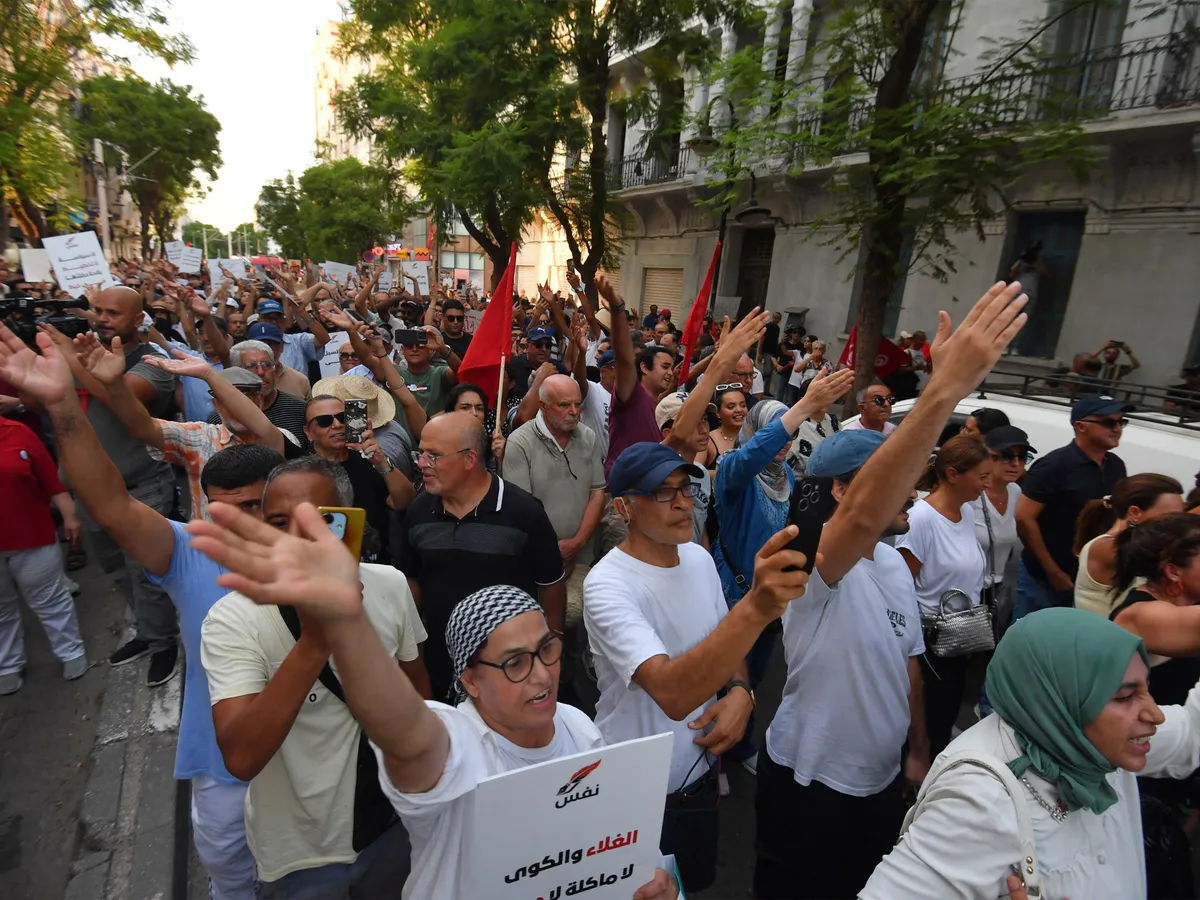
Al JazeeraFIG 01
Reading time
2min
Word count
272words
Sources cited
1cited
Entities identified
12entities
Quality score
100%
§ 01
Briefing Summary
AI-generatedNEWSAR · AI
Hundreds of protesters have taken to the streets of Tunisia's capital for a second month, demanding the ousting of President Kais Saied and the restoration of democracy. Demonstrators reject "one-man rule" and a "slide towards dictatorship," calling for the release of jailed opposition figures, activists, and journalists. These protests, occurring in the wake of similar demonstrations on July 25, coincide with deteriorating economic conditions, including mounting cost-of-living pressures, shortages of basic goods, and a 5.2 percent inflation rate. Public anger is also fueled by deteriorating public services, water and power cuts, and environmental problems, indicating that hardships of everyday life are contributing to widespread discontent.
Confidence 0.90Sources 1Claims 5Entities 12
§ 02
Article analysis
Model · rule-basedFraming
Political Strategy
Economic Impact
Tone
Measured
AI-assessed
CalmNeutralAlarmist
Factuality
0.70 / 1.00
Factual
LowHigh
Sources cited
1
Limited
FewMany
§ 03
Key claims
5 extracted01
Tunisia’s inflation rate currently sits at 5.2 percent.
statisticWorld Bank
Confidence
1.00
02
Protesters in Tunis reject “one-man rule” and “a slide towards dictatorship”, and urge the release of jailed opposition figures, activists and journalists.
quoteProtesters in Tunis
Confidence
1.00
03
Hundreds of protesters have taken to the streets of Tunisia’s capital to call for the ousting of President Kais Saied and the restoration of democracy.
factual
Confidence
1.00
04
Protests have broken out in several parts of the country over water and power cuts and environmental problems.
factual
Confidence
0.90
05
Investment in the country has fallen precipitously.
factual
Confidence
0.90
§ 04
Full report
2 min read · 272 words§ 05
Entities
12 identifiedKey playerOppositionContextPositiveNeutralNegative
§ 06
Keywords & salience
9 termstunisia protests
1.00
president kais saied
0.90
economic conditions
0.80
democracy
0.70
dictatorship
0.70
cost of living
0.60
inflation
0.50
public services
0.50
wildfires
0.40
§ 07
Topic connections
Interactive graph Network visualization showing 32 related topics
View Full Graph Person Organization Location Event|Click node to navigate|Edge numbers = shared articles