South Korea and Japan were hit by extreme rain late last week and into this week. On 13 August in the city of Chiba near Tokyo there was a record-breaking 115mm of rainfall in just one hour, while the nearby city of Sakura broke its own record with 97mm in one hour. Local authorities issued a level 5 emergency warning for heavy rain, the highest alert level and the first time one has been issued since the system was implemented in May.More than 100,000 households were asked to evacuate, with more than 20,000 in the Chiba-prefecture" class="entity-link entity-location" data-entity-id="152495" data-entity-type="location">Chiba prefecture left without power, while thousands of people were stranded at Tokyo’s Narita airport. Thirteen people have been confirmed dead, at least three of whom were found trapped inside their vehicles. One person is still missing.Japan is no stranger to heavy rainfall, thanks to the conditions created when warm and moist air from the north Pacific meets cooler air. This latest event has been especially severe, however, with the Japan-meteorological-agency" class="entity-link entity-organization" data-entity-id="3275" data-entity-type="organization">Japan Meteorological Agency describing it as an “unprecedented level” of heavy rain. There was also record-breaking rain in nearby South Korea, where in the city of Geoje 124.5mm fell within one hour early on 17 August. In total more than 400mm fell through the night.A police officer standing in a flooded road in Geoje, South Korea. Photograph: Yonhap News Agency/ReutersMeanwhile, across the north Pacific, Hurricane Lala achieved category 1 hurricane status on 15 August, travelling westwards towards Hawaii with wind speeds of about 80mph (130km/h). Lala passed just to the south of the island chain the following day, with the eyewall grazing the southern part of the main island, causing it to weaken back down to a tropical storm. Kona international airport on the island recorded its lowest ever pressure as Lala passed. After passing Hawaii, the storm restrengthened into a category 4 hurricane and gradually shifted to a more northerly trajectory. It is not expected to affect any other Pacific Islands before degrading.Another system in the north Pacific developed close to Micronesia last week and was named Saudel as it reached tropical storm status. Saudel is forecast to intensify through the weekend, becoming a very strong or potentially violent typhoon. Travelling north-west, it will pass very close to or even make landfall on the Northern Mariana Islands, where a warning is already in place. Next week, Saudel is expected to track towards Okinawa prefecture, the chain of islands to the south of mainland Japan.
SRCThe Guardian - World News
LANGEN
LEANCenter-Left
WORDS410
ENT12
FRI · 2026-08-21 · 08:19 GMTBRIEF NSR-2026-0821-104451
NSR-2026-0821-104451News Report·EN·Human Interest
Weather tracker: Extreme rain deluges Japan and South Korea
Extreme rainfall has caused widespread disruption in Japan and South Korea. On August 13th, Chiba, Japan experienced a record 115mm of rain in one hour, leading to a level 5 emergency warning, the highest alert.
Morgan Thomas for MetDeskThe Guardian - World NewsFiled 2026-08-21 · 08:19 GMTLean · Center-LeftRead · 2 min
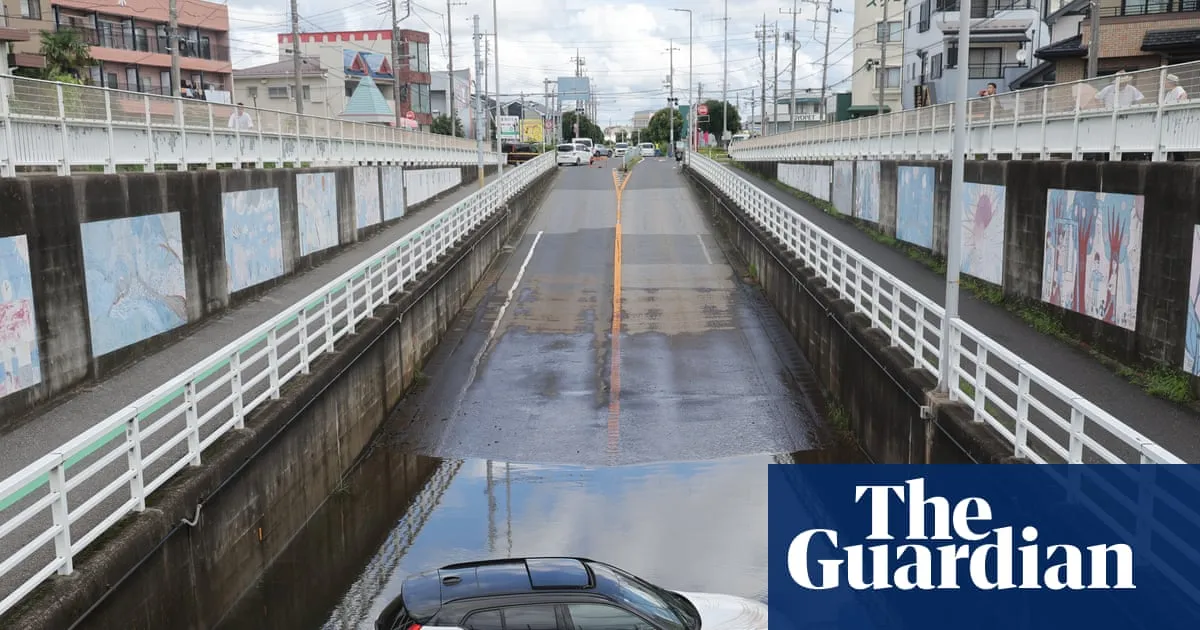
The Guardian - World NewsFIG 01
Reading time
2min
Word count
410words
Sources cited
2cited
Entities identified
12entities
Quality score
100%
§ 01
Briefing Summary
AI-generatedNEWSAR · AI
Extreme rainfall has caused widespread disruption in Japan and South Korea. On August 13th, Chiba, Japan experienced a record 115mm of rain in one hour, leading to a level 5 emergency warning, the highest alert. Over 100,000 households were advised to evacuate, with tens of thousands losing power and thousands stranded at Narita airport. Thirteen deaths have been confirmed, with at least three found trapped in vehicles. South Korea also saw record rainfall, with Geoje receiving 124.5mm in one hour on August 17th. These events are attributed to the meeting of warm, moist air from the north Pacific and cooler air.
Confidence 0.90Sources 2Claims 5Entities 12
§ 02
Article analysis
Model · rule-basedFraming
Human Interest
Environmental
Tone
Mixed Tone
AI-assessed
CalmNeutralAlarmist
Factuality
0.90 / 1.00
Factual
LowHigh
Sources cited
2
Limited
FewMany
§ 03
Key claims
5 extracted01
Hurricane Lala achieved category 1 status on August 15, travelling west towards Hawaii.
factual
Confidence
1.00
02
Geoje, South Korea received 124.5mm of rain in one hour on August 17.
statistic
Confidence
1.00
03
Thirteen people confirmed dead in Japan due to extreme rain.
statistic
Confidence
1.00
04
Level 5 emergency warning for heavy rain issued in Japan, the highest alert.
factual
Confidence
1.00
05
Chiba, Japan recorded 115mm of rainfall in one hour on August 13, a record.
statistic
Confidence
1.00
§ 04
Full report
2 min read · 410 words§ 05
Entities
12 identifiedKey playerOppositionContextPositiveNeutralNegative
Organizations1
Locations9
§ 06
Keywords & salience
10 termsextreme rain
1.00
heavy rainfall
0.90
emergency warning
0.80
record-breaking rain
0.80
evacuation
0.70
south korea
0.60
japan
0.60
typhoon
0.50
hurricanes
0.50
tropical storm
0.40
§ 07
Topic connections
Interactive graph Network visualization showing 51 related topics
View Full Graph Person Organization Location Event|Click node to navigate|Edge numbers = shared articles