President Donald Trump is betting new sanctions, a naval blockade and ramped-up economic pressure against Iran’s trading partners can accomplish what thousands of bombs and missiles could not: force Tehran to accept a deal to end the war on US terms.But like other US efforts to force Iran into capitulation, there is one main problem: Iran’s Islamic Revolutionary Guard Corps, which has claimed control of the vital Strait of Hormuz and sent volleys of attack drones across the Gulf, may be impervious to such pressure – and has plenty of ways to retaliate.A major part of the US effort will come on Monday, when Treasury Secretary Scott Bessent has promised to unveil details of a plan designed to shift the conflict from tit-for-tat strikes across the Middle East to full-blown economic isolation – a campaign that could touch nations ranging from China and India to Turkey and the United Arab Emirates.Yet significant new economic pressure is likely to prompt Iran to retaliate with military strikes across the Gulf, including against energy infrastructure, in an attempt to push up oil prices and raise the cost of the US effort, forcing Trump to shift his approach once again.“If this is actually effective, at some point, Iran will lash out again – they just will have no alternative,” said Nate Swanson, a senior fellow at the Atlantic Council who worked on Iran issues at the State Department and White House National Security Council until last year. “Trump may see this as a different phase of the war, but I don’t think Iran does.”Since the US and Israel first attacked Iran on February 28, Iran has repeatedly shown the ability to endure air strikes on thousands of targets, layers of sanctions and a US navy blockade – yet still retain the ability to hit back.
SRCSouth China Morning Post
LANGEN
LEANCenter-Right
WORDS301
ENT12
SUN · 2026-08-23 · 07:04 GMTBRIEF NSR-2026-0823-105013
NSR-2026-0823-105013Analysis·EN·Political Strategy
Why Trump’s economic pain could spark more Iranian attacks on Gulf nations
President Donald Trump is implementing new sanctions and economic pressure on Iran and its trading partners, aiming to force Tehran to accept a deal on US terms. This strategy, which includes a naval blockade and economic isolation targeting nations like China and India, is intended to achieve what military actions could not.
BloombergSouth China Morning PostFiled 2026-08-23 · 07:04 GMTLean · Center-RightRead · 2 min
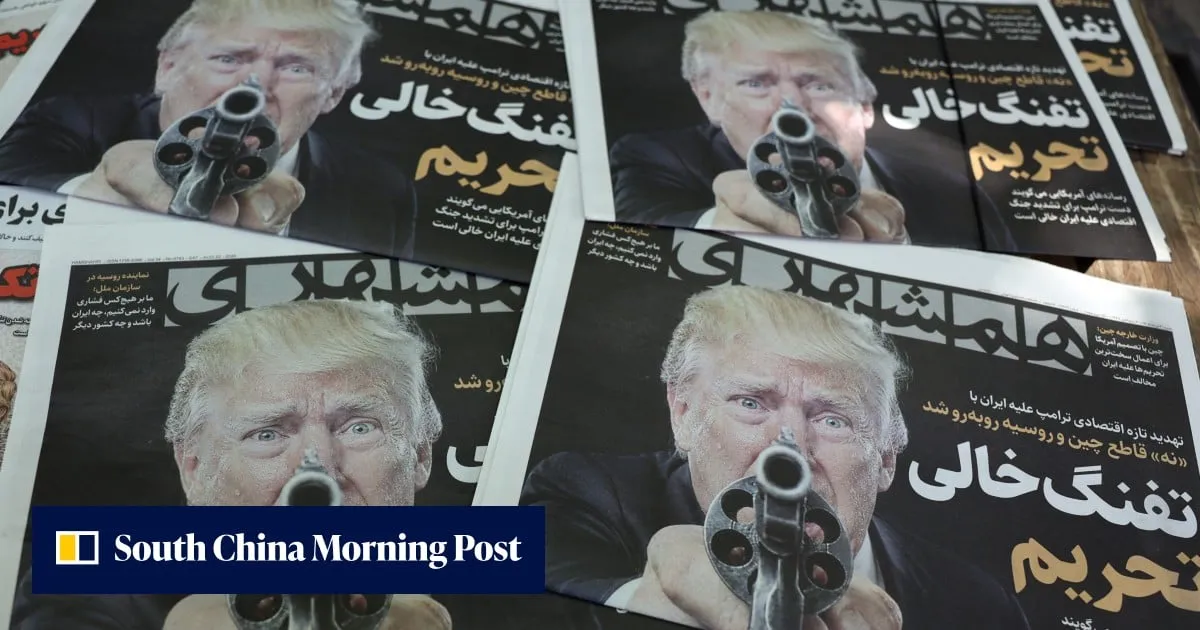
South China Morning PostFIG 01
Reading time
2min
Word count
301words
Sources cited
1cited
Entities identified
12entities
Quality score
100%
§ 01
Briefing Summary
AI-generatedNEWSAR · AI
President Donald Trump is implementing new sanctions and economic pressure on Iran and its trading partners, aiming to force Tehran to accept a deal on US terms. This strategy, which includes a naval blockade and economic isolation targeting nations like China and India, is intended to achieve what military actions could not. However, Iran's Islamic Revolutionary Guard Corps, which controls the Strait of Hormuz and has conducted drone attacks, may be resistant to this pressure. Experts suggest that significant economic pressure could prompt Iran to retaliate with military strikes across the Gulf, potentially targeting energy infrastructure to increase oil prices and the cost of the US effort. This retaliation could force a shift in the US approach, as Iran has demonstrated resilience to previous sanctions and military actions.
Confidence 0.90Sources 1Claims 5Entities 12
§ 02
Article analysis
Model · rule-basedFraming
Political Strategy
Conflict
Tone
Mixed Tone
AI-assessed
CalmNeutralAlarmist
Factuality
0.40 / 1.00
Mixed
LowHigh
Sources cited
1
Limited
FewMany
§ 03
Key claims
5 extracted01
If US economic pressure is effective, Iran will lash out again as they will have no alternative.
quoteNate Swanson
Confidence
0.90
02
Trump's administration is implementing new sanctions and economic pressure against Iran to force a deal on US terms.
factual
Confidence
0.90
03
Iran has repeatedly shown the ability to endure air strikes, sanctions, and a US navy blockade, yet still retain the ability to hit back.
factual
Confidence
0.85
04
Iran's Islamic Revolutionary Guard Corps may be impervious to US economic pressure and has ways to retaliate.
factual
Confidence
0.80
05
Significant new economic pressure is likely to prompt Iran to retaliate with military strikes across the Gulf.
prediction
Confidence
0.70
§ 04
Full report
2 min read · 301 words§ 05
Entities
12 identifiedKey playerOppositionContextPositiveNeutralNegative
§ 06
Keywords & salience
10 termsiranian attacks
1.00
economic pressure
1.00
strait of hormuz
0.90
us sanctions
0.90
islamic revolutionary guard corps
0.80
military strikes
0.70
oil prices
0.70
economic isolation
0.60
trump administration
0.50
gulf nations
0.40
§ 07
Topic connections
Interactive graph Network visualization showing 51 related topics
View Full Graph Person Organization Location Event|Click node to navigate|Edge numbers = shared articles