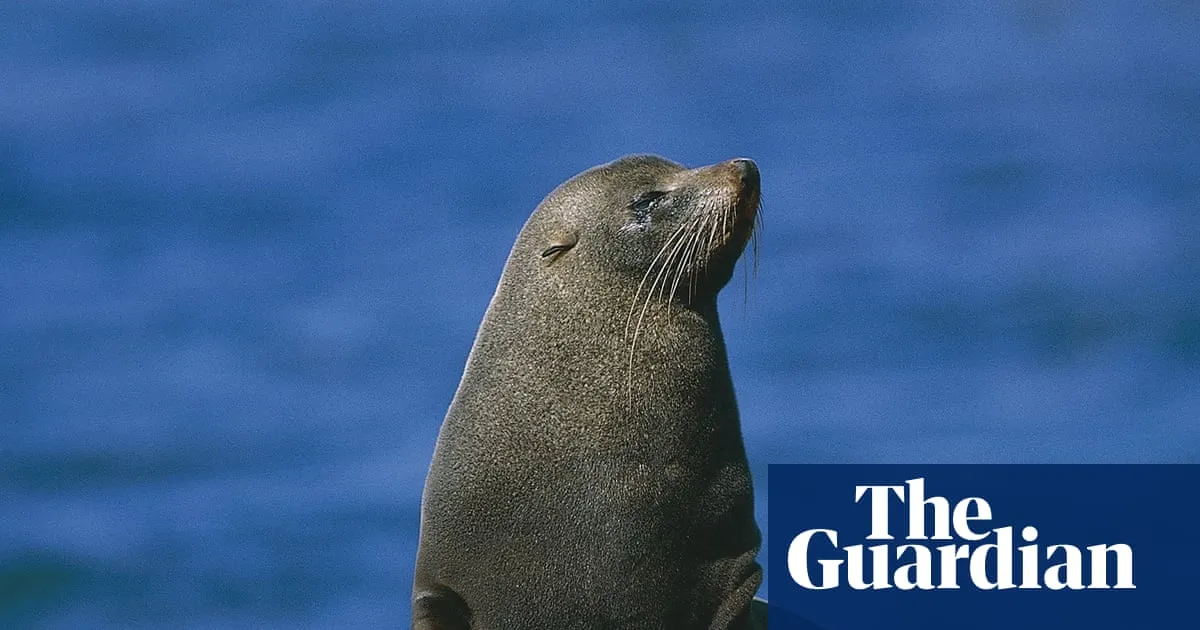
A fur seal on Kangaroo Island. A second suspected case of Bird flu in the mammals has been found after the South Australian government confirmed the first case last week. Photograph: DEA/P. JACCOD/De Agostini/Getty Images View image in fullscreen A fur seal on Kangaroo Island. A second suspected case of Bird flu in the mammals has been found after the South Australian government confirmed the first case last week. Photograph: DEA/P. JACCOD/De Agostini/Getty Images Australia has just 12,000 sea lions left – and ‘carnage’ may await them as Bird flu takes hold, scientists warn Virus has already caused catastrophic losses in pinnipeds in South America and sub-Antarctica, particularly among pups Get our breaking news email, free app or daily news podcast Scientists have warned deadly H5 Bird flu could cause “carnage” for Australia’s seal and sea lion populations after detection of the virus in long-nosed fur seals in Australia" class="entity-link entity-location" data-entity-id="210" data-entity-type="location">South Australia. SA confirmed Australia’s first case in a mammal on Saturday after a dead long-nosed fur seal found at Beachport on the Limestone Coast tested positive for H5N1. The state government announced a second suspected case on Monday in a dead long-nosed fur seal found on the Pages Islands, off Kangaroo Island, with results from CSIRO testing pending. Leading mammal scientist John Woinarski, of Charles Darwin University, said he feared the virus would quickly start affecting more seals and sea lions. “The carnage may be substantial and represent a serious conservation impact,” he said. “I fear for Australian sea lions in particular because of their small population size. H5 Bird flu has already affected pinnipeds in South America and sub-Antarctica, where it has caused catastrophic losses in populations of some species, particularly among pups. In 2023, H5N1 killed more than 17,000 southern elephant seal pups in Argentina and drone surveys detected more than 13,000 dead southern elephant seal pups on Australia’s Heard Island in 2025 and 2026. “In South America, we’ve seen huge infection rates in sea lions and fur seals,” said Jane Younger, an Antarctic disease ecologist at the University of Tasmania. “Then across the Southern Ocean we’ve seen really big mortality rates in southern elephant seals and Antarctic fur seals. “In some places, the numbers are just astronomical.” Three types of pinnipeds breed in Australian waters – the long-nosed fur seal, the Australian fur seal and the endangered Australian sea lion. The Australian government has rated all at very high risk from H5 Bird flu. Experts say about 12,000 Australian sea lions remain – though one recent estimate put the figure at less than 10,000 – with about three-quarters of the population found in Australia" class="entity-link entity-location" data-entity-id="210" data-entity-type="location">South Australia and the remainder in Western Australia. Thousands of little penguins being vaccinated against H5 Bird flu in Victoria – video The long-nosed fur seal suspected of having Bird flu was found on the Pages Islands where, the SA government reported last week, there had been mass deaths among greater crested terns. The islands are home to one of Australia’s largest breeding colonies of Australian sea lions, with long-nosed fur seals known to visit the area. Younger said while there was some uncertainty about how Australia’s seals and sea lions would fare, the mortality rates seen in South America and the Southern Ocean “make me very worried”. “There’s only 12,000 Australian sea lions in existence,” she said. “For some of these other species like elephant seals, we’ve seen many more than that killed by this virus. “Hopefully it doesn’t wipe out the species, but that’s a possibility.” Younger, said seals and sea lions were vulnerable to H5N1 because they gathered in large colonies that overlapped with seabirds infected with the virus. The environment itself, including the water and beaches, could also be contaminated with the virus. H5N1 can be transmitted from birds to seals or between seals. “At the moment there’s mass mortalities in birds and that infection will cause contamination of the environment,” said Rachael Gray, a pinniped specialist at the University of Sydney’s School of Veterinary Science. “Once you get mammals infected, it’s likely you will see mammal-to-mammal transmission, which is obviously of concern because that facilitates more rapid spread between a species.” While there are no registered vaccines for treating H5 Bird flu in mammals, the United States has undertaken experimental trials on a small number of seals. The SA government said last week it was investigating potential opportunities to vaccinate high-priority at-risk mammals, such as Australian sea lions at Seal Bay on Kangaroo Island. The Australian Marine Conservation Society said the arrival of Bird flu in SA followed significant environmental harm caused by the algal bloom. Campaigns director Alexia Wellbelove said some species, such as sea lions, were in poorer condition because their food sources had been affected, “meaning they are likely more vulnerable”. Wellbelove said the organisation had been calling for increased funding to target other threats to the species, such as fishing. “With reported mass mortality of terns and now the death of a long-nosed fur seal on the Pages it is now highly likely that this vital population of Australian sea lions has also been exposed to the virus,” she said. Explore more on these topics Bird flu Australia" class="entity-link entity-location" data-entity-id="210" data-entity-type="location">South Australia Mammals Wildlife news Share Reuse this content
SRCThe Guardian - World News
LANGEN
LEANCenter-Left
WORDS870
ENT12
MON · 2026-08-24 · 15:00 GMTBRIEF NSR-2026-0824-105398
NSR-2026-0824-105398News Report·EN·Environmental
Australia has just 12,000 sea lions left – and ‘carnage’ may await them as bird flu takes hold, scientists warn
Scientists are warning of potential "carnage" for Australia's seal and sea lion populations due to the detection of the deadly H5 bird flu virus. The first confirmed case in an Australian mammal was a long-nosed fur seal found dead in South Australia, with a second suspected case also identified.
Lisa Cox Environment and climate correspondentThe Guardian - World NewsFiled 2026-08-24 · 15:00 GMTLean · Center-LeftRead · 4 min
The Guardian - World NewsFIG 01
Reading time
4min
Word count
870words
Sources cited
3cited
Entities identified
12entities
Quality score
100%
§ 01
Briefing Summary
AI-generatedNEWSAR · AI
Scientists are warning of potential "carnage" for Australia's seal and sea lion populations due to the detection of the deadly H5 bird flu virus. The first confirmed case in an Australian mammal was a long-nosed fur seal found dead in South Australia, with a second suspected case also identified. This virus has previously caused catastrophic losses in pinnipeds in South America and sub-Antarctica, particularly among pups. With only an estimated 12,000 Australian sea lions remaining, experts fear significant conservation impacts, as these animals gather in large colonies that overlap with infected seabirds. The South Australian government is investigating potential vaccination opportunities for high-risk mammals.
Confidence 0.90Sources 3Claims 5Entities 12
§ 02
Article analysis
Model · rule-basedFraming
Environmental
Human Interest
Tone
Mixed Tone
AI-assessed
CalmNeutralAlarmist
Factuality
0.70 / 1.00
Factual
LowHigh
Sources cited
3
Well sourced
FewMany
§ 03
Key claims
5 extracted01
South Australia confirmed Australia’s first case of H5N1 in a mammal on Saturday.
factualSouth Australian government
Confidence
1.00
02
H5 bird flu has already caused catastrophic losses in pinnipeds in South America and sub-Antarctica.
factualScientists
Confidence
0.95
03
The Australian government has rated all three local pinniped species at very high risk from H5 bird flu.
factualExperts
Confidence
0.90
04
Australia has just 12,000 Australian sea lions left.
statisticScientists
Confidence
0.90
05
Deadly H5 bird flu could cause 'carnage' for Australia’s seal and sea lion populations.
predictionScientists
Confidence
0.80
§ 04
Full report
4 min read · 870 words§ 05
Entities
12 identifiedKey playerOppositionContextPositiveNeutralNegative
Organizations1
Locations5
§ 06
Keywords & salience
10 termssea lion population
1.00
bird flu
1.00
h5n1
0.90
pinnipeds
0.80
conservation impact
0.70
long-nosed fur seal
0.60
south australia
0.60
australian sea lion
0.50
kangaroo island
0.40
mortality rates
0.40
§ 07
Topic connections
Interactive graph Network visualization showing 14 related topics
View Full Graph Person Organization Location Event|Click node to navigate|Edge numbers = shared articles