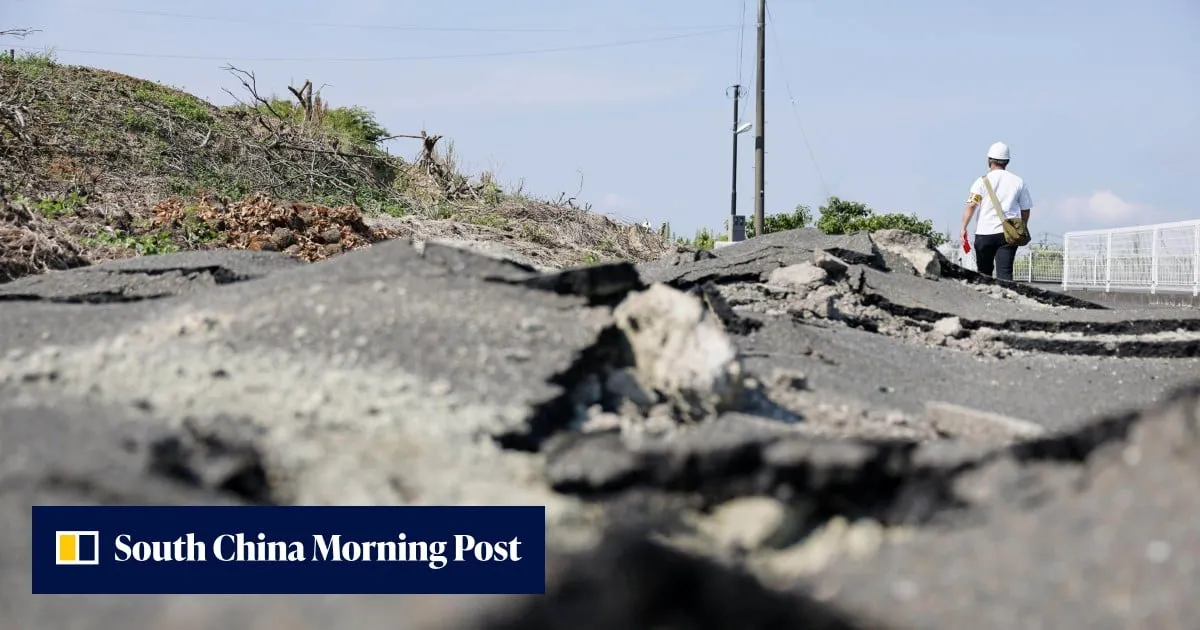
Two outlandish claims that gained large audiences online in Japan recently have “shocked” misinformation experts, who say conspiracy-style narratives are feeding on disaster anxiety, fading wartime memory and an online information ecosystem that rewards outrage and suspicion.In the aftermath of the July 28 earthquake in Kumamoto prefecture in southern Japan, a social media user claimed that seismic data from the National Research Institute for Earth Science and Disaster Resilience showed the tremor was “not an earthquake but an artificial explosion waveform”.The post, published about 30 minutes after the magnitude 7.1 quake, was later listed by Japan" class="entity-link entity-organization" data-entity-id="192630" data-entity-type="organization">Yahoo Japan’s real-time search as a popular post, with more than 2,100 reposts and 6,300 likes. Other posts pushed a related claim that the quake had been triggered by HAARP, a research facility in Alaska that has long been a target of disaster-related conspiracy theories.Days later, as Japan marked the August anniversaries of the Hiroshima and Nagasaki bombings and the end of World War II, NHK reported that false claims denying the atomic attacks were gaining traction online, with some posts on X and TikTok drawing more than 1 million views and one YouTube video claiming the bombing was a lie attracting more than 300,000 views.Doves are released over the Peace Statue during a ceremony to mark the 81st anniversary of the US atomic bombing at the Peace Park in Nagasaki, southern Japan, on August 9. Photo: Kyodo/AP“Both the theory that the earthquake was artificially triggered and the denial of the atomic bombings lack scientific basis, but the contexts in which these conspiracy theories take root differ,” said Yuzuru Kido, a former J-CAST News deputy editor and internet media researcher who tracks Japanese social media discourse.
SRCSouth China Morning Post
LANGEN
LEANCenter-Right
WORDS281
ENT12
TUE · 2026-08-25 · 00:11 GMTBRIEF NSR-2026-0825-105561
NSR-2026-0825-105561News Report·EN·Social Justice
Viral false claims about quakes, Hiroshima expose Japan’s online conspiracy problem
Misinformation experts are alarmed by two recent viral false claims in Japan that gained significant online traction. Following a July earthquake in Kumamoto prefecture, a social media user falsely claimed seismic data indicated an "artificial explosion waveform" rather than a natural tremor, with related theories blaming the HAARP facility.
Julian RyallSouth China Morning PostFiled 2026-08-25 · 00:11 GMTLean · Center-RightRead · 2 min
South China Morning PostFIG 01
Reading time
2min
Word count
281words
Sources cited
2cited
Entities identified
12entities
Quality score
100%
§ 01
Briefing Summary
AI-generatedNEWSAR · AI
Misinformation experts are alarmed by two recent viral false claims in Japan that gained significant online traction. Following a July earthquake in Kumamoto prefecture, a social media user falsely claimed seismic data indicated an "artificial explosion waveform" rather than a natural tremor, with related theories blaming the HAARP facility. Days later, around the anniversaries of the Hiroshima and Nagasaki bombings, denial of the atomic attacks spread online, with some posts on platforms like X and TikTok exceeding one million views. Researchers suggest these conspiracy narratives are fueled by disaster anxiety, fading wartime memory, and an online environment that amplifies outrage and suspicion.
Confidence 0.90Sources 2Claims 5Entities 12
§ 02
Article analysis
Model · rule-basedFraming
Social Justice
Technology
Tone
Mixed Tone
AI-assessed
CalmNeutralAlarmist
Factuality
0.70 / 1.00
Factual
LowHigh
Sources cited
2
Limited
FewMany
§ 03
Key claims
5 extracted01
Both the theory that the earthquake was artificially triggered and the denial of the atomic bombings lack scientific basis.
quoteYuzuru Kido
Confidence
1.00
02
False claims denying the atomic attacks on Hiroshima and Nagasaki gained traction online.
factualNHK
Confidence
0.95
03
Other posts claimed the Kumamoto quake was triggered by HAARP.
factualother posts
Confidence
0.90
04
A social media user claimed seismic data showed a Kumamoto earthquake was an artificial explosion waveform.
factualsocial media user
Confidence
0.90
05
Conspiracy-style narratives are feeding on disaster anxiety, fading wartime memory and an online information ecosystem that rewards outrage and suspicion.
quotemisinformation experts
Confidence
0.80
§ 04
Full report
2 min read · 281 words§ 05
Entities
12 identifiedKey playerOppositionContextPositiveNeutralNegative
Organizations5
Locations5
Topics1
§ 06
Keywords & salience
9 termsonline conspiracy
1.00
misinformation
0.90
disaster anxiety
0.80
false claims
0.70
atomic bombings
0.60
earthquake
0.60
social media
0.50
wartime memory
0.40
haarp
0.40
§ 07
Topic connections
Interactive graph Network visualization showing 51 related topics
View Full Graph Person Organization Location Event|Click node to navigate|Edge numbers = shared articles