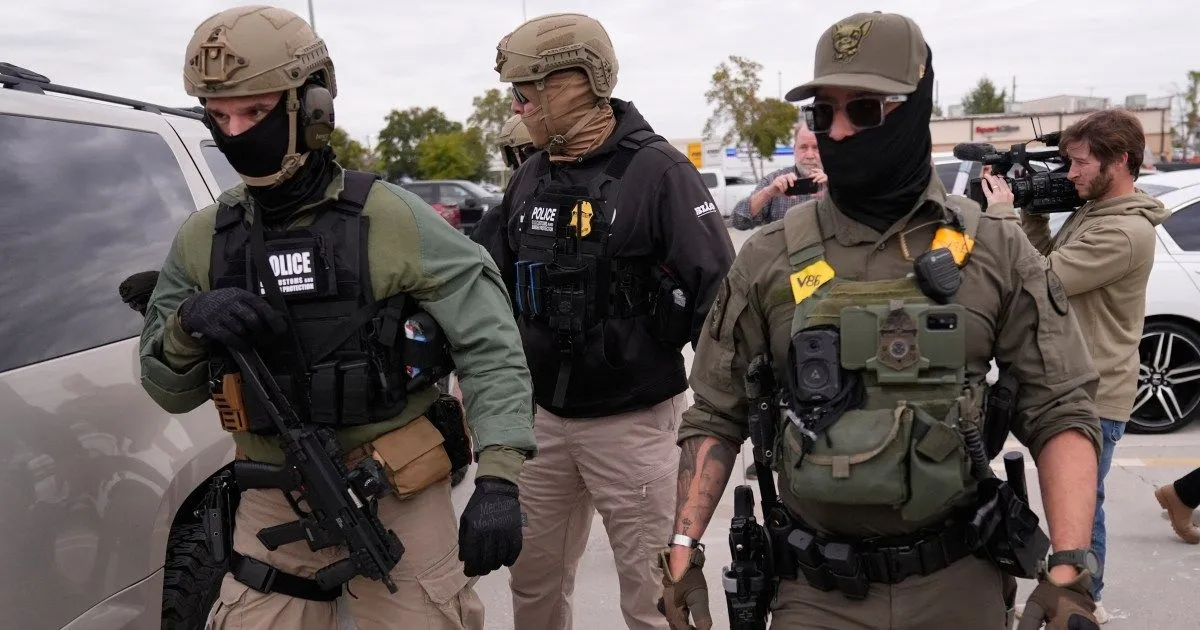
EXPLAINERThe policy could affect up to 200,000 people and deter many more from filing an asylum claim once in the United States.US President Donald Trump’s immigration crackdown has intensified during his second term [File: Gerald Herbert/AP]Published On 25 Aug 2026The administration of US President Donald Trump has announced it plans to revoke non-immigrant visas for foreigners who have applied for or are currently seeking asylum in the United States, in what could be the largest single mass revocation in US history, experts say.The US Department of State will revoke B-1 and B-2 visas issued between 2016 and 2026 for holders who have previously sought asylum or are now seeking asylum. The B-1 and B-2 non-immigrant visas are issued for business and tourism travel.Recommended Stories list of 3 itemslist 1 of 3Trump administration seeks to formalise H-1B fee of more than $100,000list 2 of 3US removes Syria from ‘state sponsor of terrorism’ listlist 3 of 3US public support for Iran war falls as Trump approval at record low: Pollend of listOn Monday, State Department spokesman Tommy Pigott said the measure was targeted at “foreigners who have come to the United States claiming to be short-term visitors, but then file for asylum to stay here permanently”.Pigott did not specify the number of visas that will be revoked in the process, but the Associated Press cited State Department documents and two US officials who estimated that up to 200,000 people could be affected.The move is part of Trump’s broader immigration crackdown, which has intensified during his second term as president.His anti-immigration agenda has included visa and green card revocations as well as an aggressive deportation drive, including military-style raids on migrant communities and workplaces by federal agencies including US Immigration and Customs Enforcement (ICE), which rights groups say have violated free speech and due process rights. During a series of raids in Minneapolis at the start of this year, protesters were killed by agents.The Trump administration has also taken steps to limit the number of people entitled to “birthright citizenship”, a constitutionally protected right that grants automatic US citizenship to babies born in the country.An executive order Trump signed shortly after the start of his second term as US president in January 2025 stated that if one parent was “unlawfully present in the United States” and the other was not a citizen or a “lawful permanent resident at the time of said person’s birth”, the child could not claim birthright. It added that if a parent’s presence in the country was “lawful but temporary” through a tourist, student or work visa and the other parent was not a US citizen, birthright citizenship would also not be passed on to the child.However, in July this year, the US Supreme Court struck down the order. This month, Trump signed a new executive order targeting “birth tourism” and another order expanding the categories that make some babies ineligible for birthright citizenship. Rights organisations in the US have launched a legal challenge to these in the US state of New Hampshire.In a separate move earlier this month, the State Department revoked more than 175,000 visas held by foreign nationals, mostly for alleged criminal activity, visa violations, fraud, calls for violence or other actions deemed a threat to national security.The Trump administration has tightened restrictions on visa applicants as well, suspending new visas to citizens of 75 countries. Last week, a federal judge struck down the policy, saying it violated federal immigration law by discriminating on the basis of nationality.Why is the US targeting B-1 and B-2 visas?As a matter of course, applicants for B-1 or B-2 business or tourist visas are asked to confirm that they will not seek asylum in the US and must provide proof that they intend to return to their home countries.Some, however, then proceed to file asylum claims once they are in the US anyway.Deputy Secretary of State Christopher Landau criticised the use of tourist and business visas as a path to asylum claims. “People in the US and all over the world are fed up with bogus asylum claims,” he wrote on X. “asylum isn’t supposed to be a loophole to circumvent immigration law.”Unlike the move to cancel more than 175,000 visas earlier this month, the latest revocation affects people who have committed no crime under US law.What impact is this expected to have? Rut Bermejo Casado, a researcher in migration and asylum policies and lecturer at Rey Juan Carlos University, Madrid, noted that revoking a non-immigrant visa is not the same as terminating an asylum claim.Individuals who enter the US on business or tourist visas and later apply for asylum derive their current legal status from the pending asylum process, rather than from the original visa.Therefore, “they would lose their status as temporary visitors, but they would not necessarily become immediately removable solely because their visa has been revoked”, Bermejo Casado said, noting, “Their right to pursue an asylum application would generally remain intact until adjudication.”This means that many applicants would become entirely dependent on their asylum cases in order to remain in the US. “If those claims are eventually denied, they would no longer have any underlying non-immigrant status to fall back on,” she said.Second, revoking these visas could trigger a legal dispute over whether the government is unfairly penalising individuals for exercising a right protected under US asylum law. “While the executive branch has broad authority over visa issuance and revocation, courts may be asked to consider due process and administrative law concerns,” Bermejo Casado said.Third, the policy could discourage future asylum claims from individuals entering on tourist or business visas. “Even if it does not lead to immediate removals, the measure signals a major shift toward treating post-entry asylum claims as evidence that temporary visas were used inconsistently with their intended purpose,” Bermejo Casado said.“In that sense, the policy may be more intended as a deterrent and political statement than a mechanism for immediate deportation.”Bermejo Casado said establishing who the policy applies to will require extensive data matching between the State Department, Homeland Security and immigration courts, something she described as an “administrative burden”.Which nationalities are most likely to be affected?The US Department of State has not published a detailed nationality breakdown of those who have claimed asylum after entering the US on B-1 or B-2 visas, and this information is not otherwise publicly available.However, Bermejo Casado noted that the groups most likely to be affected are probably similar to those that have generated the largest numbers of asylum claims in recent years.According to Homeland Security figures, the top nationalities for successful asylum claims in recent years include those from Central and South America, such as Venezuela, El Salvador, Guatemala and Honduras, as well as other parts of the world including China, Russia, Turkiye and Egypt.Applications were mostly rejected for applicants from Haiti, India, Cuba and Mexico, according to data from the Department of Justice’s Executive Office for Immigration Review (EOIR).Bermejo Casado stressed, however, that the actual impact will depend on the composition of the asylum applicants who originally entered on B-1 and B-2 visas.“Some nationalities generate substantial asylum caseloads through irregular border crossings rather than through visa overstays or status changes, meaning they may be less affected than aggregate asylum statistics alone would suggest,” she said.
SRCAl Jazeera
LANGEN
LEANCenter
WORDS1 210
ENT8
TUE · 2026-08-25 · 14:04 GMTBRIEF NSR-2026-0825-105777
NSR-2026-0825-105777News Report·EN·Legal & Judicial
Trump plans largest mass visa cancellation in history: Who will it affect?
The Trump administration plans to revoke non-immigrant B-1 and B-2 visas issued between 2016 and 2026 for foreigners who have applied for or are currently seeking asylum in the United States. This policy, described as potentially the largest mass visa cancellation in US history, could affect up to 200,000 individuals.
Federica MarsiAl JazeeraFiled 2026-08-25 · 14:04 GMTLean · CenterRead · 5 min
Al JazeeraFIG 01
Reading time
5min
Word count
1 210words
Sources cited
3cited
Entities identified
8entities
Quality score
100%
§ 01
Briefing Summary
AI-generatedNEWSAR · AI
The Trump administration plans to revoke non-immigrant B-1 and B-2 visas issued between 2016 and 2026 for foreigners who have applied for or are currently seeking asylum in the United States. This policy, described as potentially the largest mass visa cancellation in US history, could affect up to 200,000 individuals. The State Department stated the measure targets those who use short-term visitor visas to remain in the US permanently by filing asylum claims. This action is part of President Trump's broader immigration crackdown. While these individuals would lose their temporary visitor status, their pending asylum claims would not be automatically terminated.
Confidence 0.90Sources 3Claims 5Entities 8
§ 02
Article analysis
Model · rule-basedFraming
Legal & Judicial
Political Strategy
Tone
Mixed Tone
AI-assessed
CalmNeutralAlarmist
Factuality
0.70 / 1.00
Factual
LowHigh
Sources cited
3
Well sourced
FewMany
§ 03
Key claims
5 extracted01
The measure was targeted at “foreigners who have come to the United States claiming to be short-term visitors, but then file for asylum to stay here permanently”.
quoteTommy Pigott (State Department spokesman)
Confidence
1.00
02
US Supreme Court struck down the order limiting birthright citizenship.
factual
Confidence
0.95
03
Trump administration's immigration crackdown has intensified during his second term.
factual
Confidence
0.90
04
The US Department of State will revoke B-1 and B-2 visas issued between 2016 and 2026 for holders who have previously sought asylum or are now seeking asylum.
factualUS Department of State
Confidence
0.90
05
The policy could affect up to 200,000 people and deter many more from filing an asylum claim once in the United States.
statisticAssociated Press cited State Department documents and two US officials
Confidence
0.80
§ 04
Full report
5 min read · 1 210 words§ 05
Entities
8 identifiedKey playerOppositionContextPositiveNeutralNegative
Organizations2
Locations1
§ 06
Keywords & salience
8 termsvisa cancellation
1.00
asylum seekers
0.90
immigration crackdown
0.80
non-immigrant visas
0.70
trump administration
0.60
b-1 and b-2 visas
0.50
us department of state
0.40
birthright citizenship
0.40
§ 07
Topic connections
Interactive graph Network visualization showing 51 related topics
View Full Graph Person Organization Location Event|Click node to navigate|Edge numbers = shared articles