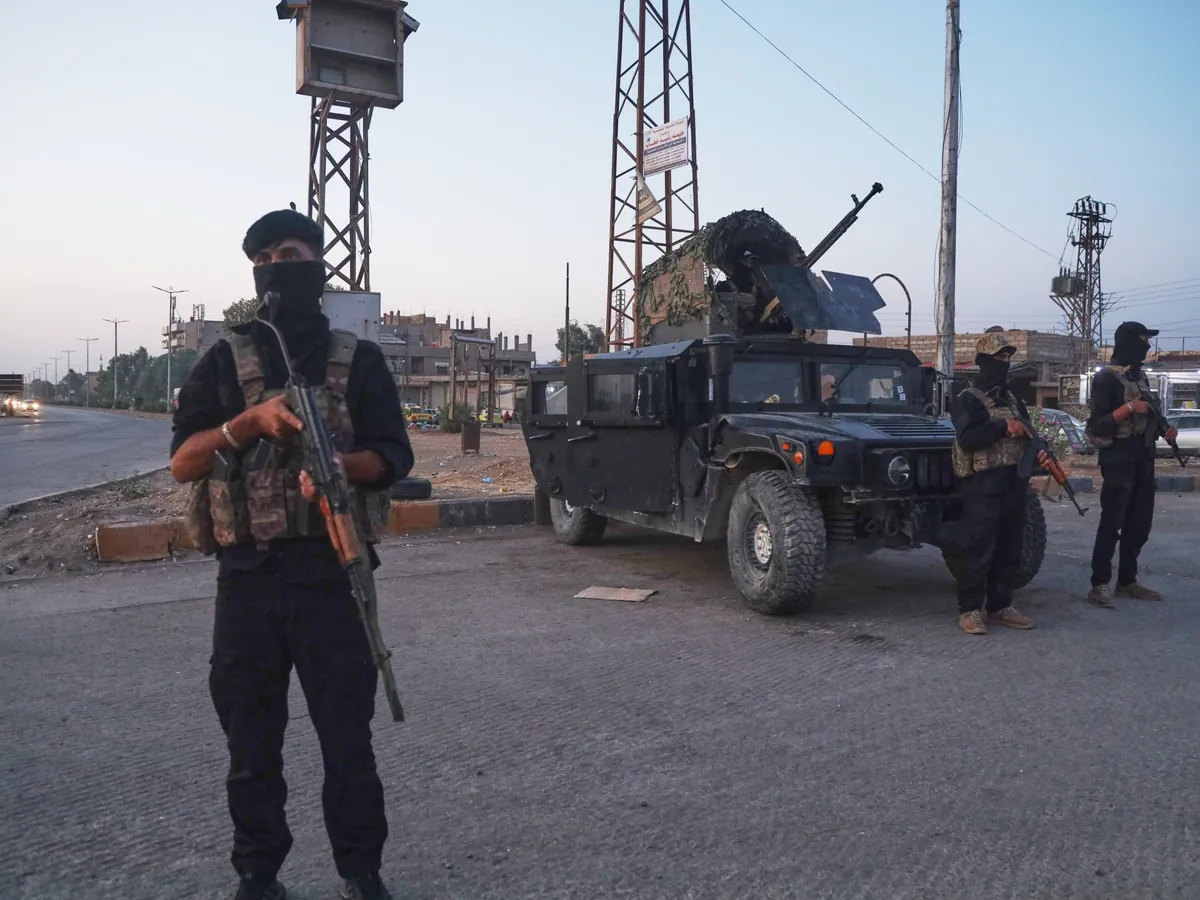
SDF’s dissolution is a major victory for Damascus, but unresolved questions over command and deployment remain, and show integration isn’t straightforward.Syrian Democratic Forces (SDF) fighters stand guard in Hasakah, northeastern Syria, Wednesday, August 26, 2026 [Baderkhan Ahmad/AP Photo]Published On 26 Aug 2026Tuesday’s announcement that the Kurdish-led Syrian Democratic Forces had dissolved, with its forces merging with the Syrian military, represents a boost for a government seeking to demonstrate that it has sole authority over the country.And yet, analysts have told Al Jazeera, the finer details of military integration remain, indicating that the divisions that have beset Syria over almost 14 years of war, and then in the 20 months since the fall of the al-Assad regime, have not been totally eradicated.Recommended Stories list of 3 itemslist 1 of 3Putin and al-Sharaa discuss Russia-Syria relations, deal on military baseslist 2 of 3Syria removed: Which countries are still on the US ‘terror’ list – and why?list 3 of 3Kurdish-led SDF announces dissolution after merging with Syria’s militaryend of listThe SDF, which emerged in 2015, has been based in the country’s northeast, where much of Syria’s historically marginalised Kurdish population lives.Despite months of talks, the SDF had been unwilling to give up on the autonomy it had gained during Syria’s war, but on Tuesday the group’s leader Mazloum Abdi (also known as Mazloum Kobani) said that an “important page” had been turned in the country’s history.“We want this day to be the beginning of a true transition from the battlefields to the fields of construction, and from the era of weapons to the era of peace,” Abdi said from the presidential palace in Damascus.Initially, the SDF had held strong reservations over giving up its arms and coming under the command of Syria’s Ministry of Defence. But a government-led offensive into the northeast in January, in addition to good relations between the Syrian government and the United States – the SDF’s main backer – has shifted the balance of power.Rob Geist Pinfold, a lecturer on security studies at King’s College London, told Al Jazeera that the SDF’s dissolution “is part of an ongoing trend of the SDF losing its leverage in Syria, simply because the US has signalled that [the SDF] no longer has protected status from the US”.The SDF’s dissolution means that “the largest organised military force outside Damascus’s authority has ended its independent existence, allowing the state to begin the process of restoring a single military command and unified control over the border, airports, and strategic resources”, said Navvar Saban, a researcher in security and military affairs at the Arab Center for Contemporary Syrian Studies.But, Saban added, the process of integration will take more than an announcement in Damascus.“The agreement may end Syria’s military division, but inclusive institutions and a single national chain of command are what will make the unity sustainable and effective,” Saban said.Obstacles remainingSaban said that SDF military fighters are being incorporated into the Syrian army under the command of the Defence Ministry, while the Asayish – the SDF’s affiliated security forces – and other local security bodies are being integrated into the Ministry of Interior. Civilian institutions and employees are also being transferred to relevant ministries.“The formal merge has been completed, but creating a unified military culture and chain of command will take much longer,” he said.There is also likely to be some apprehension from Syrian Kurds, with a deadly war still recent in their memories, and some mistrust towards Syria’s government. The government is led by figures formerly associated with now-disbanded rebel groups, including Hay’at Tahrir al-Sham, whose predecessor, al-Nusra Front, was once affiliated with al-Qaeda. Many of the former rebel groups had also fought the SDF, which was accused of cooperating with the al-Assad regime at times.“Many Arab communities may welcome the return of the central institution [government], while Kurdish communities are likely to be more cautious,” Saban said. “They want peace. But they also need guarantees concerning the Kurdish language, education, political representation, and local security.”Syria’s President Ahmed al-Sharaa has made efforts since assuming power in the wake of al-Assad’s fall to assuage Kurdish concerns, repeatedly pledging constitutional protection for Kurdish language and political rights, but insisting on integration into the wider Syrian state.“This is an agreement that comes on the government’s terms, but it’s likely that US pressure behind the scenes meant that the [Syrian government] capitulated to at least some of the remaining demands from the SDF,” Geist Pinfold said.There have been particular disagreements over the SDF’s Women Protection Units, also known as the YPJ. Earlier this month, SDF senior official Abdulkarim Omar told Al Jazeera that the YPJ wanted to join the Defence Ministry, but had instead been told by the Syrian government that the army’s existing structure did not include units for women.The government had instead suggested the YPJ be integrated into the Interior Ministry. Omar said that the YPJ had countered that it could join the Interior Ministry as a specialised counterterrorism unit.No final decision has been announced, but Alexander McKeever, author of the newsletter This Week in Northern Syria, said that this represented “a significant compromise for the government”, which had previously rejected women in combat or heavy security roles.However, McKeever, speaking from Qamishli in northeast Syria, said that there were still general disagreements over the larger integration process, including which fighters would join government forces, where they would be deployed, and what their roles would be.McKeever said the question of chain of command – whether fighters will directly report to Damascus or to more local command – is still unanswered.
SRCAl Jazeera
LANGEN
LEANCenter
WORDS922
ENT10
WED · 2026-08-26 · 18:19 GMTBRIEF NSR-2026-0826-106218
NSR-2026-0826-106218Analysis·EN·Political Strategy
Kurdish-led SDF has dissolved, but has Syria really unified its military?
The Kurdish-led Syrian Democratic Forces (SDF) have announced their dissolution and integration into the Syrian military, a move hailed as a victory for Damascus in asserting sole authority. This integration, however, faces unresolved questions regarding command and deployment, indicating that divisions from the prolonged conflict are not entirely eradicated.
Justin SalhaniAl JazeeraFiled 2026-08-26 · 18:19 GMTLean · CenterRead · 4 min
Al JazeeraFIG 01
Reading time
4min
Word count
922words
Sources cited
2cited
Entities identified
10entities
Quality score
100%
§ 01
Briefing Summary
AI-generatedNEWSAR · AI
The Kurdish-led Syrian Democratic Forces (SDF) have announced their dissolution and integration into the Syrian military, a move hailed as a victory for Damascus in asserting sole authority. This integration, however, faces unresolved questions regarding command and deployment, indicating that divisions from the prolonged conflict are not entirely eradicated. The SDF, primarily based in the northeast and representing the Kurdish population, had previously resisted relinquishing autonomy but shifted due to a government offensive and changing US backing. While the formal merge is complete, establishing a unified military culture and chain of command will be a lengthy process, with potential apprehension from Kurdish communities seeking guarantees on their rights.
Confidence 0.90Sources 2Claims 4Entities 10
§ 02
Article analysis
Model · rule-basedFraming
Political Strategy
Conflict
Tone
Measured
AI-assessed
CalmNeutralAlarmist
Factuality
0.60 / 1.00
Mixed
LowHigh
Sources cited
2
Limited
FewMany
§ 03
Key claims
4 extracted01
The Kurdish-led Syrian Democratic Forces (SDF) have announced their dissolution and merger with the Syrian military.
factualSDF leadership
Confidence
1.00
02
The process of military integration will take more than an announcement and requires inclusive institutions and a single national chain of command.
factualNavvar Saban
Confidence
0.90
03
The US signalling that the SDF no longer has protected status has reduced the SDF's leverage.
factualRob Geist Pinfold
Confidence
0.90
04
The SDF's dissolution is seen as a boost for the Syrian government, aiming to demonstrate sole authority over the country.
factualAl Jazeera analysis
Confidence
0.90
§ 04
Full report
4 min read · 922 words§ 05
Entities
10 identifiedKey playerOppositionContextPositiveNeutralNegative
Organizations3
Locations4
§ 06
Keywords & salience
8 termssyrian democratic forces
1.00
syrian military integration
0.90
syria unification
0.80
kurdish-led
0.70
syrian government
0.70
damascus authority
0.60
military command
0.50
us support
0.40
§ 07
Topic connections
Interactive graph Network visualization showing 51 related topics
View Full Graph Person Organization Location Event|Click node to navigate|Edge numbers = shared articles