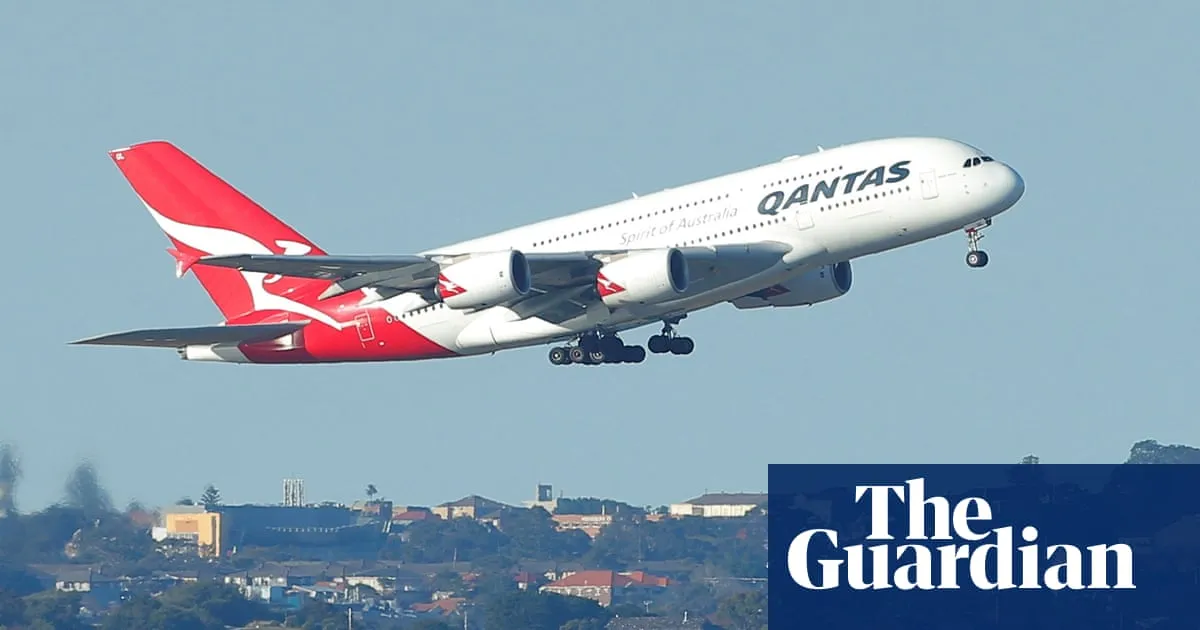
Qantas plans to phase out the Airbus A380 as it adds new planes to its fleet. Photograph: Jason Reed/Reuters View image in fullscreen Qantas plans to phase out the Airbus A380 as it adds new planes to its fleet. Photograph: Jason Reed/Reuters Qantas may hike fares and expand Jetstar add-on fees as profits dip to four-year low Airline declines to predict impact of new carry-on luggage charge on Jetstar revenue or ticket sales, saying it is offering customers ‘choice’ Follow our Australia news live blog for latest updates Get our breaking news email, free app or daily news podcast Qantas could increase ticket prices and plans to expand add-on fees at its low-budget carrier Jetstar, after the company said fuel costs contributed to its lowest pre-tax profits in four years. After delivering the airline’s annual results on Thursday, the Qantas chief executive, Vanessa Hudson, said the company could push for more revenue because passenger demand remained strong despite cost-of-living pressures. “We are not saying that everything that can be done has been done, because we’re going to continue to drive where we see demand,” Hudson told analysts, who asked if further fare increases were planned. “We’re going to continue to push to maximise revenue and clearly, obviously, maximise earnings.” Qantas recorded a sharp decline in its pre-tax underlying profit – at $2.06bn in the year to 30 June – with higher fuel prices linked to the Iran conflict denting the airline’s profitability. Those higher fuel costs were disproportionately felt by its older A380 fleet. Qantas said it would start retiring the models – primarily used for long-haul international flights – in 2028, rather than 2032 as planned, as it expected maintenance costs and disruptions to rise. The company said it expects to buy up to 20 additional planes from 2030 as it continues its fleet renewal program. Hudson said Airbus A350-1000s and Boeing 787 Dreamliners were being considered. But there were no plans to order more of the ultra-long haul A350s like the ones to be used for Qantas’ planned Project Sunrise Sydney-London route. While airlines tend to hedge against rising fuel costs – a financial strategy to protect against volatile prices – it only offers partial protection. They also typically increase air fares and reduce seat capacity on less popular routes to maximise profits. Qantas’s annual accounts show that while its international routes are less profitable than they used to be, its Jetstar business remains a strong revenue earner and is at the forefront of an attempt to make the airline more profitable. Last month, Jetstar announced it would charge fees to put carry-on luggage in overhead lockers, in a controversial move that was widely criticised by consumer advocates. Stephanie Tully, Jetstar’s chief executive, told investors on Thursday the budget carrier planned to split more services from the individual ticket price in a bid to keep the advertised fare lower. “Obviously, we’ve launched a product in the last few weeks that’s got a bit of attention around baggage, but we’ve got many more to come,” Tully said. “So we’ve got a whole pipeline of ancillary [non-seat] initiatives.” Non-seat fees, including check-in baggage, preferred seats, cancellation rights and meals and snacks, generate more than $1bn of Jetstar’s $6bn annual revenue. Tully said on Thursday that figure would rise significantly. The median Jetstar fare was close to $150 in the year to June, up from nearly $100 in 2022, company reports indicate. Meanwhile, Qantas increased its overall revenue by 7% to $25.5bn over the 12 months. But it took on an extra $610m in fuel costs across its network, making the company less profitable. Days before the US and Israel struck Iran in late February, Qantas delivered a record $1.46bn pre-tax profit for the six months to December, as passengers shrugged off cost-of-living pressures to travel within and outside Australia. Its rising fuel costs have been partially offset by ticket sales to new customers who switched to Qantas after cancelling flights at airlines with Middle East stopovers. Qantas said its loyalty scheme had increased underlying earnings by 12% in the year, to $625m, with a 6% growth in active members. Uber was the fastest-growing source of points. Banks have reformed their credit cards rewards schemes ahead of the ban on card surcharges, which is expected to affect Qantas’s frequent flyer points scheme. The company said it still believed the points business would earn at least 5% more in the coming financial year and meet company targets of $800m in earnings by 2030. Qantas’s share price rose more than 4% in early afternoon trading on Thursday. Explore more on these topics Qantas Business Airline industry Transport news Share Reuse this content
SRCThe Guardian - World News
LANGEN
LEANCenter-Left
WORDS779
ENT12
THU · 2026-08-27 · 05:03 GMTBRIEF NSR-2026-0827-106338
NSR-2026-0827-106338News Report·EN·Economic Impact
Qantas may hike fares and expand Jetstar add-on fees as profits dip to four-year low
Qantas reported its lowest pre-tax profits in four years, attributing the dip to increased fuel costs. In response, the airline is considering raising ticket prices and expanding add-on fees at its budget carrier, Jetstar, to boost revenue.
Luca Ittimani and Jonathan BarrettThe Guardian - World NewsFiled 2026-08-27 · 05:03 GMTLean · Center-LeftRead · 4 min
The Guardian - World NewsFIG 01
Reading time
4min
Word count
779words
Sources cited
3cited
Entities identified
12entities
Quality score
100%
§ 01
Briefing Summary
AI-generatedNEWSAR · AI
Qantas reported its lowest pre-tax profits in four years, attributing the dip to increased fuel costs. In response, the airline is considering raising ticket prices and expanding add-on fees at its budget carrier, Jetstar, to boost revenue. Jetstar plans to introduce more ancillary services beyond the base fare, following recent criticism for its new carry-on luggage charge. Despite cost-of-living pressures, passenger demand remains strong, giving Qantas confidence to pursue further revenue maximization. The airline also announced plans to retire its Airbus A380 fleet starting in 2028 due to rising maintenance costs.
Confidence 0.90Sources 3Claims 5Entities 12
§ 02
Article analysis
Model · rule-basedFraming
Economic Impact
Human Interest
Tone
Mixed Tone
AI-assessed
CalmNeutralAlarmist
Factuality
0.70 / 1.00
Factual
LowHigh
Sources cited
3
Well sourced
FewMany
§ 03
Key claims
5 extracted01
Jetstar announced it would charge fees to put carry-on luggage in overhead lockers.
factualJetstar
Confidence
1.00
02
Qantas recorded a pre-tax underlying profit of $2.06bn in the year to 30 June.
statisticQantas
Confidence
1.00
03
Qantas plans to start retiring its Airbus A380 fleet in 2028.
factualQantas
Confidence
0.90
04
Higher fuel prices, linked to the Iran conflict, dented Qantas' profitability.
factualQantas
Confidence
0.90
05
Qantas may hike fares and expand Jetstar add-on fees as profits dip to a four-year low.
factualQantas
Confidence
0.90
§ 04
Full report
4 min read · 779 words§ 05
Entities
12 identifiedKey playerOppositionContextPositiveNeutralNegative
Organizations3
Locations2
§ 06
Keywords & salience
10 termsqantas
1.00
jetstar
0.90
fare increases
0.80
add-on fees
0.80
profitability
0.70
fuel costs
0.70
fleet renewal
0.60
airbus a380
0.50
revenue maximization
0.50
carry-on luggage charge
0.40
§ 07
Topic connections
Interactive graph Network visualization showing 14 related topics
View Full Graph Person Organization Location Event|Click node to navigate|Edge numbers = shared articles