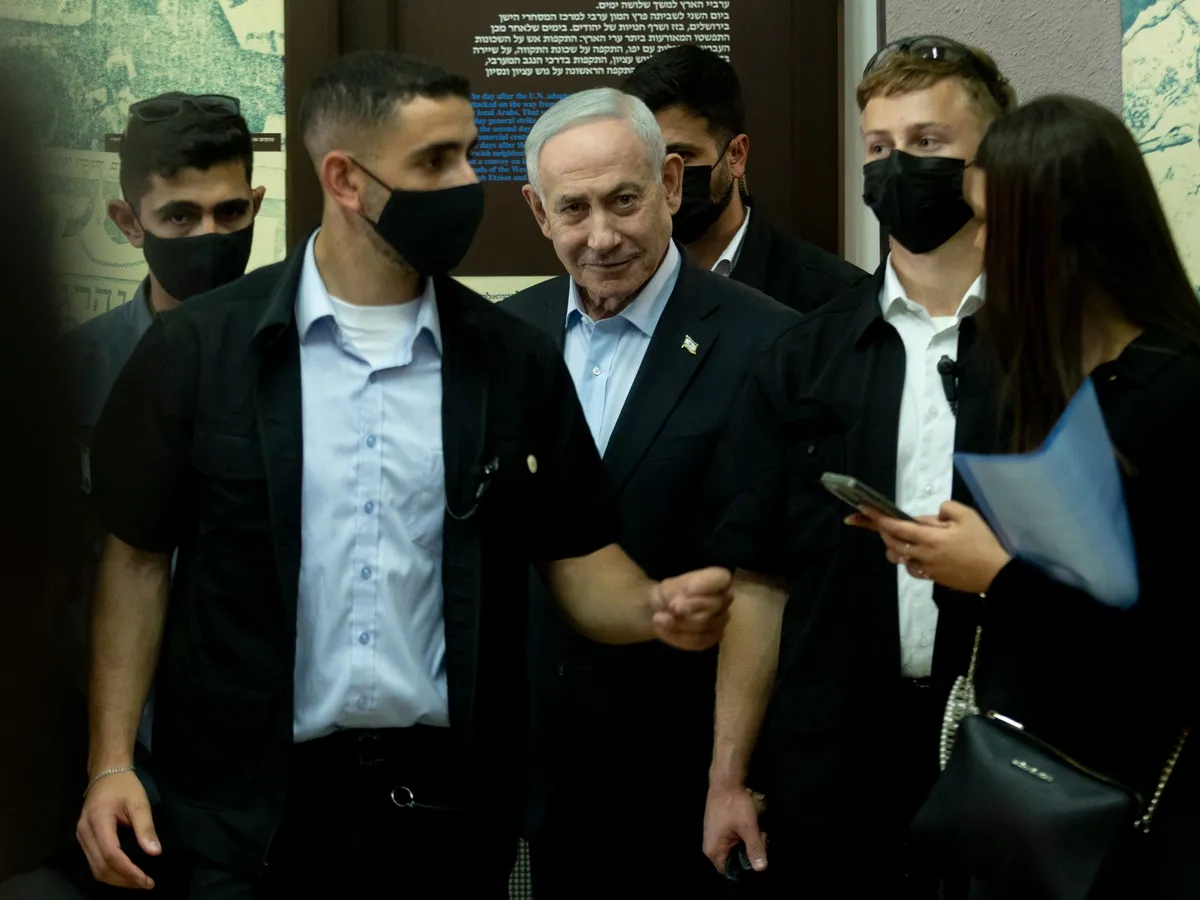
The rediscovery of the Altalena has revived an old Israeli fault line, but beneath it lies a broad consensus on Jewish supremacy, occupation and military force.Independent analyst.Published On 27 Aug 2026On August 24, Israeli Prime Minister Benjamin Netanyahu stood outside the Etzel Museum on Tel Aviv’s seafront after the wreck of the Altalena was discovered. The ship, which belonged to the right-wing Zionist paramilitary organisation Etzel, was shelled by the newly formed Israeli military in 1948. Netanyahu promised to raise it from the seabed and turn it into a symbol for future generations, centred on the message: “Civil war, never again.”Etzel, better known in English as Irgun, promoted a highly nationalistic vision of Jewish political life and advocated Jewish military supremacy. It had operated as an independent armed organisation before Israel’s establishment and resisted surrendering its weapons and autonomy to the new state. In June 1948, as it was being absorbed into the newly formed Israeli military, the Altalena arrived carrying more than 900 immigrants, medical supplies and a large shipment of weapons. Irgun and the government could not agree on control of the arms, and the dispute escalated into fighting. After an initial confrontation north of Tel Aviv, the ship sailed south towards the city. Left-wing Prime Minister David Ben-Gurion ordered Israeli forces to shell it off Tel Aviv. Etzel leader Menachem Begin, who was on board, urged his supporters not to retaliate and warned against civil war.For the Israeli right, the Altalena became a symbol of the left’s willingness to use force against fellow Jews to impose its political authority. The episode endured as a historical grievance, but it never became a constant feature of Israeli political life. For decades, it largely remained a symbolic tale, invoked from time to time before gradually receding into historical memory. Its rediscovery in the middle of an election campaign has abruptly revived that symbolism. By invoking Begin’s warning against civil war while resurrecting one of the right’s oldest grievances against the left, Netanyahu was not simply calling for unity. He was also issuing a veiled threat: We remember what you did. If need be, we will come for you as you came for us.
SRCAl Jazeera
LANGEN
LEANCenter
WORDS363
ENT11
THU · 2026-08-27 · 07:24 GMTBRIEF NSR-2026-0827-106395
NSR-2026-0827-106395Analysis·EN·Political Strategy
Israel is not heading for civil war
The recent discovery of the Altalena shipwreck has revived a historical Israeli fault line, but beneath current political divisions, a broad consensus exists on Jewish supremacy, occupation, and military force. In 1948, the Israeli military shelled the Altalena, a ship carrying immigrants and weapons for the right-wing paramilitary organization Etzel (Irgun), after a dispute over control of the arms.
Ori GoldbergAl JazeeraFiled 2026-08-27 · 07:24 GMTLean · CenterRead · 2 min
Al JazeeraFIG 01
Reading time
2min
Word count
363words
Sources cited
0cited
Entities identified
11entities
Quality score
100%
§ 01
Briefing Summary
AI-generatedNEWSAR · AI
The recent discovery of the Altalena shipwreck has revived a historical Israeli fault line, but beneath current political divisions, a broad consensus exists on Jewish supremacy, occupation, and military force. In 1948, the Israeli military shelled the Altalena, a ship carrying immigrants and weapons for the right-wing paramilitary organization Etzel (Irgun), after a dispute over control of the arms. Prime Minister David Ben-Gurion ordered the shelling, and Etzel leader Menachem Begin warned against civil war. Prime Minister Benjamin Netanyahu recently invoked this event, promising to make the wreck a symbol against civil war while also issuing a veiled threat, reminding the left of past actions. This revival of a historical grievance during an election campaign highlights underlying nationalistic sentiments.
Confidence 0.90Claims 5Entities 11
§ 02
Article analysis
Model · rule-basedFraming
Political Strategy
Conflict
Tone
Measured
AI-assessed
CalmNeutralAlarmist
Factuality
0.40 / 1.00
Mixed
LowHigh
Sources cited
0
No named sources
FewMany
§ 03
Key claims
5 extracted01
Netanyahu promised to raise the Altalena from the seabed and turn it into a symbol for future generations, centred on the message: “Civil war, never again.”
quoteBenjamin Netanyahu
Confidence
1.00
02
Left-wing Prime Minister David Ben-Gurion ordered Israeli forces to shell the Altalena off Tel Aviv.
factualDavid Ben-Gurion
Confidence
0.90
03
In June 1948, the Altalena arrived carrying more than 900 immigrants, medical supplies and a large shipment of weapons.
factual
Confidence
0.90
04
The rediscovery of the Altalena has revived an old Israeli fault line, but beneath it lies a broad consensus on Jewish supremacy, occupation and military force.
factual
Confidence
0.70
05
By invoking Begin’s warning against civil war while resurrecting one of the right’s oldest grievances against the left, Netanyahu was not simply calling for unity. He was also issuing a veiled threat: We remember what you did. If need be, we will come for you as you came for us.
factual
Confidence
0.60
§ 04
Full report
2 min read · 363 words§ 05
Entities
11 identifiedKey playerOppositionContextPositiveNeutralNegative
People3
Organizations3
Locations1
Events1
§ 06
Keywords & salience
10 termsaltalena
1.00
civil war
0.90
jewish supremacy
0.80
israeli military
0.70
benjamin netanyahu
0.60
etzel
0.60
menachem begin
0.50
david ben-gurion
0.50
occupation
0.40
military force
0.40
§ 07
Topic connections
Interactive graph Network visualization showing 51 related topics
View Full Graph Person Organization Location Event|Click node to navigate|Edge numbers = shared articles