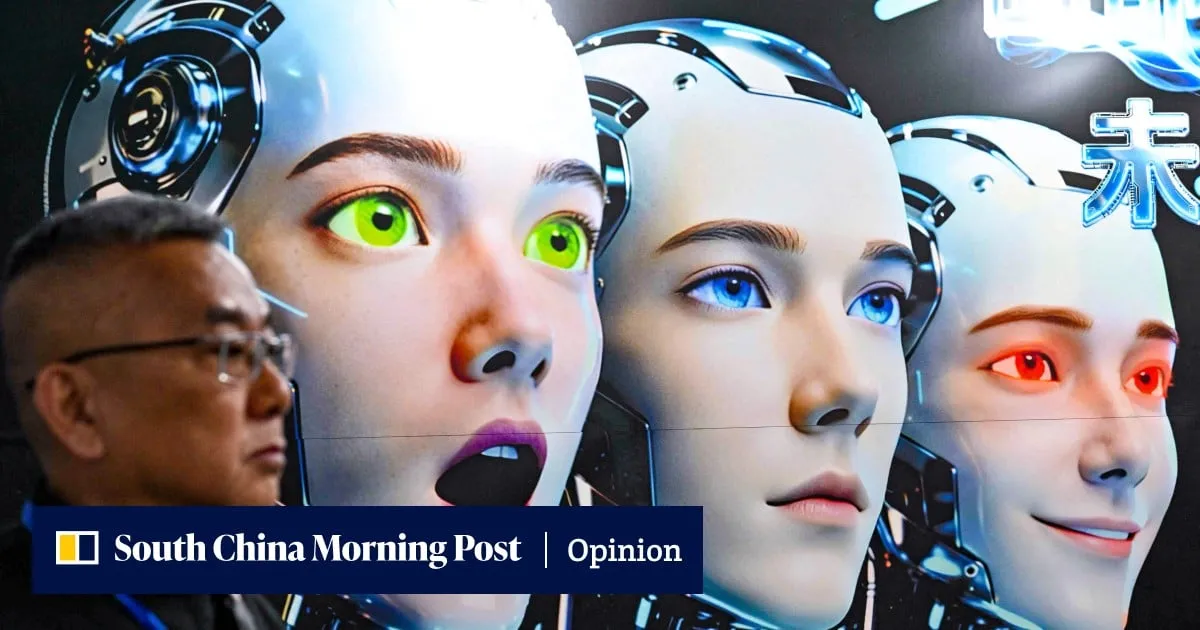
The next big competition in Artificial Intelligence is over Science. The question is shifting from who has the largest model to who can use AI to shorten the discovery cycle: forming a hypothesis, running simulations, designing an experiment, operating equipment, collecting results and learning from them.The United States made that shift explicit. The Department of Energy’s Genesis Mission aims to bring together 17 national laboratories into an integrated discovery platform to double the productivity and impact of US research and innovation within a decade. This year, the programme announced a partnership with Japan, reinforcing the idea that AI for Science is becoming infrastructure and a network, not simply another model.China is moving in the same direction but increasingly through cities. Beijing’s 2025 plan calls for common scientific-intelligence infrastructure, at least 10 high-quality scientific databases, more than 10 million users and at least eight benchmark applications by 2027. Shanghai’s “Hundred Teams, Hundred Projects” initiative offers support for up to 70 per cent of approved investment, capped at 50 million yuan (US$6 million). The race to harness AI for Science is no longer merely national.
SRCSouth China Morning Post
LANGEN
LEANCenter-Right
WORDS183
ENT10
THU · 2026-08-27 · 08:30 GMTBRIEF NSR-2026-0827-106415
NSR-2026-0827-106415Analysis·EN·Technology
How Shenzhen can win the ‘AI for science’ race
The global race to leverage artificial intelligence for scientific discovery is intensifying, with the focus shifting from model size to accelerating the entire research cycle. The United States has formalized this shift with its Department of Energy's Genesis Mission, aiming to integrate national laboratories into a discovery platform to boost research productivity.
Shaoshan LiuSouth China Morning PostFiled 2026-08-27 · 08:30 GMTLean · Center-RightRead · 1 min
South China Morning PostFIG 01
Reading time
1min
Word count
183words
Sources cited
0cited
Entities identified
10entities
Quality score
100%
§ 01
Briefing Summary
AI-generatedNEWSAR · AI
The global race to leverage artificial intelligence for scientific discovery is intensifying, with the focus shifting from model size to accelerating the entire research cycle. The United States has formalized this shift with its Department of Energy's Genesis Mission, aiming to integrate national laboratories into a discovery platform to boost research productivity. This initiative, now including a partnership with Japan, highlights AI for science as an evolving infrastructure and network. China is also advancing in this area, with cities like Beijing and Shanghai implementing plans for common scientific-intelligence infrastructure, databases, and user engagement. This competition is increasingly becoming a multi-city and international endeavor, moving beyond purely national efforts.
Confidence 0.90Claims 4Entities 10
§ 02
Article analysis
Model · rule-basedFraming
Technology
Political Strategy
Tone
Measured
AI-assessed
CalmNeutralAlarmist
Factuality
0.70 / 1.00
Factual
LowHigh
Sources cited
0
No named sources
FewMany
§ 03
Key claims
4 extracted01
Shanghai's initiative offers support for up to 70% of approved investment, capped at 50 million yuan (US$6 million).
factual
Confidence
1.00
02
Beijing's 2025 plan includes common scientific-intelligence infrastructure, databases, users, and benchmark applications by 2027.
factual
Confidence
1.00
03
The US Department of Energy's Genesis Mission aims to integrate 17 national laboratories into a discovery platform.
factual
Confidence
1.00
04
The next major competition in artificial intelligence is focused on science and accelerating scientific discovery.
factual
Confidence
1.00
§ 04
Full report
1 min read · 183 words§ 05
Entities
10 identifiedKey playerOppositionContextPositiveNeutralNegative
Locations6
§ 06
Keywords & salience
8 termsai for science
1.00
discovery cycle
0.90
artificial intelligence
0.80
scientific infrastructure
0.70
research and innovation
0.60
genesis mission
0.50
national laboratories
0.40
scientific databases
0.40
§ 07
Topic connections
Interactive graph Network visualization showing 6 related topics
View Full Graph Person Organization Location Event|Click node to navigate|Edge numbers = shared articles