"Additional analysis of nearby seismic stations, long period seismic waves, and satellite imagery led to the determination that the seismic event was instead a glacial collapse and debris flow, and that no earthquake had occurred," USGS said on Thursday.Earlier Nepali authorities had also told the BBC that a massive chunk of ice may have collapsed from a mountain, pulling down rocks and other sediments with it.Climate Change is known to be driving faster glacier melt in the Hindu Kush Himalaya region and, as rescue efforts continue, scientists are trying to piece together the exact order of events.Simon Cook, senior lecturer in energy environment and security at the University of Dundee who specialises in glaciology, said "Climate Change could have an impact".He told the BBC "permafrost is partially holding some mountainsides together, this permafrost is warming and thawing and degrading so you are going to get more landslides".One possibility is that water from rainfall or melting ice may have destabilised the ground or ice, triggering a chain reaction.Scientist will be looking at satellite images of exactly where the landslide occurred, whether any glacial lakes suddenly drained, and where the river might have become blocked, as well as data on recent rainfall.
SRCBBC News - World
LANGEN
LEANCenter
WORDS200
ENT10
THU · 2026-08-27 · 09:55 GMTBRIEF NSR-2026-0827-106424
NSR-2026-0827-106424News Report·EN·Environmental
What we know about deadly Nepal-Tibet floods
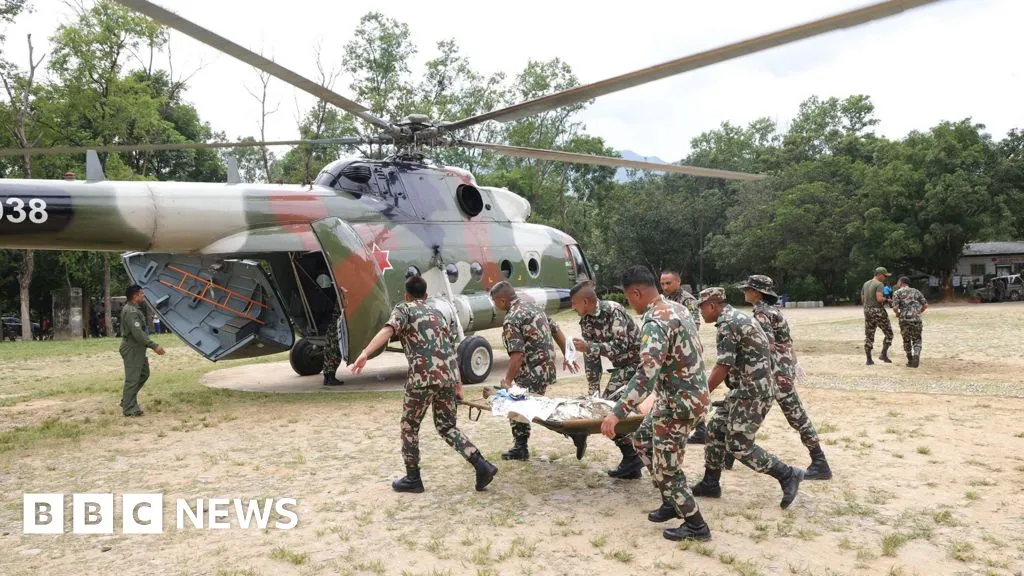
Deadly floods and landslides have occurred on the border of Nepal and Tibet, resulting in hundreds of deaths. Initial reports suggested an earthquake, but the USGS determined the event was a glacial collapse and debris flow.
3 hours agoShareSaveAdd as preferred on GoogleOlivia IrelandBBC News - WorldFiled 2026-08-27 · 09:55 GMTLean · CenterRead · 1 min
BBC News - WorldFIG 01
Reading time
1min
Word count
200words
Sources cited
3cited
Entities identified
10entities
Quality score
100%
§ 01
Briefing Summary
AI-generatedNEWSAR · AI
Deadly floods and landslides have occurred on the border of Nepal and Tibet, resulting in hundreds of deaths. Initial reports suggested an earthquake, but the USGS determined the event was a glacial collapse and debris flow. Scientists are investigating the exact sequence of events, with climate change identified as a potential contributing factor due to faster glacier melt and thawing permafrost in the Hindu Kush Himalaya region. Researchers are analyzing seismic data, satellite imagery, and information on glacial lakes and river blockages to understand the cause.
Confidence 0.90Sources 3Claims 4Entities 10
§ 02
Article analysis
Model · rule-basedFraming
Environmental
Public Health
Tone
Measured
AI-assessed
CalmNeutralAlarmist
Factuality
0.80 / 1.00
Factual
LowHigh
Sources cited
3
Well sourced
FewMany
§ 03
Key claims
4 extracted01
The seismic event was determined to be a glacial collapse and debris flow, not an earthquake.
factualUSGS
Confidence
1.00
02
Warming and thawing permafrost can lead to more landslides.
factualSimon Cook
Confidence
0.90
03
Climate change is driving faster glacier melt in the Hindu Kush Himalaya region.
factualarticle
Confidence
0.90
04
Water from rainfall or melting ice may have destabilized the ground or ice, triggering a chain reaction.
factualarticle
Confidence
0.70
§ 04
Full report
1 min read · 200 words§ 05
Entities
10 identifiedKey playerOppositionContextPositiveNeutralNegative
Organizations3
§ 06
Keywords & salience
9 termsdebris flow
1.00
glacial collapse
1.00
climate change
0.90
glaciology
0.80
landslides
0.70
permafrost
0.60
seismic stations
0.50
hindu kush himalaya region
0.40
satellite imagery
0.40
§ 07
Topic connections
Interactive graph Network visualization showing 51 related topics
View Full Graph Person Organization Location Event|Click node to navigate|Edge numbers = shared articles