1 hour agoPaul KirbyEurope digital editorAFP via Getty ImagesLatest opinion polls have been so close that the result is impossible to callIcelanders are voting in a referendum to decide whether to resume talks on joining the European Union, 13 years after they were broken off.In an indication of how tight the result is expected to be, the latest opinion poll put the No campaign in the lead with 51.6%. An earlier poll had put the Yes campaign ahead.Prime Minister Kristrún Frostadóttir's centre-left government had already intended to hold a referendum, but turbulent international affairs prompted her to bring it forward.But the debate was fought less over Nato member Iceland's security concerns than over its vital fishing industry and sovereignty.Voting is due to go on from 09:00 to 22:00 GMT on Saturday and the result is expected in the early hours of Sunday.Iceland has a population of under 400,000. More than one in five voters had already cast their ballots in early voting before Saturday, according to Iceland's public broadcaster RUV.What is the vote about?The question on the ballot is: "Should Iceland resume accession negotiations with the European Union?"Although Iceland is already part of the EU's single market and Schengen border-free zone as part of the European Economic Area, EU membership would bring it into the customs union and eventually the euro.Iceland's application to join the EU was already well advanced when it put talks on hold in 2013, and European Commission officials have indicated that talks could be finalised in one or two years. Of the 35 so-called chapters of talks ranging from fisheries and economic policy to freedom of speech and free movement of goods, 27 had begun and 11 of them were provisionally complete.A Yes vote would not be a final decision on joining the EU. It would mean backing a move towards an accession agreement. Any deal would then have to be approved by a second referendum, as well by parliament, and the constitution would have to be amended. The EU's 27 member states would also have to sign it off.One Yes-campaign group, "Yes to See", says Icelanders should at least see what deal they can get, so they have all the information before a final decision.Equally, a No vote would not rule out the chance of Iceland resuming talks in the future.What are the key issues?sovereignty has been a crucial issue in the pre-referendum debate. Iceland fought hard to become fully independent from Denmark in 1944, and its fishing and marine industries make up almost 40% of exports.No campaigners fear losing control over Iceland's prized fishing grounds under the EU's Common Fisheries Policy and they have vowed never to share their waters with anyone. Brussels has indicated Iceland could earn some kind of exemption, but it is considered potentially the biggest obstacle to any agreement.Many Icelanders remember the so-called Cod Wars with the UK that Iceland won in the 1970s. And fisheries was always the issue that stopped Iceland joining the EU before.However, in the wake of the 2008 financial crisis and the collapse of Iceland's banking system, Reykjavik moved to start accession talks in 2009, only to bring them to a halt in 2013. Iceland is now one of Europe's most affluent nations and Eirikur Bergmann, professor of politics at Bifröst University, told the BBC that "many people attribute this to Iceland's independence".One Icelandic trade union survey suggested this year that the country was more expensive than the next 10 most expensive countries in the world.Although it has the fifth highest GDP (economic output) per capita in the world, interest rates are stubbornly high at 8% and inflation has climbed to 5.6%. Yes campaigners argue that the economic benefits of the EU would help bring the rates down. ReutersThe "Yes to See" campaign believes Icelanders should see what EU deal can getWhat are Iceland's security concerns?Iceland may be a founder member of Nato but it has no military and relies on its allies for defence. A bilateral US defence agreement has been in place since 1951 and the No campaign has said Iceland's security rests on both Nato and the US and EU membership is not a substitute for Nato.Iceland has been a strong supporter of Ukraine during Russia's full-scale invasion and officials have viewed Russia's increased maritime manoeuvres near the island with alarm.However, there has also been concern at US President Donald Trump's expressed interest in taking over Greenland, and the fact that he has confused it with Iceland has caused alarm.This year the EU and Iceland signed a security and defence partnership, and EU officials said the EU "offers an anchor in a community of values, prosperity and security". What do the Yes and No campaigns say?Ahead of the referendum, the two sides held a televised debate where the Yes campaign team was headed by Prime Minister Kristrún Frostadóttir and the No campaign was led by Guðrún Hafsteinsdóttir, chair of the opposition Independence Party.Kristrún told the audience that Iceland was already well integrated in the European Union, and becoming a member would be "one of the biggest risk-reducing steps we can take". She also made clear that a Yes vote did not necessarily mean that Iceland would join, and that if there was a No vote, the result would be respected. Guðrún, meanwhile, stressed that the vote was not about whether Iceland should work well with Europe: "We already do, and we want that to continue."Instead, she portrayed the referendum as a vote on whether Icelanders wanted to hand "decision-making powers" to Brussels on fisheries, agriculture and their natural resources.Although geopolitics kick-started the government's decision to push for a return to EU talks, there has been little discussion of it during the campaign."It's lower on the agenda than many would think," says Hallgrimur Oddsson, director of EU-Iceland think-tank European Currents.
SRCBBC News - World
LANGEN
LEANCenter
WORDS967
ENT12
SAT · 2026-08-29 · 00:56 GMTBRIEF NSR-2026-0829-107041
NSR-2026-0829-107041News Report·EN·Political Strategy
Close race as Iceland votes on whether to restart talks on joining EU
Icelanders are voting in a referendum on whether to resume accession talks with the European Union, a decision brought forward due to turbulent international affairs. The vote is extremely close, with recent polls showing a slight lead for the No campaign.
1 hour agoShareSaveAdd as preferred on GooglePaul KirbyEurope digital editorBBC News - WorldFiled 2026-08-29 · 00:56 GMTLean · CenterRead · 4 min
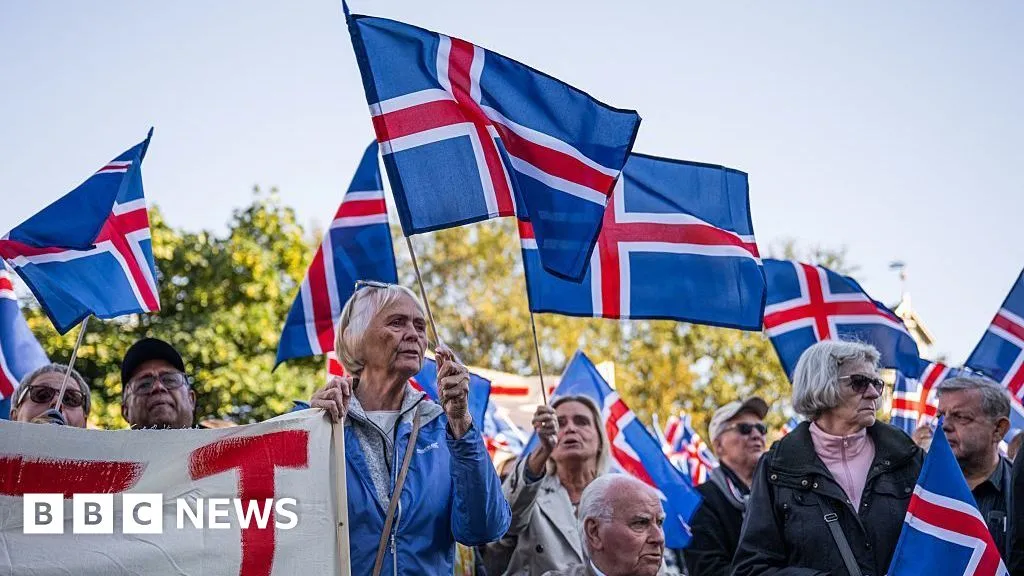
BBC News - WorldFIG 01
Reading time
4min
Word count
967words
Sources cited
2cited
Entities identified
12entities
Quality score
100%
§ 01
Briefing Summary
AI-generatedNEWSAR · AI
Icelanders are voting in a referendum on whether to resume accession talks with the European Union, a decision brought forward due to turbulent international affairs. The vote is extremely close, with recent polls showing a slight lead for the No campaign. While security concerns exist, the debate has primarily focused on Iceland's vital fishing industry and sovereignty, with opponents fearing loss of control over fishing grounds. A Yes vote would initiate negotiations for an accession agreement, which would require further approval. A No vote would not permanently close the door on future talks. The outcome is expected early Sunday morning.
Confidence 0.90Sources 2Claims 5Entities 12
§ 02
Article analysis
Model · rule-basedFraming
Political Strategy
Diplomatic
Tone
Measured
AI-assessed
CalmNeutralAlarmist
Factuality
0.80 / 1.00
Factual
LowHigh
Sources cited
2
Limited
FewMany
§ 03
Key claims
5 extracted01
No campaigners fear losing control over Iceland's prized fishing grounds under the EU's Common Fisheries Policy.
quoteNo campaigners
Confidence
1.00
02
EU membership would bring Iceland into the customs union and eventually the euro.
factual
Confidence
1.00
03
Icelanders are voting in a referendum to decide whether to resume talks on joining the European Union, 13 years after they were broken off.
factual
Confidence
1.00
04
Iceland's fishing and marine industries make up almost 40% of exports.
statistic
Confidence
0.90
05
The latest opinion poll put the No campaign in the lead with 51.6%.
statisticAFP via Getty Images
Confidence
0.90
§ 04
Full report
4 min read · 967 words§ 05
Entities
12 identifiedKey playerOppositionContextPositiveNeutralNegative
Organizations4
Locations3
§ 06
Keywords & salience
8 termsiceland referendum
1.00
eu membership
1.00
accession negotiations
0.90
sovereignty
0.80
fishing industry
0.70
european economic area
0.60
single market
0.50
customs union
0.40
§ 07
Topic connections
Interactive graph Network visualization showing 24 related topics
View Full Graph Person Organization Location Event|Click node to navigate|Edge numbers = shared articles