People gather next to the bodies of people they said were their relatives and were killed in a gang attack in the Kenscoff neighborhood of Port-au-Prince, Haiti, Monday, Aug. 24, 2026. (AP Photo/Odelyn Joseph) By Evens Sanon and Edith M. Lederer Updated 5:53 PM MESZ, August 29, 2026 Leer en español Add AP News on Google Add AP News as your preferred source to see more of our stories on Google. Share Share Facebook Copy Link copied Print Email X LinkedIn Bluesky Flipboard Pinterest Reddit Port-au-Prince, Haiti (AP) — Six children and seven women were released by a gang in Haiti that had kidnapped more than 50 people after launching a deadly attack on a community near the capital, Port-au-Prince, nearly a week ago, according to UNICEF. The United Nations children’s agency said late Friday that among those released are three children under the age of 2, a 7-year-old and two teenage girls. “This release offers a rare moment of hope amid the violence threatening children in Haiti,” said Yannig Dussart, UNICEF’s deputy representative in Haiti. “The Kenscoff abduction was not an isolated incident but another stark reminder of the scale and frequency of attacks on children across the country.” UNICEF said it worked with community leaders to help secure the release of the women and children. It wasn’t immediately clear if they needed medical treatment, and whether there are more women and children being held. While individual kidnappings in Haiti are commonplace, mass abductions are more unusual. The outcomes vary: Some people are released without a ransom, while others are killed despite multiple ransoms being paid. Gangs killed at least 47 people during the attack late Sunday on Kenscoff, a once-peaceful farming community nestled in the hills above Haiti’s capital. More than 50 kidnapped as violent Haiti" class="entity-link entity-event" data-entity-id="196117" data-entity-type="event">Gang attack in Haiti leaves 47 dead 3 MIN READ Haitians demand answers from police after gangs kill 47, kidnap more than 50 5 MIN READ First group of deportees arrives in troubled Haiti after US ends TPS program 5 MIN READ A gang leader known as Izo-2" class="entity-link entity-person" data-entity-id="193155" data-entity-type="person">Izo 2 had threatened to execute all the hostages if police killed any gang members in their push to secure Kenscoff. Izo-2" class="entity-link entity-person" data-entity-id="193155" data-entity-type="person">Izo 2 leads an armed group in that area on behalf of and in coordination with other gang leaders including Izo, considered one of Haiti’s most powerful gang leaders. The recent attack sparked an outcry Friday at an emergency meeting of the U.N. Security Council for swift deployment of the new U.N.-backed gang-fighting force and action to rein in the lawless bands. Diplomats at the meeting called by the United States, Panama and Colombia expressed horror at the brutal attack. Luis Ruiz Massieu, the U.N. special envoy to Haiti, said the attack has generated “a new wave of public indignation across all sectors of Haiti’s society, as well as international partners.” Ruiz Massieu welcomed the decision by Haiti’s authorities to bring together the national police, armed forces and the gang suppression force to assess developments and coordinate plans. It was agreed that the gang suppression force would strengthen its presence in Port-au-Prince and that Haitian forces would reinforce their deployment in Kenscoff. But the U.N. envoy and many council speakers stressed the urgent need to strengthen international security support for Haiti. U.S. Deputy Ambassador Jennifer Locetta said the United States “is resolved and as committed as ever to supporting Haitian-led security efforts to end gang terror.” She urged U.N. members to provide equipment and resources to enable the gang suppression force to deploy as quickly as possible -- and to invest in jobs, infrastructure and other opportunities to provide an alternative path to joining a gang. Locetta noted that gang coalitions have publicly said they are seeking to prevent Haitian voters from electing their representatives in a future election and that “terrorists” can’t be allowed to take democracy hostage. “They cannot terrorize from the ends of rifles and from the comforts of toll stations – as they rob Haiti of their future,” she said, “We must protect civilians against these unconscionable acts.” Indrika Ratwatte, the acting assistant secretary-general for humanitarian affairs, told the Security Council that the Kenscoff attack forced more than 2,600 people to flee their homes, many for the second or third time. He said people are traumatized, searching for missing relatives and uncertain about the future. Nearly 1.5 million people, 12% of Haiti’s population, are internally displaced, half of them children, he said. “Meanwhile, deportations to Haiti continue at scale,” Ratwatte said, referring to expulsions from the Dominican Republic and to the Trump administration’s push to remove Haitians living and working legally in the U.S. and others whose visas had expired or who had entered illegally. “In the first eight months of 2026, almost 200,000 people were forcibly returned, a 10% increase compared with the same period last year,” many arriving with nothing, he said. Calling violence especially toward women, girls and children “shocking,” he said the U.N.’s humanitarian partners “recorded over 5,500 incidents of gender-based violence, or about 30 cases per day, in the first six months of the year alone.”
SRCAssociated Press (AP)
LANGEN
LEANCenter
WORDS850
ENT12
SAT · 2026-08-29 · 14:23 GMTBRIEF NSR-2026-0829-107180
NSR-2026-0829-107180News Report·EN·Human Rights
Violent Haitian gang releases women and children after mass kidnapping and deadly attack
A violent gang attack in Kenscoff, near Port-au-Prince, Haiti, resulted in the deaths of at least 47 people and the kidnapping of over 50 individuals. Following the attack, which occurred nearly a week prior, a gang released thirteen hostages: six children and seven women.
Associated Press (AP)Filed 2026-08-29 · 14:23 GMTLean · CenterRead · 4 min
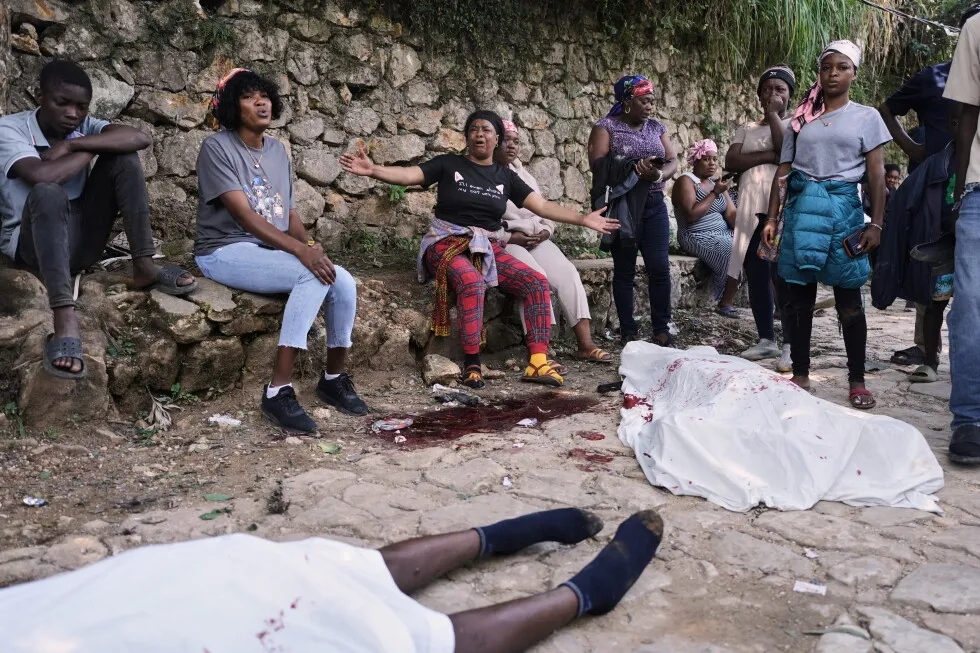
Associated Press (AP)FIG 01
Reading time
4min
Word count
850words
Sources cited
3cited
Entities identified
12entities
Quality score
100%
§ 01
Briefing Summary
AI-generatedNEWSAR · AI
A violent gang attack in Kenscoff, near Port-au-Prince, Haiti, resulted in the deaths of at least 47 people and the kidnapping of over 50 individuals. Following the attack, which occurred nearly a week prior, a gang released thirteen hostages: six children and seven women. UNICEF, working with community leaders, facilitated this release, which included very young children. The gang leader known as Izo 2 had threatened to execute all hostages if police intervened. This mass abduction, while unusual, highlights the ongoing violence and scale of attacks on children in Haiti. The incident has prompted calls for the swift deployment of a U.N.-backed gang-fighting force and increased international security support.
Confidence 0.90Sources 3Claims 5Entities 12
§ 02
Article analysis
Model · rule-basedFraming
Human Rights
Conflict
Tone
Mixed Tone
AI-assessed
CalmNeutralAlarmist
Factuality
0.80 / 1.00
Factual
LowHigh
Sources cited
3
Well sourced
FewMany
§ 03
Key claims
5 extracted01
The recent attack sparked an outcry at an emergency meeting of the U.N. Security Council for swift deployment of the new U.N.-backed gang-fighting force.
factualAP News
Confidence
1.00
02
The Kenscoff abduction was not an isolated incident but another stark reminder of the scale and frequency of attacks on children across the country.
quoteYannig Dussart, UNICEF’s deputy representative in Haiti
Confidence
1.00
03
Gangs killed at least 47 people during the attack on Kenscoff, a community near Port-au-Prince.
factualAP News
Confidence
1.00
04
A gang released six children and seven women who were among more than 50 people kidnapped after a deadly attack in Haiti.
factualUNICEF
Confidence
1.00
05
A gang leader known as Izo 2 had threatened to execute all the hostages if police killed any gang members.
factualAP News
Confidence
0.90
§ 04
Full report
4 min read · 850 words§ 05
Entities
12 identifiedKey playerOppositionContextPositiveNeutralNegative
People6
Organizations2
§ 06
Keywords & salience
10 termskidnapping
1.00
haiti
1.00
gang violence
1.00
port-au-prince
0.80
unicef
0.70
mass abduction
0.70
deadly attack
0.60
children
0.60
u.n. security council
0.50
ransom
0.40
§ 07
Topic connections
Interactive graph No topic relationship data available yet. This graph will appear once topic relationships have been computed.