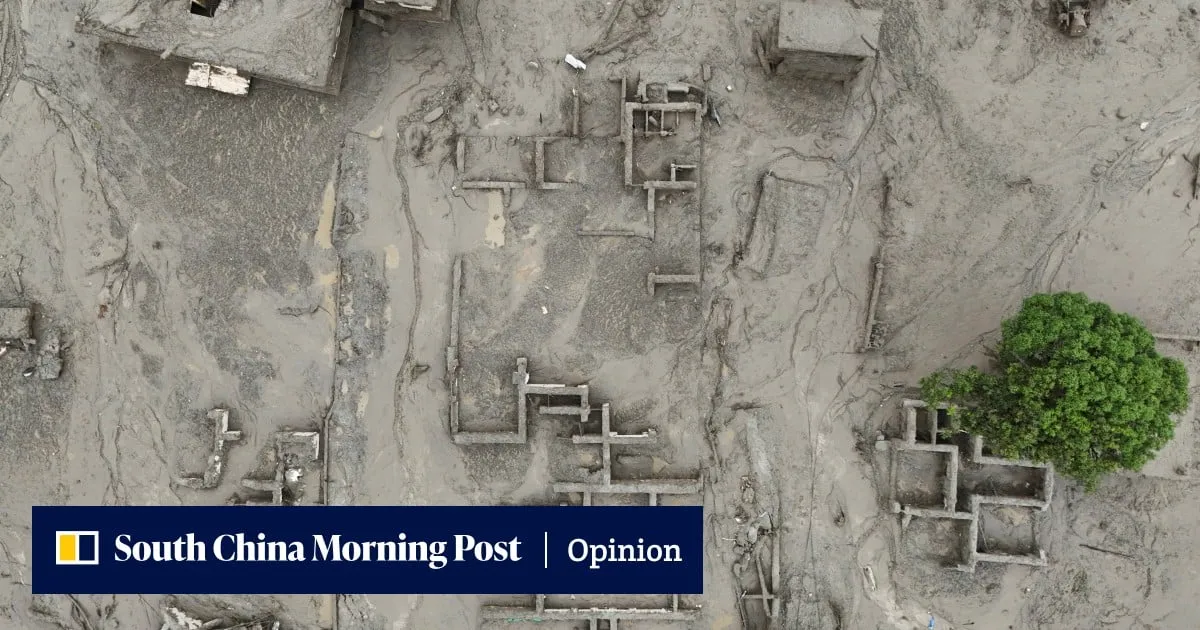
As the waters of the Bhotekoshi and Trishuli rivers recede, leaving behind mud, debris and damaged infrastructure, a familiar pattern is visible in Nepal. When disaster strikes, the country’s usual political divisions, cronyism and institutional mistrust give way, for a while, to real unity.Across party lines, political leaders worked around the clock alongside security forces. Digital channels opened for the disaster-relief-fund" class="entity-link entity-organization" data-entity-id="196500" data-entity-type="organization">Prime Minister’s disaster Relief Fund, a “one-door policy” was enforced to prevent duplication of relief efforts and telecoms operators made calls and internet free across affected areas. Diaspora communities and local volunteers stepped up alongside the state.But a familiar governance pattern is at risk of taking hold again: treating this disaster as an unpredictable, unpreventable act of nature.
SRCSouth China Morning Post
LANGEN
LEANCenter-Right
WORDS118
ENT8
SUN · 2026-08-30 · 08:30 GMTBRIEF NSR-2026-0830-107342
NSR-2026-0830-107342Analysis·EN·Political Strategy
Behind the Nepal-China border floods lie bad politics
Flooding from the Bhotekoshi and Trishuli rivers in Nepal has caused significant damage, leaving behind mud, debris, and destroyed infrastructure. In response to the disaster, Nepal's political leaders, security forces, diaspora communities, and local volunteers have united in relief efforts.
Narayan AdhikariSouth China Morning PostFiled 2026-08-30 · 08:30 GMTLean · Center-RightRead · 1 min
South China Morning PostFIG 01
Reading time
1min
Word count
118words
Sources cited
0cited
Entities identified
8entities
Quality score
100%
§ 01
Briefing Summary
AI-generatedNEWSAR · AI
Flooding from the Bhotekoshi and Trishuli rivers in Nepal has caused significant damage, leaving behind mud, debris, and destroyed infrastructure. In response to the disaster, Nepal's political leaders, security forces, diaspora communities, and local volunteers have united in relief efforts. This unity has manifested in round-the-clock work by political figures, the establishment of digital channels for the Prime Minister’s Disaster Relief Fund, a "one-door policy" to streamline aid, and free communication services in affected areas. However, there is a concern that the disaster may be framed as an unpredictable natural event, potentially obscuring underlying governance issues.
Confidence 0.85Claims 5Entities 8
§ 02
Article analysis
Model · rule-basedFraming
Political Strategy
Environmental
Tone
Measured
AI-assessed
CalmNeutralAlarmist
Factuality
0.40 / 1.00
Mixed
LowHigh
Sources cited
0
No named sources
FewMany
§ 03
Key claims
5 extracted01
Telecoms operators provided free calls and internet in affected areas.
factual
Confidence
0.90
02
Digital channels were opened for the Prime Minister’s Disaster Relief Fund.
factual
Confidence
0.90
03
Political leaders, security forces, and the public collaborated on disaster relief efforts.
factual
Confidence
0.80
04
There is a risk of treating the disaster as an unpredictable, unpreventable act of nature.
factual
Confidence
0.70
05
Nepal's political divisions, cronyism, and institutional mistrust often give way to unity during disasters.
factual
Confidence
0.70
§ 04
Full report
1 min read · 118 words§ 05
Entities
8 identifiedKey playerOppositionContextPositiveNeutralNegative
Locations4
§ 06
Keywords & salience
7 termsnepal-china border floods
1.00
political divisions
0.90
governance pattern
0.80
disaster relief
0.70
institutional mistrust
0.60
cronyism
0.50
act of nature
0.40
§ 07
Topic connections
Interactive graph Network visualization showing 51 related topics
View Full Graph Person Organization Location Event|Click node to navigate|Edge numbers = shared articles