EXPLAINERAl Jazeera tracked the cost of common food items and compared them with pre-revolution prices in 2010.Published On 1 Sep 2026In Tunisia, the cost-of-living crisis has outlasted the government it once toppled.On December 17, 2010, street vendor Mohamed Bouazizi set himself on fire in Sidi Bouzid following years of police harassment, setting off protests driven by unemployment, corruption, rising living costs and police brutality.Recommended Stories list of 4 itemslist 1 of 48 migrants buried in Tunisia’s coastal town of Ben Guerdanelist 2 of 4At least 12 dead, 54 injured as wildfires ravage northeastern Algerialist 3 of 4Qatar pledges support for efforts to end Libya’s political divisionlist 4 of 4Tunisia swelters as power cuts disrupt water suppliesend of listThe movement, which became known as the Arab Spring, ultimately toppled longtime President Zine El Abidine Ben Ali and four other leaders around the Arab world.Nearly 16 years later, however, Tunisians are still facing a cost-of-living crisis that some say is worse than ever.To show how much everyday prices have changed, Al Jazeera tracked the cost of common food items and compared them with their 2010 prices.Dinar has lost half its value against the dollarIn December 2010, one United States dollar bought 1.47 Tunisian dinars. Today it buys 2.93, meaning each dinar is only worth half (49 percent) the dollar value it was worth 15 years ago.Tunisia buys much of its food abroad and pays for it in dollars and euros. A weaker dinar means each of those purchases costs more, and shoppers see it at the till.The cost of daily essentialsPrices at the supermarket tell the story.In 2010, eight Tunisian dinars bought 4kg (8.8lb) of tomatoes, half a kg (1.1lb) of chicken and a litre (34oz) of cooking oil. Today the same eight dinars buys less than half of that. The price of tomatoes has risen 113 percent; chicken, 118 percent; and cooking oil, 129 percent.Prices of vegetables have climbed higher still. Carrots now cost 428 percent more (that is more than five times) than they did in 2010, potatoes 268 percent. Beef, already the most expensive item on the list, has risen 290 percent (nearly four times) to 52.5 dinars a kg – or about $18.Rice, still tightly price-controlled, is the outlier at 10 percent higher.Abdessattar*, 55, from El Jem, says that with the exception of subsidised goods, the increases are hard to miss. “You feel that 20, 30 or 40 dinars don’t buy much any more,” he tells Al Jazeera. Butter, cheese, cleaning products and school snacks have all risen in price since last year.The graphic below sets average 2010 prices from the Tunisian monthly statistics bulletin against those recorded this week.Tunisia has subsidised basic food items since 1970, when it established the General Compensation Fund (Caisse Generale de Compensation). The state holds prices for certain staples below market rate and pays producers and importers the difference.Items have been removed from the list over the decades, however. In late 2022, the government agreed to gradually phase out universal food subsidies in favour of targeted cash transfers to secure an IMF loan, but President Kais Saied halted the implementation of these terms in 2023.The result is a two-tier basket: Subsidised goods have kept their fixed prices, while unsubsidised food prices have surged.‘The results were really, really disappointing’Hamed el-Matri is an engineer and political activist who now lives in Qatar. He was in Tunisia during the 2010 uprising and says he was on its front lines.El-Matri recalls how the uprising was driven by socioeconomic demands, including jobs, freedom and dignity.“The expectations at the time were very high. But, when I see the situation today, or even across the last 15 years, the results were really, really disappointing,” he tells Al Jazeera.El-Matri says the 15 years cannot be treated as one period. He describes 2011 to 2021 as “a stumbling democratic transition” and what followed as “a kind of populist totalitarian rule, with a very aggressive rhetoric but quite unclear policy”.El-Matri says that over the past five years, economic systems in Tunisia have more than weakened, if not collapsed. He explains that investment has almost stopped, and the economy is not far from stagnation.‘Public transport is no longer reliable’Yassine*, 44, a father in Tunis, says preparing his children for the new school year has become a source of anxiety. Subsidised notebooks and other cheap school supplies have disappeared from shops, he says, and families are buying second-hand books and materials from one another instead.Transport is another worry. “Public transport is no longer reliable, so we’re forced to use private transport. It has become a major worry for every Tunisian,” he says.He points to cooking oil, which once cost one dinar per litre but is now sold only in a version costing five dinars a litre.The strain shows at every occasion. During the recent Eid holidays, Yassine says, most people he knew could not celebrate properly, and many bought second-hand clothes.Hanen*, 45, a factory worker in Tunis, told Al Jazeera that prices have risen so fast that “people can no longer meet basic needs”. Red meat, which once sold for 20 dinars per kg, now costs 60 or more, she says, and the price of medicine climbs daily. Staples including canned tomatoes, sugar and cooking oil have all gone up sharply, along with fruit and vegetables. “The price hikes are extreme. It’s abnormal,” she says.*Some names have been changed for anonymity.
SRCAl Jazeera
LANGEN
LEANCenter
WORDS897
ENT12
TUE · 2026-09-01 · 06:34 GMTBRIEF NSR-2026-0901-107966
NSR-2026-0901-107966Analysis·EN·Economic Impact
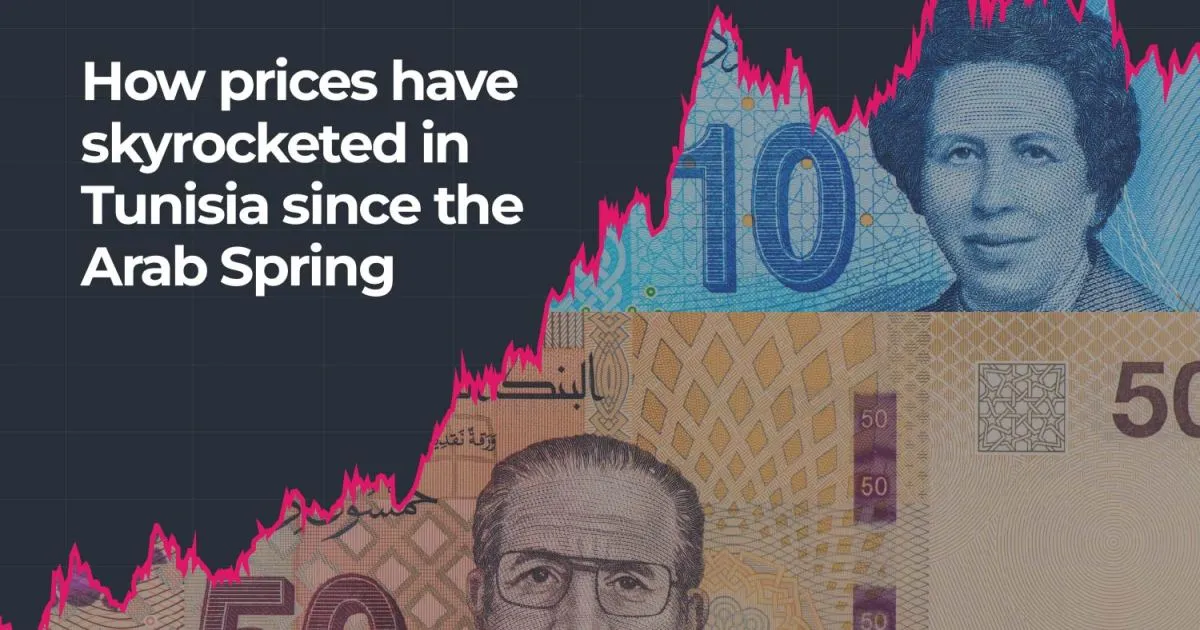
How prices in Tunisia have skyrocketed since the Arab Spring
Since the 2010 Arab Spring protests, Tunisia has experienced a significant increase in the cost of living, with prices for common food items skyrocketing. Al Jazeera tracked these price changes, comparing them to 2010 figures.
Alia ChughtaiAl JazeeraFiled 2026-09-01 · 06:34 GMTLean · CenterRead · 4 min
Al JazeeraFIG 01
Reading time
4min
Word count
897words
Sources cited
1cited
Entities identified
12entities
Quality score
100%
§ 01
Briefing Summary
AI-generatedNEWSAR · AI
Since the 2010 Arab Spring protests, Tunisia has experienced a significant increase in the cost of living, with prices for common food items skyrocketing. Al Jazeera tracked these price changes, comparing them to 2010 figures. The Tunisian dinar has lost half its value against the US dollar, making imported goods more expensive. For example, the cost of tomatoes has risen 113 percent, chicken 118 percent, and cooking oil 129 percent. While basic food items were historically subsidized, the government's agreement to phase out universal subsidies in favor of targeted cash transfers, though implementation was halted, has led to a two-tier market. Unsubsidized goods have seen substantial price hikes, impacting daily life and causing anxiety for families, particularly regarding essentials like food and transportation.
Confidence 0.90Sources 1Claims 5Entities 12
§ 02
Article analysis
Model · rule-basedFraming
Economic Impact
Human Interest
Tone
Measured
AI-assessed
CalmNeutralAlarmist
Factuality
0.80 / 1.00
Factual
LowHigh
Sources cited
1
Limited
FewMany
§ 03
Key claims
5 extracted01
Carrots now cost 428 percent more in Tunisia than they did in 2010.
statistic
Confidence
1.00
02
The price of cooking oil in Tunisia has risen 129 percent since 2010.
statistic
Confidence
1.00
03
The price of chicken in Tunisia has risen 118 percent since 2010.
statistic
Confidence
1.00
04
The price of tomatoes in Tunisia has risen 113 percent since 2010.
statistic
Confidence
1.00
05
The Tunisian dinar has lost half its value against the US dollar since December 2010.
statistic
Confidence
1.00
§ 04
Full report
4 min read · 897 words§ 05
Entities
12 identifiedKey playerOppositionContextPositiveNeutralNegative
Organizations1
Locations5
§ 06
Keywords & salience
10 termscost of living crisis
1.00
tunisia
1.00
arab spring
0.90
price increases
0.90
tunisian dinar
0.80
food prices
0.80
economic impact
0.70
inflation
0.60
currency devaluation
0.60
mohamed bouazizi
0.40
§ 07
Topic connections
Interactive graph Network visualization showing 51 related topics
View Full Graph Person Organization Location Event|Click node to navigate|Edge numbers = shared articles