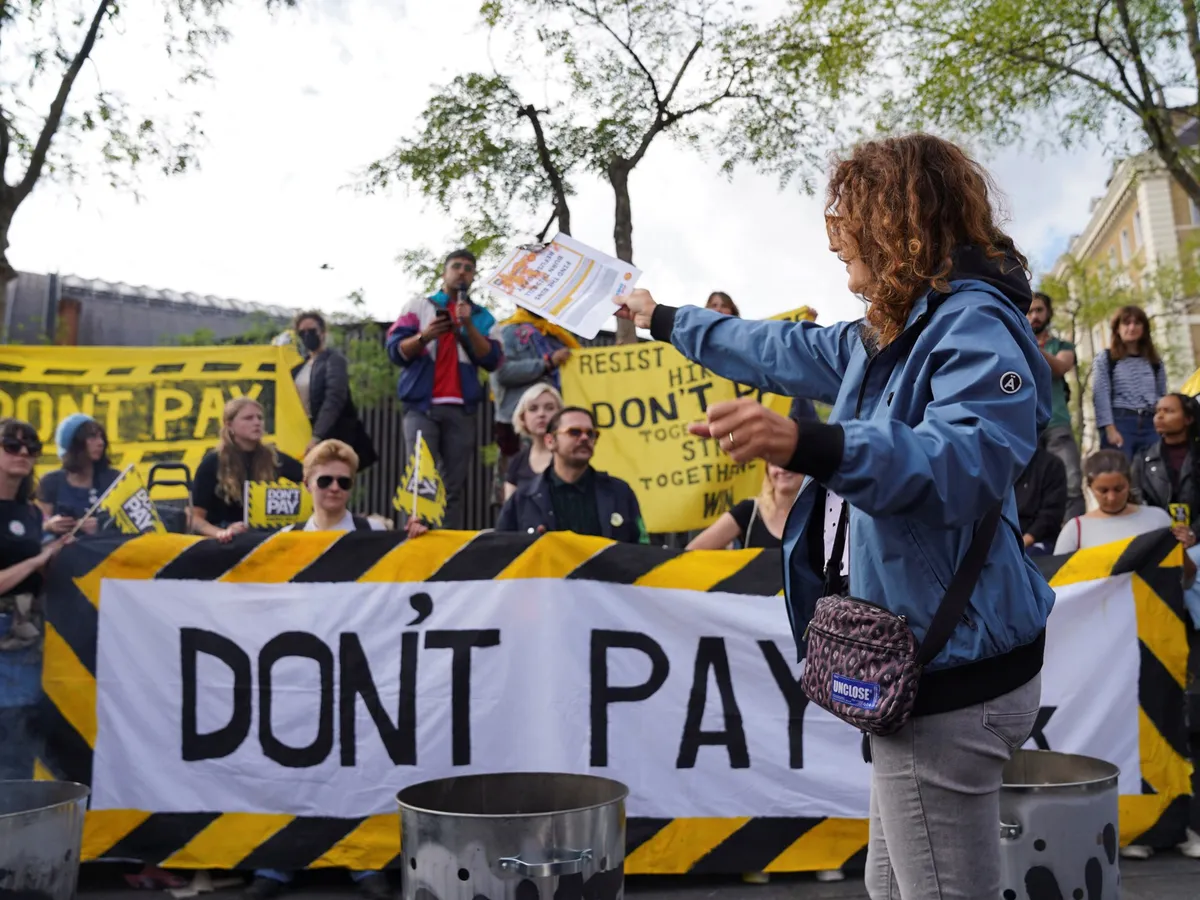
A price cap increase is on the way, the latest blow to people already struggling with rising costs.An activist burns a bill in protest against the rising cost of living, at Kings Cross, London, October 2022 [Maja Smiejkowska/Reuters]Published On 1 Sep 2026London, United Kingdom – Andrew, a 70-year-old retiree from the eastern English city of Norwich, had enrolled months ago in a fixed-rate energy plan for 18 months, learning from earlier price shocks caused by wars.“I guess I saw this coming,” he told Al Jazeera.Recommended Stories list of 4 itemslist 1 of 4How has life changed for Iranians six months into the war?list 2 of 4Who are the economic winners and losers of the US-Israel war on Iran?list 3 of 4Petrol prices strain US households as oil giants Chevron, Exxon profits soarlist 4 of 4Inside the UK’s ‘stressful’ cost of living crisis Burnham hopes to tackleend of listDays ago, Ofgem, the energy regulator for England, Scotland and Wales, announced a 4 percent increase of the energy price cap from October 1, 2026, a result of the sharp rise in wholesale gas prices due to the Israel-war-on-Iran" class="entity-link entity-event" data-entity-id="44694" data-entity-type="event">United States-Israel war on Iran.“The situation doesn’t look any clearer … the fog of war is still there, and who knows when it will blow away,” said Andrew, who requested that his surname be withheld for privacy.The end of his fixed-rate plan is not something he likes to think about.Andrew, 70, is among the third of Britons locked into a deal whereby his bills will not rise for some time [Courtesy of the family]“I don’t think there’s going to be clarity,” he said. “I can’t see that the current state of geopolitics will allow for any resolution. I’m starting to think, if it’s not one conflict zone, it will be another.”According to Ofgem, 35 percent of households in England, Scotland and Wales are on similar, fixed-rate energy plans, and will not be immediately affected by the Ofgem price cap increase.Most, however, will face higher bills in the winter, an added blow to a nation already struggling amid a continued cost-of-living crisis.A household using a regular level of energy will pay about 60 pounds ($80) a year more.The UK government, alongside the increase, announced a tax cut on monthly electricity bills as part of a wider effort to shield people from the increasingly stark economic impacts of the Iran war as winter approaches. The tax cut is noted to last until the end of the 2027 financial year, but both experts and everyday people are not so sure that costs will be under control by then.While the move on tax gives people “room to breathe, it doesn’t fix the fundamentals”, Ahmed Tabaqchali, a non-resident senior fellow at the Atlantic Council, told Al Jazeera.“We are not going to see a return to normality as far as the Strait of Hormuz is concerned. One way or the other, whatever end-game with the US and Iran, there is now a change to the status quo,” said Tabaqchali, who has worked in capital markets for more than 25 years.Volatility is not a temporary concern, he said.“As long as the United Kingdom relies on energy imports, we are going to be impacted by geopolitics,” said Jack Burt, a PhD candidate at the University of Cambridge, researching novel forms of energy storage.Before the Iran war, roughly one-fifth of the world’s oil and liquefied natural gas (LNG) passed through the Strait of Hormuz, the only route connecting the Gulf to the ocean. Iran shut the strategic waterway not long after the initial US-Israeli strikes on Tehran in late February, triggering a global energy crisis.Shortly after those initial strikes, the UK House of Commons Library released a briefing noting that the Bank of England would likely scrap plans to lower interest rates, while predicting that household gas bills would increase.“Higher energy costs are likely to result in the UK economic activity weakening,” the report said.(Al Jazeera)Ofgem’s move is the latest development in the ongoing energy crisis stemming from the war.Wholesale prices have risen by 11 percent over the past three months, noted Ofgem, with Neil Kenward, the body’s director general for markets, underlining that “high international gas prices are continuing to drive energy costs in the UK”.The price cap applies to gas and electricity, while the tax cut applies to electricity bills, meaning households that do not use gas will fare better than those that do.A ‘risk premium’ for energy supplyWhile diplomatic efforts in the Gulf region have focused on keeping the Strait of Hormuz open, US attacks on Iran over the weekend – the first in a month – threaten continued destabilisation.“The consumer is going to be paying a ‘risk premium’ for energy supply,” noted Burt.Following the 2022 full-scale Russian invasion of Ukraine, when monthly energy bills hit all-time highs, the UK moved away from gas coming through Russian pipelines “and became much more reliant on other suppliers of liquid natural gas, mostly coming from the Middle East”, he said.Ozan, 20, a business owner in northeast London, said that “it’s getting more and more difficult to absorb the rises” for small business owners.“Ultimately, the customer is also suffering, leading to less disposable income, meaning less spending.”Last week, the Centre for Economics and Business Research forecast that by the end of 2027, the average UK household’s real spending power will be reduced by 2,400 pounds ($3,200), as the prices of everyday goods continue to increase.Ofgem’s price cap will be reviewed again in January, following a quarterly schedule. But experts are predicting a continued rise in prices, painting a bleak picture for the UK’s energy sector.
SRCAl Jazeera
LANGEN
LEANCenter
WORDS931
ENT12
TUE · 2026-09-01 · 08:14 GMTBRIEF NSR-2026-0901-108003
NSR-2026-0901-108003News Report·EN·Economic Impact
Britons face ‘risk premium’ for energy as US-Israel war on Iran intensifies
Britons are facing an increase in energy costs due to a 4 percent rise in the energy price cap announced by Ofgem, effective October 1, 2026. This increase is attributed to soaring wholesale gas prices caused by the US-Israel war on Iran and the subsequent closure of the Strait of Hormuz.
Laura O'ConnorAl JazeeraFiled 2026-09-01 · 08:14 GMTLean · CenterRead · 4 min
Al JazeeraFIG 01
Reading time
4min
Word count
931words
Sources cited
2cited
Entities identified
12entities
Quality score
100%
§ 01
Briefing Summary
AI-generatedNEWSAR · AI
Britons are facing an increase in energy costs due to a 4 percent rise in the energy price cap announced by Ofgem, effective October 1, 2026. This increase is attributed to soaring wholesale gas prices caused by the US-Israel war on Iran and the subsequent closure of the Strait of Hormuz. While 35 percent of households on fixed-rate plans are temporarily shielded, most will see an approximate £60 annual increase in energy bills. The UK government has implemented a tax cut on electricity bills until the end of the 2027 financial year to mitigate these impacts. Experts suggest this geopolitical instability has introduced a permanent "risk premium" for energy supply, impacting the UK's reliance on imports.
Confidence 0.90Sources 2Claims 5Entities 12
§ 02
Article analysis
Model · rule-basedFraming
Economic Impact
Conflict
Tone
Mixed Tone
AI-assessed
CalmNeutralAlarmist
Factuality
0.60 / 1.00
Mixed
LowHigh
Sources cited
2
Limited
FewMany
§ 03
Key claims
5 extracted01
The UK government announced a tax cut on monthly electricity bills until the end of the 2027 financial year.
factual
Confidence
0.90
02
Ofgem announced a 4 percent increase of the energy price cap from October 1, 2026, due to the US-Israel war on Iran.
factualOfgem
Confidence
0.90
03
There is now a permanent change to the status quo concerning the Strait of Hormuz.
quoteAhmed Tabaqchali
Confidence
0.80
04
A household using a regular level of energy will pay about 60 pounds ($80) a year more.
statistic
Confidence
0.80
05
The current state of geopolitics will not allow for any resolution to energy price volatility.
quoteAndrew
Confidence
0.70
§ 04
Full report
4 min read · 931 words§ 05
Entities
12 identifiedKey playerOppositionContextPositiveNeutralNegative
People1
Organizations2
Locations6
§ 06
Keywords & salience
8 termscost of living crisis
1.00
energy price cap
1.00
us-israel war on iran
0.90
wholesale gas prices
0.80
geopolitics
0.70
energy regulator
0.60
economic impacts
0.50
tax cut
0.40
§ 07
Topic connections
Interactive graph Network visualization showing 51 related topics
View Full Graph Person Organization Location Event|Click node to navigate|Edge numbers = shared articles