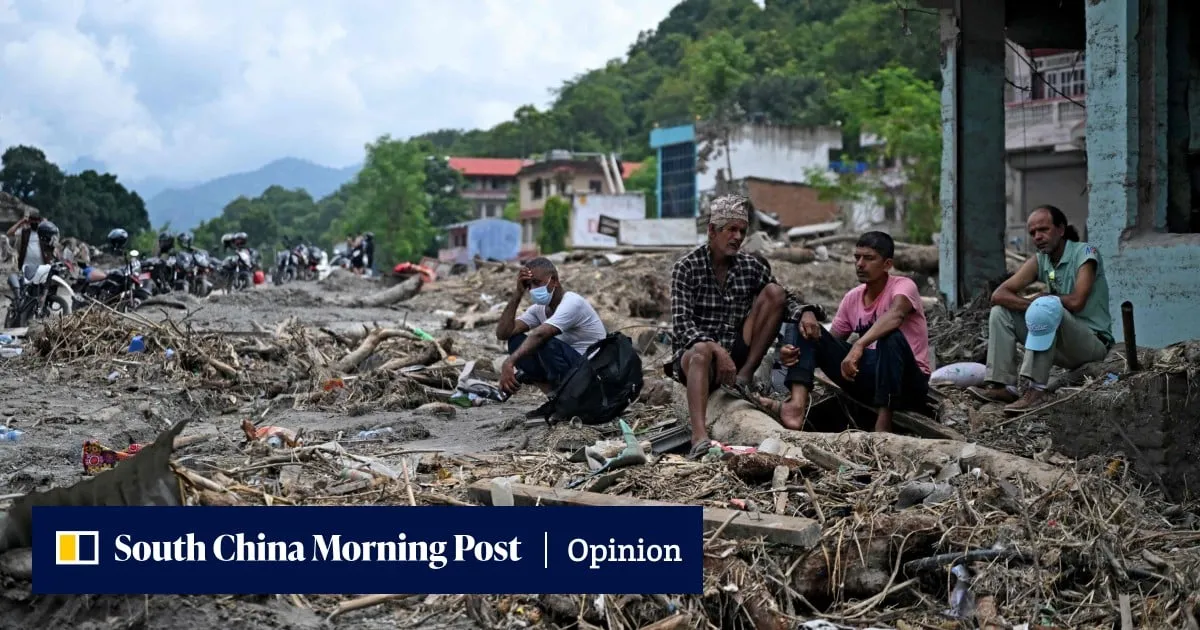
On August 26, a section of glacier collapsed at an altitude of more than 5,000 metres on the Nepalese side of the Himalayas. The falling ice and rock accelerated down a steep valley at about 50 metres per second, scouring debris and transforming into a high-speed Mudslide that slammed into Gyirong Port on the Chinese side just seven minutes later.The force of the flow largely buried and obliterated the border facilities. Hundreds of people, many of them travellers, remain missing on the Chinese side. Across the border in Nepal, entire villages were swept away, leaving hundreds dead and thousands unaccounted for.For decades, the defining image of Climate Vulnerability has been the low-lying island nation, where Rising Seas threaten to erase entire communities from the map. That threat is real, urgent and unfinished business. However, the catastrophic Mudslide that tore through the China-Nepal border forces us to look beyond the waterline and consider a more complex, multidimensional map of Climate Risk.
SRCSouth China Morning Post
LANGEN
LEANCenter-Right
WORDS160
ENT10
TUE · 2026-09-01 · 21:30 GMTBRIEF NSR-2026-0901-108245
NSR-2026-0901-108245Analysis·EN·Environmental
Nepal-China floods highlight a growing front of the climate change crisis
On August 26, a glacier collapse in the Nepalese Himalayas triggered a massive mudslide that traveled over 5,000 meters down a valley. Within seven minutes, the high-speed flow reached Gyirong Port on the Chinese side, burying border facilities and leaving hundreds of travelers missing.
Zhengxu WangSouth China Morning PostFiled 2026-09-01 · 21:30 GMTLean · Center-RightRead · 1 min
South China Morning PostFIG 01
Reading time
1min
Word count
160words
Sources cited
0cited
Entities identified
10entities
Quality score
100%
§ 01
Briefing Summary
AI-generatedNEWSAR · AI
On August 26, a glacier collapse in the Nepalese Himalayas triggered a massive mudslide that traveled over 5,000 meters down a valley. Within seven minutes, the high-speed flow reached Gyirong Port on the Chinese side, burying border facilities and leaving hundreds of travelers missing. In Nepal, entire villages were destroyed, resulting in hundreds of deaths and thousands unaccounted for. This event highlights a growing climate change crisis beyond rising sea levels, impacting mountainous regions and their populations.
Confidence 0.90Claims 4Entities 10
§ 02
Article analysis
Model · rule-basedFraming
Environmental
Human Interest
Tone
Mixed Tone
AI-assessed
CalmNeutralAlarmist
Factuality
0.70 / 1.00
Factual
LowHigh
Sources cited
0
No named sources
FewMany
§ 03
Key claims
4 extracted01
A glacier collapse in the Himalayas caused a mudslide that hit Gyirong Port on the China-Nepal border.
factual
Confidence
1.00
02
The event highlights a growing front of the climate change crisis beyond low-lying island nations.
factual
Confidence
0.90
03
Hundreds died and thousands are unaccounted for in Nepal due to villages being swept away.
factual
Confidence
0.90
04
Hundreds of people remain missing on the Chinese side after the mudslide.
factual
Confidence
0.90
§ 04
Full report
1 min read · 160 words§ 05
Entities
10 identifiedKey playerOppositionContextPositiveNeutralNegative
Locations4
§ 06
Keywords & salience
9 termsclimate change crisis
1.00
high-speed mudslide
0.90
glacier collapse
0.90
nepal-china border
0.80
climate risk
0.70
climate vulnerability
0.70
himalayas
0.60
rising seas
0.50
border facilities
0.40
§ 07
Topic connections
Interactive graph Network visualization showing 51 related topics
View Full Graph Person Organization Location Event|Click node to navigate|Edge numbers = shared articles