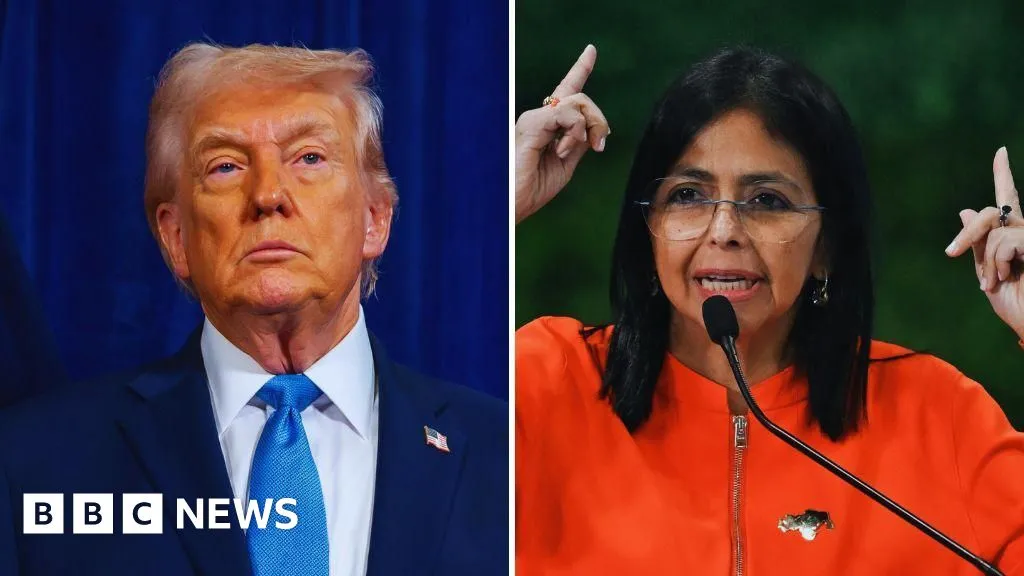
"You chose to use the power of the United States not to liberate Venezuelans, but to ally yourself with our oppressors," said Venezuelan economist, Ricardo Hausmann, on social media, directing his comments at the US Secretary of State Marco Rubio."You opted to push through an asset seizure, an unconstitutional agreement with an illegitimate and oppressive government, instead of using the leadership of the United States to first restore constitutional order and democracy," he said.The lack of an imminent election in Venezuela – or, indeed, any clear plan towards one – strikes many opponents as a betrayal.There is betrayal felt at the other end of the ideological spectrum, too. Although the governing socialist party, PSUV, has backed Rodríguez over the US deal, many Venezuelan socialists see it as capitulation.After almost three decades opposing Washington's influence in the region, they feel she has gifted the country's most valuable asset to the old enemy.The deal "hands over [the oil] and opens the doors to a new colonialism of the United States," said Rafael Ramírez, who served as the head of the state-run energy firm, PDVSA, and as the oil minister under former President Hugo Chávez.In early 2008, Chávez presented his Sunday television programme, Aló Presidente, from former ExxonMobil oilfields in the Orinoco River Belt. Having expropriated some of the oil company's assets in the region, he was in a defiant mood.
SRCBBC News - World
LANGEN
LEANCenter
WORDS228
ENT12
TUE · 2026-09-01 · 21:27 GMTBRIEF NSR-2026-0901-108362
NSR-2026-0901-108362News Report·EN·Political Strategy
Remarkable US oil deal puzzles analysts - and angers many Venezuelans
A significant US oil deal involving 65 billion barrels of crude has drawn criticism from various Venezuelan factions. Venezuelan economist Ricardo Hausmann, addressing US Secretary of State Marco Rubio, stated the US chose to ally with Venezuela's "oppressors" rather than liberate Venezuelans, pushing through an agreement with an "illegitimate and oppressive government" instead of restoring democracy.
9 hours agoBBC News - WorldFiled 2026-09-01 · 21:27 GMTLean · CenterRead · 1 min
BBC News - WorldFIG 01
Reading time
1min
Word count
228words
Sources cited
2cited
Entities identified
12entities
Quality score
100%
§ 01
Briefing Summary
AI-generatedNEWSAR · AI
A significant US oil deal involving 65 billion barrels of crude has drawn criticism from various Venezuelan factions. Venezuelan economist Ricardo Hausmann, addressing US Secretary of State Marco Rubio, stated the US chose to ally with Venezuela's "oppressors" rather than liberate Venezuelans, pushing through an agreement with an "illegitimate and oppressive government" instead of restoring democracy. Opponents view the deal as a betrayal, particularly given the absence of an imminent election. Many Venezuelan socialists also see it as a capitulation, with former PDVSA head Rafael Ramírez describing it as opening the doors to a "new colonialism of the United States."
Confidence 0.90Sources 2Claims 4Entities 12
§ 02
Article analysis
Model · rule-basedFraming
Political Strategy
Diplomatic
Tone
Mixed Tone
AI-assessed
CalmNeutralAlarmist
Factuality
0.40 / 1.00
Mixed
LowHigh
Sources cited
2
Limited
FewMany
§ 03
Key claims
4 extracted01
The deal hands over Venezuelan oil and opens doors to a new US colonialism.
quoteRafael Ramírez
Confidence
1.00
02
The US deal is an unconstitutional agreement with an illegitimate and oppressive government.
quoteRicardo Hausmann
Confidence
1.00
03
US oil deal with Venezuela is seen by some as a betrayal of Venezuelan people and an alliance with oppressors.
quoteRicardo Hausmann
Confidence
1.00
04
Many Venezuelan socialists view the deal as a capitulation and a gift of the country's assets to the US.
factualArticle's interpretation of socialist sentiment
Confidence
0.80
§ 04
Full report
1 min read · 228 words§ 05
Entities
12 identifiedKey playerOppositionContextPositiveNeutralNegative
People5
§ 06
Keywords & salience
10 termsvenezuela
1.00
us oil deal
1.00
democracy
0.80
asset seizure
0.70
constitutional order
0.60
socialist party
0.50
oppressors
0.50
hugo chávez
0.40
pdvsa
0.40
colonialism
0.40
§ 07
Topic connections
Interactive graph Network visualization showing 51 related topics
View Full Graph Person Organization Location Event|Click node to navigate|Edge numbers = shared articles