Johan Forssell, the migration minister, said the European Commission was onboard with Sweden’s approach. Photograph: Joel Lindhe/ZUMA Press Wire/Shutterstock View image in fullscreen Johan Forssell, the migration minister, said the European Commission was onboard with Sweden’s approach. Photograph: Joel Lindhe/ZUMA Press Wire/Shutterstock Swedish minister defends strict post-Brexit removals of Britons Minister says Sweden has ‘fulfilled its commitments’ amid criticism of ‘unjust’ decisions such as case of Joyce Thomas The Swedish government has doubled down on its position on removing and deporting British citizens on the grounds they were late to apply for permission to stay after Brexit. The migration minister, Johan Forssell, issued a robust defence of the Swedish migration agency’s implementation of the Brexit withdrawal agreement on Wednesday in response to a question from an MP about the case of Joyce Thomas, a 78-year-old British widow who has been ordered to leave the country after 21 years. Forssell said the European Commission, which is legally mandated to ensure EU member states implement the withdrawal agreement correctly, was onboard with Sweden’s approach. “The migration board has followed up on the application of the withdrawal agreement and the assessment is that Sweden has fulfilled its commitments. This assessment is shared by the commission,” he said. There has been growing controversy over removal orders issued to British citizens who did not know that Sweden was one of 13 countries in the EU that required formal applications to stay in the country post-Brexit. In another case, a 34-year-old British man, John Sellers, has been deported despite having lived in Sweden since he was 10. Thomas’s local MP, Häkan Svenneling, of the Left party, told the Guardian: “It seems to me that the Swedish government thinks everything is fine even though British citizens are being deported from Sweden right now. Not acting is also an action in this situation. What Sweden needs is a new government and a new migration minister who stops deporting people with strong connections to Sweden.” In his written answer to Svenneling, Forssell offered British citizens facing deportation a sliver of hope. He said: “The relationship with the UK is very important to Sweden and the government will continue to safeguard the correct implementation of the withdrawal agreement. As part of this, the government is investigating whether further measures can be taken to facilitate the process in the future.” View image in fullscreen Joyce Thomas, 78, has been ordered to leave Sweden after living there for 21 years. Photograph: Felix Andler Thomas has been told she must remove herself from Sweden by Tuesday 8 September or face deportation and a potential ban from the Schengen area. She is one of several British citizens who have been faced with removal orders after the migration agency rejected their late applications to stay. The UK Foreign Office has raised Sweden’s approach to late applications for post-Brexit residency a number of times in the specialised committee on citizens’ rights, a structure set up to ensure the withdrawal agreement is implemented properly. David Milstead, who runs the grassroots organisation Brits in Sweden, said the Swedish response was not a surprise. “The government was hardly going to disown the decisions of [the migration agency] or the Swedish courts. The real question is whether Sweden’s approach is consistent with EU law and the [withdrawal agreement],” he said. He pointed out that under the agreement, the UK was obliged to set up a statutory body, the Independent Monitoring Authority (IMA), to independently ensure the Home Office implemented the Brexit deal correctly, while the European Commission performed the correspondent role for EU member states. “The IMA has taken a much more robust approach. It is hard to imagine it not challenging the UK had it operated a policy like Sweden’s, which would have put the rights of around a quarter of a million successful late applicants [in the UK] at risk,” Milstead said. “Sweden’s approach now needs either to be tested before the European court of justice or addressed through measures that remedy the problem. The government’s response leaves open the possibility of change, and that must include fixing unjust deportation decisions.” The European Commission has been approached for comment. According to Eurostat data, between 2021 and 2025 a total of 2,490 UK nationals were ordered to leave Sweden. Analysis by the Foreign Office found this was 32.9% of the 7,565 UK nationals ordered to leave the 27 EU member states over this period. Although it is not possible to determine exactly how many were in Sweden prior to the end of the UK-EU transition period, it is likely that the majority will have been. Thomas has been in Sweden for 21 years and says her late husband inquired about the impact of Brexit and was told by the authorities there was nothing they needed to do to remain in the country legally. The couple moved to the country to be close to their son and grandchildren, and Thomas said she had been left feeling sick with worry after receiving the removal order. Explore more on these topics Sweden Brexit European Commission European Union Europe news Share Reuse this content
SRCThe Guardian - World News
LANGEN
LEANCenter-Left
WORDS851
ENT10
WED · 2026-09-02 · 12:59 GMTBRIEF NSR-2026-0902-108497
NSR-2026-0902-108497News Report·EN·Human Interest
Swedish minister defends strict post-Brexit removals of Britons
Sweden's Migration Minister, Johan Forssell, defended the country's strict post-Brexit removal of British citizens who applied late for residency permits. This defense comes amid criticism over decisions like that of Joyce Thomas, a 78-year-old widow facing deportation after 21 years in Sweden.
Lisa O’Carroll Senior correspondentThe Guardian - World NewsFiled 2026-09-02 · 12:59 GMTLean · Center-LeftRead · 4 min
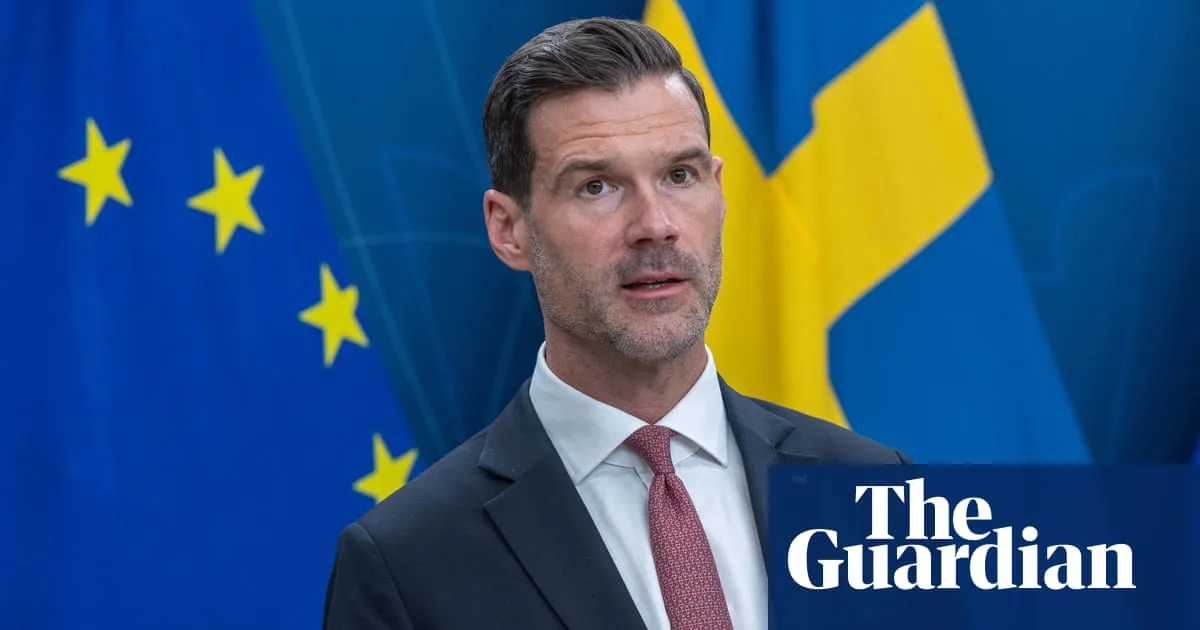
The Guardian - World NewsFIG 01
Reading time
4min
Word count
851words
Sources cited
3cited
Entities identified
10entities
Quality score
100%
§ 01
Briefing Summary
AI-generatedNEWSAR · AI
Sweden's Migration Minister, Johan Forssell, defended the country's strict post-Brexit removal of British citizens who applied late for residency permits. This defense comes amid criticism over decisions like that of Joyce Thomas, a 78-year-old widow facing deportation after 21 years in Sweden. Forssell stated that Sweden has fulfilled its commitments under the Brexit withdrawal agreement, a position shared by the European Commission. The Swedish Migration Agency has rejected late applications, leading to deportations of British citizens who were unaware of the formal application requirement. While the government is investigating potential future measures to facilitate the process, some MPs argue for immediate action to stop deportations of individuals with strong ties to Sweden.
Confidence 0.90Sources 3Claims 5Entities 10
§ 02
Article analysis
Model · rule-basedFraming
Human Interest
Legal & Judicial
Tone
Mixed Tone
AI-assessed
CalmNeutralAlarmist
Factuality
0.70 / 1.00
Factual
LowHigh
Sources cited
3
Well sourced
FewMany
§ 03
Key claims
5 extracted01
British citizens are being deported from Sweden due to late applications for residency post-Brexit.
factual
Confidence
1.00
02
Swedish migration minister defends strict post-Brexit removals of Britons.
quoteJohan Forssell
Confidence
1.00
03
Sweden has fulfilled its commitments regarding the Brexit withdrawal agreement.
factualJohan Forssell
Confidence
0.90
04
The European Commission is onboard with Sweden’s approach to implementing the Brexit withdrawal agreement.
factualJohan Forssell
Confidence
0.90
05
The Swedish government is investigating further measures to facilitate the process for British citizens facing deportation.
factualJohan Forssell
Confidence
0.80
§ 04
Full report
4 min read · 851 words§ 05
Entities
10 identifiedKey playerOppositionContextPositiveNeutralNegative
People4
Events1
§ 06
Keywords & salience
9 termspost-brexit removals
1.00
brexit withdrawal agreement
0.90
swedish migration agency
0.80
deportation
0.80
migration minister
0.70
european commission
0.70
british citizens
0.60
sweden
0.50
joyce thomas
0.40
§ 07
Topic connections
Interactive graph Network visualization showing 8 related topics
View Full Graph Person Organization Location Event|Click node to navigate|Edge numbers = shared articles