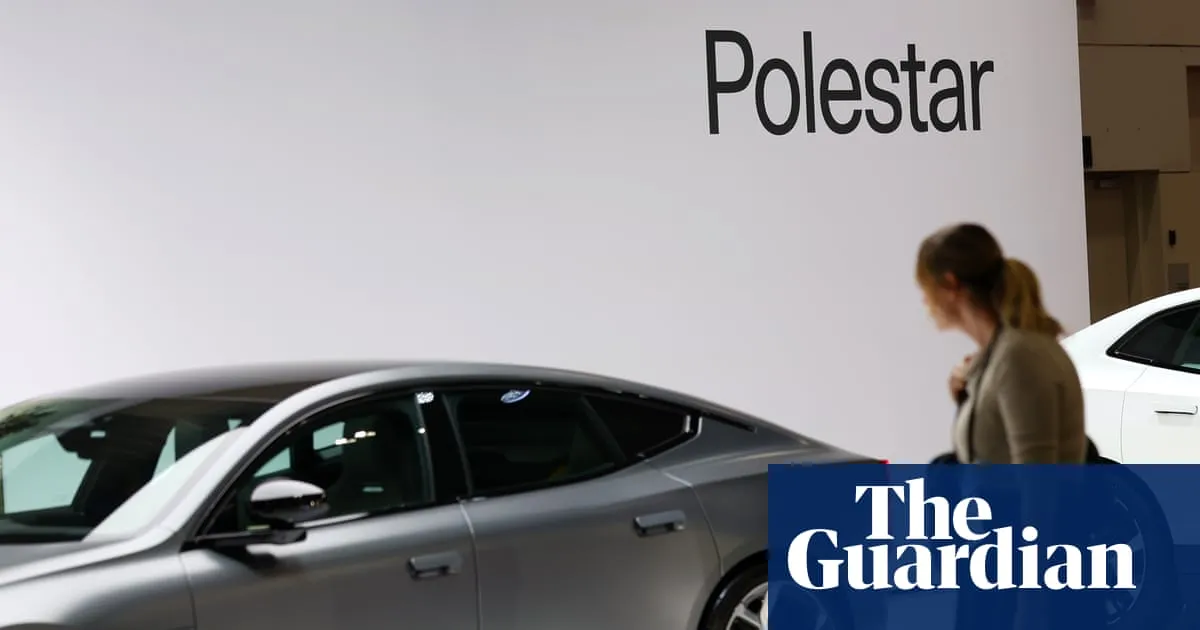
Record sales of EVs and hybrids bolstered spending in the quarter, the ABS said, accounting for three-quarters of the 0.4% quarterly growth in consumption. Photograph: Con Chronis/AAP View image in fullscreen Record sales of EVs and hybrids bolstered spending in the quarter, the ABS said, accounting for three-quarters of the 0.4% quarterly growth in consumption. Photograph: Con Chronis/AAP We’re purchasing EVs instead of holidaying in Europe – and what else we learned from Australia’s national accounts ABS’s snapshot of Australia’s accounts shows economic growth – albeit low – in the face ‘challenging international circumstances’ Get our breaking news email, free app or daily news podcast The Australian Bureau of Statistics released its latest set of national accounts, which give us a snapshot of how the economy is performing in the quarter, and what’s happening under the hood. Economic growth eased from 2.5% in the year to the March quarter, to 2.1% in the year to June, the Australian Bureau of Statistics figures showed, while real GDP in the three months to June expanded by 0.4%, a tick higher than in the previous quarter. Growth is softening, but is not disastrously slow, and there’s no sign of the collapse that many feared when the US and Israel began their attacks on Iran at the end of February, triggering a global oil shock. Jim Chalmers called it a “robust result in challenging international circumstances”. “The Australian economy has obvious strengths, but we can still see in these numbers our three primary challenges: inflation, productivity and global volatility, and we know that each of these puts pressure on people,” the treasurer told reporters. Economists predict the economy will continue to slow through 2026, moving towards 1.3-1.5% growth by the end of the year as the Reserve Bank’s interest rate hikes and the high cost of living drag on spending and activity. Stephen Smith, a partner at Deloitte Access Economics, said “today’s accounts show too little growth and too much inflation”. This winter we didn’t fly north, but we did splurge on EVs Just as the pandemic led to some big swings in behaviours and spending patterns, so has this year’s big shock – the Middle East conflict. The national accounts showed disposable household incomes, after inflation, lifted by a respectable 0.6% in the quarter. That slipped to just 0.3% after adjusting for population growth, but it was at least positive. Belinda Allen, CBA’s head of Australian economics, said this showed households were “largely insulated from the Middle East conflict over the quarter” and there was “only partial pass through of interest rate hikes to date”. What we didn’t do was fly north for the winter. War in the Middle East put the dampers on international travel, not least as high jet fuel costs pushed up the price of air fares. Grace Kim, ABS’s head of national accounts, said “the number of Australians travelling overseas for the northern hemisphere summer fell for the first time since the Covid-19 pandemic”. Instead of holidays under the northern sun, we splurged on fuel-efficient and electric vehicles. Record sales of EVs and hybrids bolstered spending in the quarter, the ABS said, accounting for three-quarters of the 0.4% quarterly growth in consumption. Vehicle purchases jumped by 10% in three months as we continued to shift away from gas guzzlers in an attempt to protect ourselves from pain at the pump, both today and in the future, and were helped along by government subsidies. Still, Smith said that absent the spending on fuel-efficient and electric cars, consumption was “far too weak to suggest households are shrugging off cost-of-living challenges”. That said, the household saving rate lifted from 6.4% to 6.5% – pretty much its 20-year average – suggesting households continue to add to their buffers. A bigger population is driving higher growth, not productivity While the economy is expanding, this is entirely due to a higher population – an unfortunate hallmark of Australia’s since the end of the pandemic. Growth in real GDP per person shrank by 0.1% in the three months to June (recalling overall total GDP expanded by 0.5%), and was zero in the previous quarter. Per capita GDP was up by only 0.7% over the year, still below its 2022 peak – and at this rate, won’t get there any time soon. It’s the broadest measure of living standards, and reflects the lived experience of many Australians labouring through a high-cost and low-growth economy. Jonathan Kearns, the chief economist at Challenger, said “growth in GDP per capita has clearly slowed compared with the pre-pandemic period”. Our lacklustre productivity performance explains stagnating living standards, and there was no joy in the national accounts by this measure. Real GDP per hour worked – the measure of labour productivity – was flat in the June quarter and 0.2% lower through the year. Kearns pointed out that it’s difficult to raise living standards when productivity growth has averaged just 0.1% since 2018. “Perhaps AI will eventually boost productivity growth and improve the trend in GDP per capita and living standards,” he said. “But that will take time and does not lessen the need for productivity-enhancing reforms and winding back red tape.” Explore more on these topics Australian economy Economics Australian politics Inflation Business (Australia news) news Share Reuse this content
SRCThe Guardian - World News
LANGEN
LEANCenter-Left
WORDS879
ENT12
WED · 2026-09-02 · 15:00 GMTBRIEF NSR-2026-0902-108537
NSR-2026-0902-108537Analysis·EN·Economic Impact
We’re purchasing EVs instead of holidaying in Europe – and what else we learned from Australia’s national accounts
Australia's economy grew by 0.4% in the June quarter, reaching 2.1% annual growth, according to the Australian Bureau of Statistics. This growth was primarily driven by record sales of electric and hybrid vehicles, which accounted for three-quarters of consumption growth, as Australians opted for these purchases over international travel due to factors like high airfares influenced by the Middle East conflict.
Patrick Commins Economics editorThe Guardian - World NewsFiled 2026-09-02 · 15:00 GMTLean · Center-LeftRead · 4 min
The Guardian - World NewsFIG 01
Reading time
4min
Word count
879words
Sources cited
3cited
Entities identified
12entities
Quality score
100%
§ 01
Briefing Summary
AI-generatedNEWSAR · AI
Australia's economy grew by 0.4% in the June quarter, reaching 2.1% annual growth, according to the Australian Bureau of Statistics. This growth was primarily driven by record sales of electric and hybrid vehicles, which accounted for three-quarters of consumption growth, as Australians opted for these purchases over international travel due to factors like high airfares influenced by the Middle East conflict. While household incomes saw a modest increase, overall economic expansion is largely attributed to population growth rather than productivity gains, with real GDP per person shrinking slightly. Economists predict continued slowing growth due to interest rate hikes and cost-of-living pressures, highlighting ongoing challenges of inflation and global volatility.
Confidence 0.90Sources 3Claims 5Entities 12
§ 02
Article analysis
Model · rule-basedFraming
Economic Impact
Technology
Tone
Measured
AI-assessed
CalmNeutralAlarmist
Factuality
0.70 / 1.00
Factual
LowHigh
Sources cited
3
Well sourced
FewMany
§ 03
Key claims
5 extracted01
War in the Middle East put the dampers on international travel, not least as high jet fuel costs pushed up the price of air fares.
quoteGrace Kim, ABS
Confidence
1.00
02
Disposable household incomes, after inflation, lifted by a respectable 0.6% in the quarter.
statisticABS
Confidence
1.00
03
Economic growth eased from 2.5% in the year to the March quarter, to 2.1% in the year to June.
statisticAustralian Bureau of Statistics
Confidence
1.00
04
Record sales of EVs and hybrids accounted for three-quarters of the 0.4% quarterly growth in consumption.
statisticABS
Confidence
1.00
05
Economists predict the economy will continue to slow through 2026, moving towards 1.3-1.5% growth by the end of the year.
predictionEconomists
Confidence
0.70
§ 04
Full report
4 min read · 879 words§ 05
Entities
12 identifiedKey playerOppositionContextPositiveNeutralNegative
Organizations3
§ 06
Keywords & salience
9 termsnational accounts
1.00
electric vehicles
1.00
economic growth
0.90
inflation
0.80
household spending
0.70
australian bureau of statistics
0.60
global volatility
0.50
interest rate hikes
0.40
cost of living
0.40
§ 07
Topic connections
Interactive graph Network visualization showing 51 related topics
View Full Graph Person Organization Location Event|Click node to navigate|Edge numbers = shared articles