Iran has continued to demonstrate an ability to target bases in the Gulf used by the US despite six months of war and a new sanctions regime described by the Trump administration as an “economic D-day”.As Iran’s military targeted US bases in the United Arab Emirates and Kuwait, despite threats of further strikes by the US president, Israel’s defence chief warned that economic pressures from the sanctions could lead Tehran to escalate to more “extreme measures”.“This morning, the army hit the satellite communication systems, equipment depots and fighter aircraft hangars of the terrorist US army at the Ahmad al-Jaber air base in Kuwait with missiles and drones,” the Iranian military said on Thursday in a statement carried by state television.The “location of forces and radar systems of the child-killing US army at the Al Minhad air base in the UAE were also attacked by missiles and drones of the army”, it added.In a post on X, Kuwait’s ministry of defence said its air defences had intercepted missile and drone attacks during a “blatant Iranian aggression”.The Kuwaiti statement came after the US allies Bahrain and Jordan said their air defence systems intercepted several Iranian air attacks on Wednesday.Fighting between the US and Iran has increased this week after the US hit Iranian rocket launchers on an island in the Strait of Hormuz on Sunday, claiming that Iran was planning to use them to shoot mines into the waterway.Damage to a residential building after an Iranian drone attack, according to Kuwaiti authorities, in Kuwait City on Thursday. Photograph: AFP/Getty ImagesThe latest flare-up in the conflict comes amid little evidence that the Trump administration is succeeding in advancing its nebulous war aims either on the battlefield or via mediation, despite the US president’s repeated claims to have opened the Strait of Hormuz to oil traffic.Instead, traffic through the key maritime passageway remains far below prewar levels, with oil prices remaining stubbornly elevated ahead of US midterm elections. Oil prices jumped again on Thursday after the Iranian strikes.Among the weapons Iran has used this week is its Kheibar Shekan medium-range ballistic missile system. The cheap and accurate missile can be launched within minutes and has become a staple of Iranian strikes.The rocket’s solid fuel motor means it does not require lengthy fuelling. It can be deployed very quickly to avoid detection and can be armed with a powered and steerable final stage to help beat anti-missile systems.Despite claims by the Trump administration that Tehran is running out of rockets, Iran continues to fire missiles that are considerably cheaper to produce than the US interceptors used to shoot them down.Iran has claimed as recently as the end of August that it maintained both missiles stockpiles and the ability to manufacture them.“Initially, some believed that Iran had only a limited number of missiles and that its stockpiles would eventually be depleted as the war continued,” the Islamic Revolutionary Guard Corps spokesperson Brig Gen Hossein Mohebbi said.“However, that assumption proved incorrect, as Iran’s missile capability has remained sustained and its missile production has continued.” Mohebbi’s characterisation of Iranian missile stockpiles could not be verified.The continued strikes came as Israel’s defence minister, Israel Katz, said that while the new US economic sanctions appeared to be effective, the increased pressure could lead Tehran into extreme measures.“We see signs indicating that the heavy economic pressure they are under, and the fear of an uprising and the collapse of the regime, may push them to desperate steps,” Katz said at a ceremony for defence ministry employees.The hawkish minister reiterated the threats against the Islamic Republic that he has made in recent months.“An Iranian attack on Israel will free Israel from any existing constraint,” he said. “We will strike all of Iran’s national military and civilian infrastructure – including energy infrastructure – and push Iran deep back into the stone age.”
SRCThe Guardian - World News
LANGEN
LEANCenter-Left
WORDS639
ENT12
THU · 2026-09-03 · 14:16 GMTBRIEF NSR-2026-0903-108889
NSR-2026-0903-108889News Report·EN·Conflict
Iran targets US bases as Israel warns sanctions could drive Tehran to ‘desperate steps’
Iran has targeted US air bases in the UAE and Kuwait with missiles and drones, according to Iranian state television. Kuwait's defense ministry confirmed intercepting Iranian attacks.
Peter Beaumont Senior international correspondentThe Guardian - World NewsFiled 2026-09-03 · 14:16 GMTLean · Center-LeftRead · 3 min
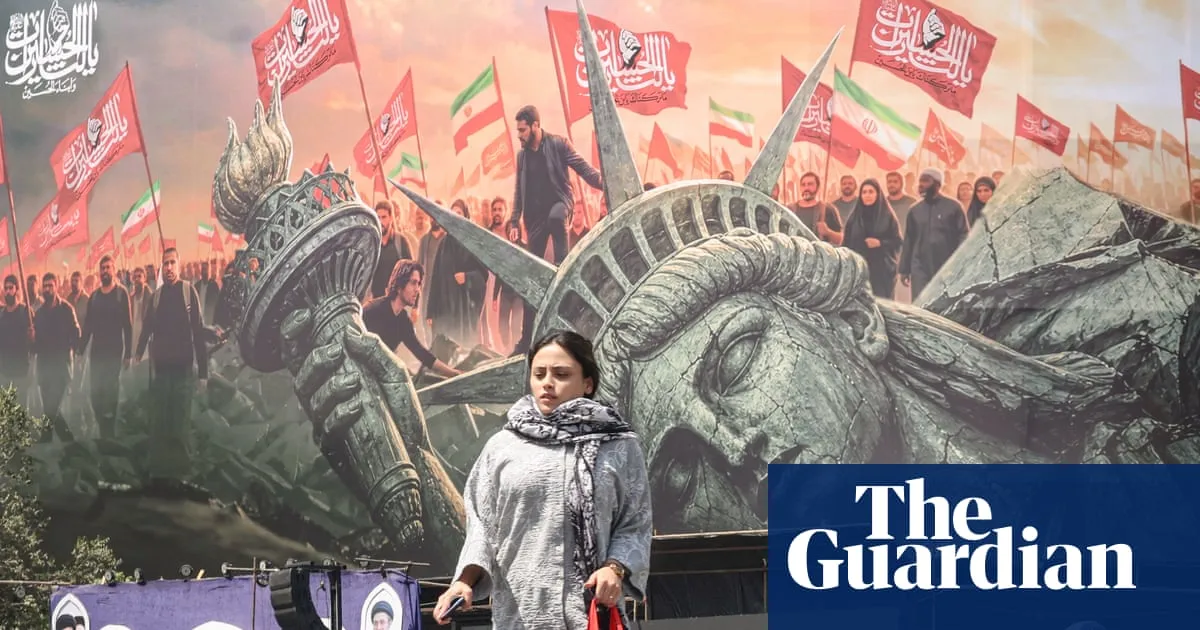
The Guardian - World NewsFIG 01
Reading time
3min
Word count
639words
Sources cited
4cited
Entities identified
12entities
Quality score
100%
§ 01
Briefing Summary
AI-generatedNEWSAR · AI
Iran has targeted US air bases in the UAE and Kuwait with missiles and drones, according to Iranian state television. Kuwait's defense ministry confirmed intercepting Iranian attacks. This escalation follows recent US strikes on Iranian rocket launchers. Israel's defense chief warned that economic pressures from US sanctions could drive Iran to take "extreme measures." Despite US claims of success with sanctions, oil traffic through the Strait of Hormuz remains below pre-war levels, and oil prices have risen. Iran asserts it maintains significant missile stockpiles and production capabilities.
Confidence 0.90Sources 4Claims 5Entities 12
§ 02
Article analysis
Model · rule-basedFraming
Conflict
National Security
Tone
Mixed Tone
AI-assessed
CalmNeutralAlarmist
Factuality
0.70 / 1.00
Factual
LowHigh
Sources cited
4
Well sourced
FewMany
§ 03
Key claims
5 extracted01
Iran's Kheibar Shekan missile is cheap, accurate, and can be launched within minutes.
factual
Confidence
0.90
02
Kuwait's air defenses intercepted missile and drone attacks described as 'blatant Iranian aggression'.
factualKuwait's ministry of defence
Confidence
0.90
03
Iran targeted US bases in the UAE and Kuwait with missiles and drones.
factualIranian military
Confidence
0.90
04
Economic pressures from sanctions could lead Tehran to escalate to more 'extreme measures'.
quoteIsrael's defence chief
Confidence
0.80
05
Traffic through the Strait of Hormuz remains far below pre-war levels.
factual
Confidence
0.80
§ 04
Full report
3 min read · 639 words§ 05
Entities
12 identifiedKey playerOppositionContextPositiveNeutralNegative
Locations10
§ 06
Keywords & salience
9 termsiran military strikes
1.00
us bases
0.90
sanctions regime
0.80
economic pressures
0.70
missiles and drones
0.70
escalation
0.60
oil prices
0.50
strait of hormuz
0.50
ballistic missile system
0.40
§ 07
Topic connections
Interactive graph Network visualization showing 51 related topics
View Full Graph Person Organization Location Event|Click node to navigate|Edge numbers = shared articles