Many Syrians feel liberated by the army pushing out the Kurdish-led SDF. But others fear government troops.Kurdish fighters with the Syrian Democratic Forces (SDF) prepare to head towards the front line before the end of a four-day truce with the Syrian government in Hasakah, northeastern Syria, Saturday, January 24, 2026 [Baderkhan Ahmad/AP]Published On 27 Jan 2026When the Kurdish-led Syrian Democratic Forces (SDF) announced they would withdraw from the northeastern Syrian cities of Raqqa and Deir Az Zor on January 18, images immediately began to spread of spontaneous celebrations from populations in the two Arab-majority cities.But the latest convulsion in Syria is a tale of two communities.Recommended Stories list of 3 itemslist 1 of 3Protests in Paris over death of migrant worker in police custodylist 2 of 3Israel’s genocide wiped out over 2,700 families in Gazalist 3 of 3ICC judges find former Philippine President Duterte fit to stand trialend of list“The reaction of the people of the region to the entry of the Syrian state and its control over the region is indescribable,” Adnan Khadeir, an Arab resident of Deir Az Zor, told Al Jazeera. “There was overwhelming joy at the liberation.”Khadeir said many people in the region feared the SDF’s repression.“I was unable to criticise the [SDF] and the biggest fear among the people of the region was forced conscription,” he said. “The situation is much better than before.”But in areas of the northeast with larger Kurdish populations, residents told Al Jazeera that fear over the government’s military incursions had gripped the local population.Though the area has also experienced many violent episodes during the last 15 years of war, particularly present in their minds was a repeat of sectarian killings similar to those that erupted along the Syrian coast involving Alawite in Latakia and Druze in Suwayda in the south in 2025.“Fear is widespread, and it is a real fear based on documented experiences,” Abbas Musa, the coordinator of the Missing Persons’ Families Platform in North and East Syria (MPFP-NES), told Al Jazeera from Qamishli, a Kurdish-majority city on the border with Turkiye.Damascus ‘has all the cards’After the fall of the Bashar al-Assad regime in December 2024, the SDF controlled most of the country’s resource-rich northeast, about a quarter of Syrian territory.Discussions ensued between the group and President Ahmed al-Sharaa’s government about how to bring the region under the control of the new authorities and how to integrate SDF fighters into the government’s forces.An agreement was signed on March 10 between the two sides, which promised the SDF’s integration into the new Syrian Armed Forces by the end of 2025. Still, disagreements remained over whether SDF fighters would integrate individually or retain their battalions. The SDF also wanted some form of autonomy or political decentralisation for the northeast.But clashes in Aleppo and a rapid government offensive pushed the SDF back. The offensive was bolstered by an alliance of sorts with tribes in Deir Az Zor and Raqqa, and support from the US, which signalled that its yearlong support for the SDF may be ending.“…the SDF as the primary anti-ISIS force on the ground has largely expired, as Damascus is now both willing and positioned to take over security responsibilities, including control of ISIS detention facilities and camps,” US Special Envoy Tom Barrack wrote on social media platform X.“It’s very much clear the US gave the green light for advances from the government in Deir Az Zor,” Thomas McGee, the Max Weber Fellow specialising on Syria at the European University Institute in Florence, told Al Jazeera.With this new reality on the ground, a new deal was agreed on January 18 that gave more favourable terms to Damascus.“The March agreement has been replaced by the January deal signed under military duress on Damascus’s terms,” Nanar Hawach, International Crisis Group (ICG)’s senior Syria analyst, told Al Jazeera. “Both parties have agreed to individual integration: SDF fighters join the Syrian army as individuals, not preserved units. This was Damascus’s core demand.”Mazloum Abdi (also known as Mazloum Kobani), the SDF commander, has also reportedly been offered positions as either deputy defence minister or governor of Hasakah.“It seems like the government has all the cards,” Alexander McKeever, author of the newsletter This Week in Northern Syria, told Al Jazeera from Damascus.Kurdish fearsAn extended 15-day ceasefire was agreed on Saturday, though analysts and observers said clashes were ongoing. They also said the ceasefire was likely brokered by the US to move ISIL (ISIS) fighters imprisoned in the area to Iraq, before the beginning of a more intense government offensive.Many residents of Deir Az Zor and Raqqa celebrated the Syrian government’s entering their areas. Videos spread on social media of locals stomping on yellow SDF flags and waving the green, white and black Syrian flag. On Saturday, the Syrian Ministry of Justice announced it had released 126 juveniles from al-Aqtan, an SDF prison in the Raqqa province.But as the Syrian Army continued its offensive, residents of Kurdish-majority areas have expressed fears that massacres inflicted on the coast or in Suwayda last year could repeat in the northeast.Analysts said recent history has shaken this population to the core. From 2014 to 2017, a genocide of the Yazidi people, a Kurdish-speaking religious minority, was committed by ISIL. Other incidents involved Turkiye or Turkish-backed groups, some of which were incorporated into the Syrian army, including an invasion in Afrin in 2018. Many families are still displaced from Afrin.“Kurdish fear is existential, grounded in what they’ve witnessed over the past year and experienced directly this month,” ICG’s Hawach said. “The Syrian army includes factions that view Kurds as enemies, not fellow citizens. This creates genuine fears about what government control could mean.”In Kobane, a Kurdish-majority city on the border with Turkiye that is also known as Ain al-Arab, thousands of families have sought refuge after the fighting. Locals and analysts said the area was overcrowded to the point that some displaced families were sleeping in cars or crowding together in homes.The United Nations says more than 134,000 people have been displaced in the Hasakah province of northeast Syria due to the clashes.Locals in Kobane claimed the government had cut off water and electricity since January 17. The Syrian government denied it was besieging the area and that the Tishrin Dam, which provides electricity, had been damaged during the fighting.The area is also undergoing an intense cold front of sub-zero temperatures, which locals call the worst in years. The Kurdish Red Crescent reported on Saturday that five children had frozen to death in the last week.A UN convoy of 24 trucks arrived in Kobane on Sunday, carrying blankets and basic needs, but a resident, who asked their name be withheld for fear of retribution, told Al Jazeera, “It’s not enough.“We don’t have vegetables, we do not have basic items such as sugar or rice,” they said. “There are half a million people, all without electricity and without water … and with major internet problems.”‘The will of the Syrian government is not a military takeover’In addition to the hardship, locals expressed fear that after the ceasefire period, government forces may enter Kurdish-dominant towns.Musa, the coordinator of the Missing Persons group, said locals feared that sieges and service cuts would turn into policies of collective punishment, that national and religious minorities such as Kurds and Yazidis would be targeted or subjected to arbitrary arrests or enforced disappearances.“The military escalation, the imposition of severe restrictions on movement, and the cutting off of basic services have led to widespread displacement and an unprecedented state of collective fear, particularly in predominantly Kurdish cities like Kobane and Hasakah, in addition to the serious repercussions of what happened in the Sheikh Maqsoud and Ashrafieh neighbourhoods of Aleppo,” Musa said.
SRCAl Jazeera
LANGEN
LEANCenter
WORDS1 279
ENT10
TUE · 2026-01-27 · 07:50 GMTBRIEF NSR-2026-0127-10898
NSR-2026-0127-10898News Report·EN·Conflict
Syrian army offensive overjoys some, leaves others with ‘existential’ fear
Following the SDF's withdrawal from Raqqa and Deir Az Zor in January 2026, the Syrian army's offensive has elicited contrasting reactions. Arab residents in these cities expressed joy and relief, citing liberation from SDF repression and forced conscription.
Justin SalhaniAl JazeeraFiled 2026-01-27 · 07:50 GMTLean · CenterRead · 6 min
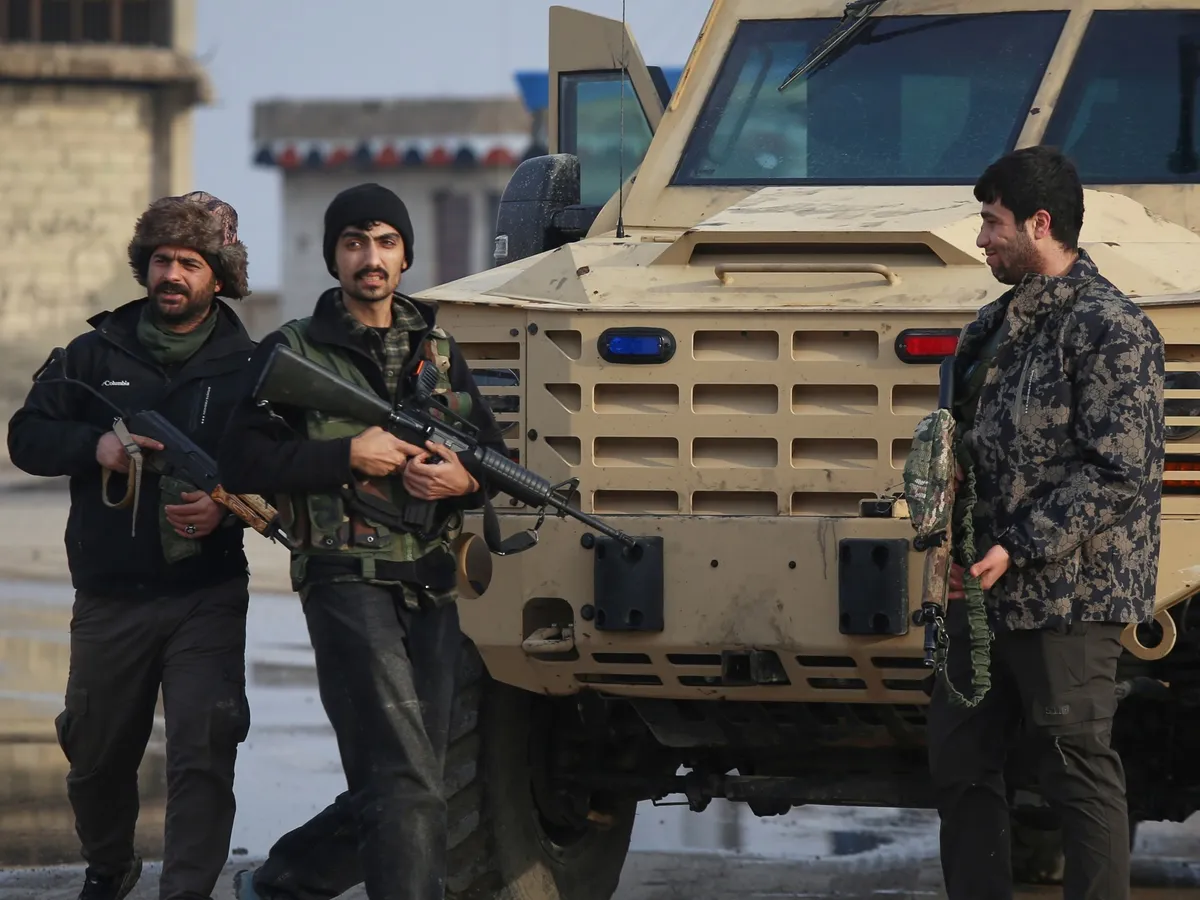
Al JazeeraFIG 01
Reading time
6min
Word count
1 279words
Sources cited
2cited
Entities identified
10entities
Quality score
100%
§ 01
Briefing Summary
AI-generatedNEWSAR · AI
Following the SDF's withdrawal from Raqqa and Deir Az Zor in January 2026, the Syrian army's offensive has elicited contrasting reactions. Arab residents in these cities expressed joy and relief, citing liberation from SDF repression and forced conscription. However, in Kurdish-majority areas of northeastern Syria, the government's military presence has sparked fear among residents. They worry about potential sectarian violence, referencing past incidents in other regions. The SDF controlled much of northeast Syria after the fall of the Assad regime in December 2024, before withdrawing earlier this year. Discussions are ongoing between the SDF and the new government regarding control of the region.
Confidence 0.90Sources 2Claims 5Entities 10
§ 02
Article analysis
Model · rule-basedFraming
Conflict
Human Interest
Tone
Measured
AI-assessed
CalmNeutralAlarmist
Factuality
0.70 / 1.00
Factual
LowHigh
Sources cited
2
Limited
FewMany
§ 03
Key claims
5 extracted01
SDF announced they would withdraw from Raqqa and Deir Az Zor on January 18.
factualArticle
Confidence
1.00
02
Fear is widespread, and it is a real fear based on documented experiences.
quoteAbbas Musa, coordinator of MPFP-NES
Confidence
0.90
03
There was overwhelming joy at the liberation.
quoteAdnan Khadeir, an Arab resident of Deir Az Zor
Confidence
0.90
04
Some residents fear government troops.
factualArticle
Confidence
0.90
05
Many Syrians feel liberated by the army pushing out the Kurdish-led SDF.
factualArticle
Confidence
0.80
§ 04
Full report
6 min read · 1 279 words§ 05
Entities
10 identifiedKey playerOppositionContextPositiveNeutralNegative
Organizations3
§ 06
Keywords & salience
10 termssyrian army offensive
0.90
syria
0.80
kurdish-led sdf
0.80
fear
0.70
liberation
0.60
government troops
0.60
forced conscription
0.50
sectarian killings
0.50
resource-rich northeast
0.40
bashar al-assad regime
0.40
§ 07
Topic connections
Interactive graph Network visualization showing 51 related topics
View Full Graph Person Organization Location Event|Click node to navigate|Edge numbers = shared articles