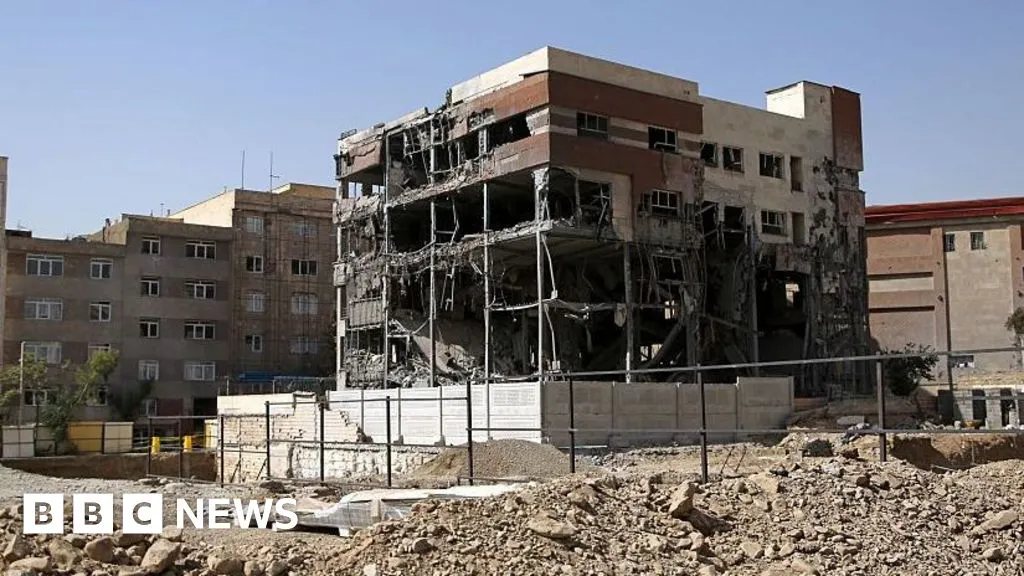
I do not think the latest strikes really alter Iranian calculations on the war. I think Tehran is preparing for an increased squeeze on its economy, and a continuation of the on and off attacks which we have seen over the past couple of months. Their intent will be to respond to these attacks in a proportionate manner in order not to spiral a larger conflict.On the economic side, obviously this is likely to hurt the Iranian economy which has already been affected by the war and has had underlying structural issues anyway, as we know from the December and January demonstrations in Iran.But I do not feel like there is the sense from the Iranian side that the economic squeeze is going to alter the Iranian calculation any time soon, including on any negotiations.That does not mean Iran is not looking for an off ramp, but I think what we are seeing is that it is waiting for the US to go back to the MoU, or to at least offer some sort of concession. Tehran does not want to cave in to US pressure or alter its own approach in response to sanctions or additional attacks.US knows what to do - go back to the MoUNicholas Hopton, Distinguished Fellow in international security at the Royal United Services Institute think tank in London and former UK ambassador to IranThe latest spike in military action is not going to produce Iran's capitulation - it is just the latest twist. Economic pressure is also unlikely to work because China, Russia and many other countries which trade with Iran are not going to support unilateral US sanctions.Iran can continue to disrupt the Strait of Hormuz - they have a thumb on the jugular of the global economy.
SRCBBC News - World
LANGEN
LEANCenter
WORDS295
ENT10
FRI · 2026-09-04 · 09:14 GMTBRIEF NSR-2026-0904-109165
NSR-2026-0904-109165Opinion·EN·Political Strategy
How could US-Iran conflict end? Three experts give their views
Following renewed strikes, experts believe Iran is prepared for increased economic pressure and ongoing, intermittent attacks, aiming for proportionate responses to avoid escalation. While the economic squeeze is expected to further impact Iran's already struggling economy, it is unlikely to alter Tehran's calculations regarding negotiations or its overall strategy.
1 hour agoShareSaveAdd as preferred on GoogleAlex BoydBBC News - WorldFiled 2026-09-04 · 09:14 GMTLean · CenterRead · 2 min
BBC News - WorldFIG 01
Reading time
2min
Word count
295words
Sources cited
2cited
Entities identified
10entities
Quality score
100%
§ 01
Briefing Summary
AI-generatedNEWSAR · AI
Following renewed strikes, experts believe Iran is prepared for increased economic pressure and ongoing, intermittent attacks, aiming for proportionate responses to avoid escalation. While the economic squeeze is expected to further impact Iran's already struggling economy, it is unlikely to alter Tehran's calculations regarding negotiations or its overall strategy. Iran is reportedly seeking an "off ramp" but is waiting for the US to return to a Memorandum of Understanding (MoU) or offer concessions, rather than yielding to US pressure or sanctions. Experts suggest that increased military action and economic pressure will not lead to Iran's capitulation, as international partners like China and Russia are unlikely to support unilateral US sanctions. Iran retains the ability to disrupt the Strait of Hormuz, impacting the global economy.
Confidence 0.90Sources 2Claims 5Entities 10
§ 02
Article analysis
Model · rule-basedFraming
Political Strategy
Economic Impact
Tone
Measured
AI-assessed
CalmNeutralAlarmist
Factuality
0.20 / 1.00
Opinion-Heavy
LowHigh
Sources cited
2
Limited
FewMany
§ 03
Key claims
5 extracted01
Iran can continue to disrupt the Strait of Hormuz.
predictionNicholas Hopton
Confidence
0.90
02
Iran's intent will be to respond to attacks proportionately to avoid escalating the conflict.
predictionExpert 1
Confidence
0.85
03
Tehran is preparing for an increased economic squeeze and continuation of on and off attacks.
predictionExpert 1
Confidence
0.80
04
Economic pressure is unlikely to work because China, Russia and other countries will not support unilateral US sanctions.
factualNicholas Hopton
Confidence
0.70
05
The US should go back to the MoU or offer concessions for Iran to consider negotiations.
factualExpert 1
Confidence
0.60
§ 04
Full report
2 min read · 295 words§ 05
Entities
10 identifiedKey playerOppositionContextPositiveNeutralNegative
Organizations1
Locations6
§ 06
Keywords & salience
10 termsus-iran conflict
1.00
economic squeeze
0.90
iranian economy
0.80
negotiations
0.70
us pressure
0.60
sanctions
0.60
strait of hormuz
0.50
military action
0.50
global economy
0.40
mou
0.40
§ 07
Topic connections
Interactive graph Network visualization showing 51 related topics
View Full Graph Person Organization Location Event|Click node to navigate|Edge numbers = shared articles