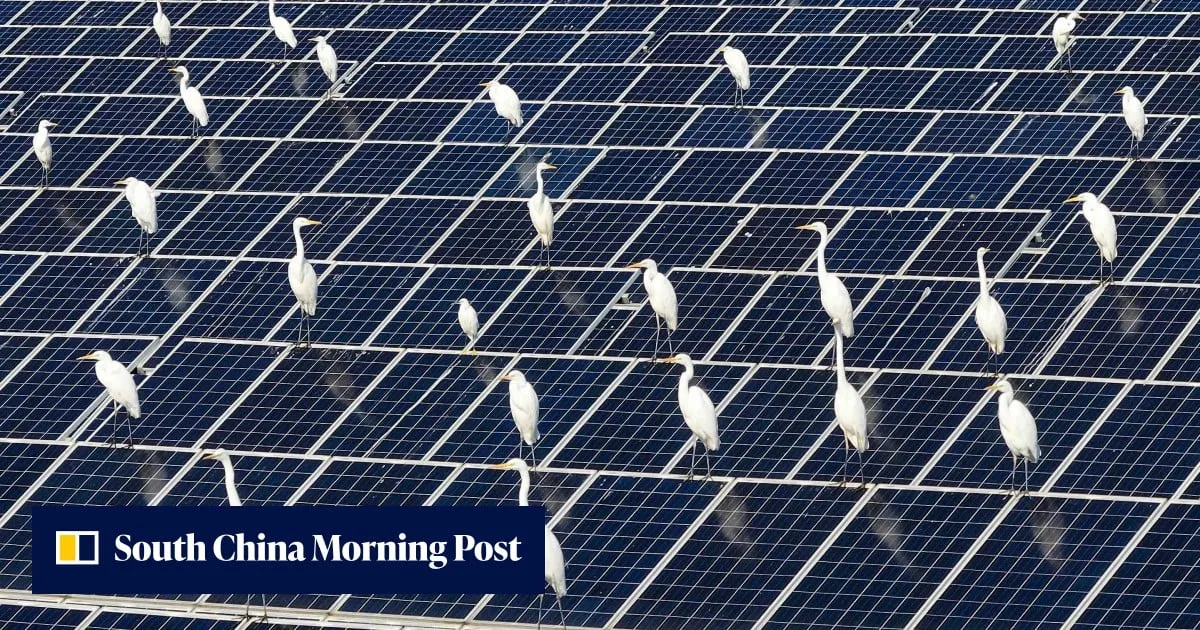
A study in one of the world’s top scientific journals that concluded China’s policy-driven solar energy expansion was harming bird diversity has come under fire after allegations emerged that the analysis may have used observations of 2.1 billion little egrets in a single park – more than the entire global population of the species.It also brought up heated conversations on social media about negative narratives surrounding China’s green energy sector.The study in question – by researchers in China, Vietnam and the United States – published in Science magazine, a leading US peer-reviewed journal, on August 20. It compared the strength of China’s solar policy against changes in bird diversity from 2014 to 2023.The data used to plug into a bird diversity index was taken from the China-birdwatching-record-centre" class="entity-link entity-organization" data-entity-id="201246" data-entity-type="organization">China Birdwatching Record Centre, the largest citizen-science platform for bird observations in the country.Late last month, a social media post from the China-ornithological-society" class="entity-link entity-organization" data-entity-id="201247" data-entity-type="organization">China Ornithological Society warned of potential errors in the centre’s records, which it said may have influenced the paper’s conclusions.It pointed to a logged observation in 2015 of 2.1 billion little egrets in a wetland, and another in 2022 of 1.3 billion red-billed blue magpies in a park, both in Guangdong province.
SRCSouth China Morning Post
LANGEN
LEANCenter-Right
WORDS200
ENT12
SUN · 2026-09-06 · 09:00 GMTBRIEF NSR-2026-0906-109682
NSR-2026-0906-109682News Report·EN·Environmental
Study that argued China’s solar policy hurt birds may have miscounted 2 billion egrets
A study published in Science magazine by researchers from China, Vietnam, and the United States has faced criticism regarding its findings on China's solar energy policy and bird diversity. The study, which analyzed data from 2014 to 2023, concluded that China's solar expansion was harming bird diversity.
Victoria BelaSouth China Morning PostFiled 2026-09-06 · 09:00 GMTLean · Center-RightRead · 1 min
South China Morning PostFIG 01
Reading time
1min
Word count
200words
Sources cited
2cited
Entities identified
12entities
Quality score
100%
§ 01
Briefing Summary
AI-generatedNEWSAR · AI
A study published in Science magazine by researchers from China, Vietnam, and the United States has faced criticism regarding its findings on China's solar energy policy and bird diversity. The study, which analyzed data from 2014 to 2023, concluded that China's solar expansion was harming bird diversity. However, concerns have been raised that the data used from the China Birdwatching Record Centre may contain significant errors. Specifically, an observation of 2.1 billion little egrets in a single wetland and another of 1.3 billion red-billed blue magpies in a park were flagged as potentially inflated. The China Ornithological Society warned that these potential inaccuracies in citizen-science records could have influenced the study's conclusions, sparking debate about negative narratives surrounding China's green energy sector.
Confidence 0.90Sources 2Claims 5Entities 12
§ 02
Article analysis
Model · rule-basedFraming
Environmental
Technology
Tone
Mixed Tone
AI-assessed
CalmNeutralAlarmist
Factuality
0.80 / 1.00
Factual
LowHigh
Sources cited
2
Limited
FewMany
§ 03
Key claims
5 extracted01
The data for the study was sourced from the China Birdwatching Record Centre, a citizen-science platform.
factualArticle
Confidence
1.00
02
The study compared China's solar policy strength against changes in bird diversity from 2014 to 2023.
factualStudy authors
Confidence
0.90
03
The China Ornithological Society warned of potential errors in the centre's records.
factualChina Ornithological Society
Confidence
0.90
04
A study in Science magazine concluded China's solar energy expansion harmed bird diversity.
factualStudy authors
Confidence
0.90
05
Allegations suggest the study may have miscounted 2.1 billion little egrets in a single park.
factualChina Ornithological Society
Confidence
0.80
§ 04
Full report
1 min read · 200 words§ 05
Entities
12 identifiedKey playerOppositionContextPositiveNeutralNegative
Organizations3
Locations4
§ 06
Keywords & salience
9 termssolar energy expansion
1.00
bird diversity
0.90
scientific study
0.80
data accuracy
0.70
green energy sector
0.60
china
0.60
little egrets
0.50
citizen-science platform
0.50
science magazine
0.40
§ 07
Topic connections
Interactive graph Network visualization showing 51 related topics
View Full Graph Person Organization Location Event|Click node to navigate|Edge numbers = shared articles