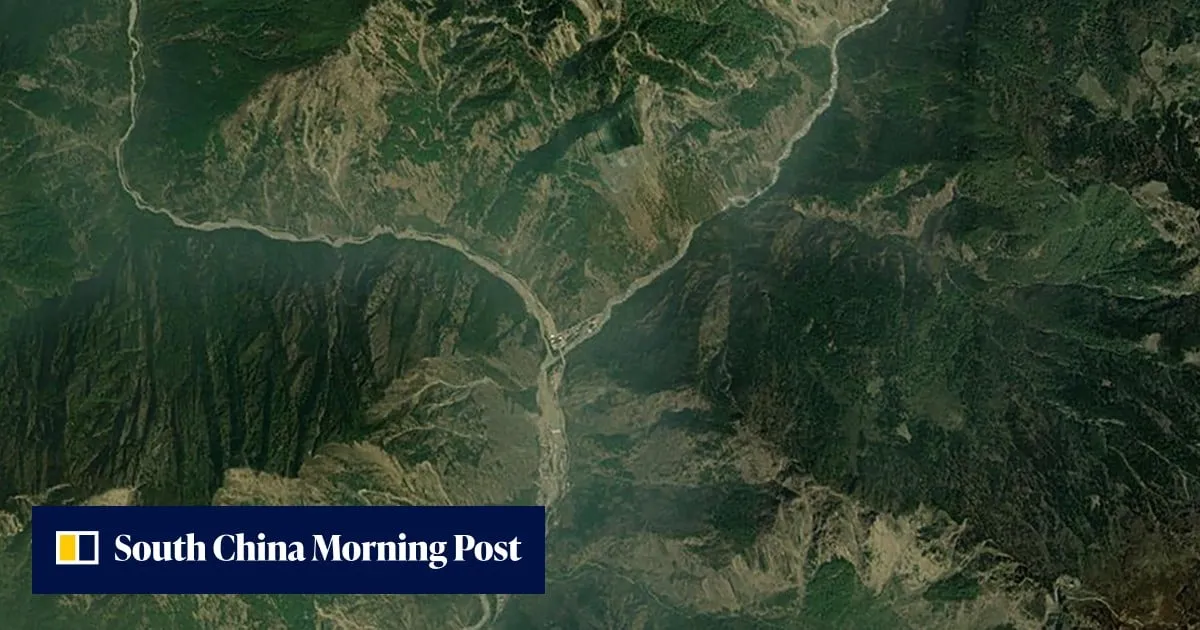
We have put together stories from our coverage on science from the past two weeks to help you stay informed. If you would like to see more of our reporting, please consider subscribing.1. China’s radar satellites capture sharp images of Glacier Collapse site in NepalWithin hours of a devastating Glacier Collapse on the China-Nepal border, a Beijing-based satellite company had already redirected six of its satellites to survey the disaster zone.2. Chip expert Chen Ye joins China’s Zhejiang University – as it overtakes HarvardZhejiang University has been named the world’s top academic institution by the Nature Index. Photo: ShutterstockChen Ye, a semiconductor quality control expert with more than 16 years of industry experience in the United States, has been appointed as a Qiushi Distinguished Professor at Zhejiang University’s College of Integrated Circuits, the university has announced.3. Arthritis drug restores 100% hair on 1 in 5 Alopecia patients in global trialFor many, losing hair isn’t just a cosmetic worry – it is a deeply personal struggle that can chip away at confidence, social life and mental health. Now, a surprising candidate is offering new hope: a pill originally designed to treat arthritis.4. China-Nepal Floods: first research shows no one could have outrun debris flowThe mudflow was travelling at around 19 metres per second when it struck the Gyirong border crossing. Photo: HandoutNot even the world’s fastest sprinters could have outrun the devastating floodwaters that struck a border crossing between China and Nepal last week, according to one of the first peer-reviewed assessments of the disaster.5. China will never allow any country to achieve AI dominance: Victor GaoThe United States is “weaponising and militarising AI”, according to Victor Gao. Photo: TNSChina will thwart US ambitions for global Artificial Intelligence (AI) dominance, the vice-president of the China-and-globalisation" class="entity-link entity-organization" data-entity-id="50057" data-entity-type="organization">Centre for China and Globalisation has said, while warning that Washington’s military-focused strategy was pushing towards “AI for evil”.6. The ‘Asian water tower’ is starting to wobble, computer simulations show“Asia’s water tower” is heading towards a more unpredictable and unstable future, according to a new study measuring the Tibetan Plateau’s stability. The study, published on August 21 in Nature Communications, examined the entropy of the region to gauge how much chaos or disorder was building up in a complex system.7. Chinese coastguard has 0.3% chance of using weapons in disputed waters: studyScreenshot from a China Coast Guard social media post showing the Chinese military holding joint naval and air drills in the South China Sea. Photo: The PaperA Chinese coastguard ship is shielding a cluster of fishing boats when several small, fast vessels begin circling – sometimes darting closer, sometimes backing off. Are they just curious fishermen? Or are they probing for a weak spot, trying to lure the patrol ship into a trap?Further Reading
SRCSouth China Morning Post
LANGEN
LEANCenter-Right
WORDS458
ENT12
WED · 2026-09-09 · 07:30 GMTBRIEF NSR-2026-0909-109935
NSR-2026-0909-109935News Report·EN·Technology
China-Nepal floods; arthritis drug restores alopecia patients’ hair: 7 science highlights
Recent science highlights include China's radar satellites quickly surveying a glacier collapse site on the China-Nepal border. Zhejiang University, now ranked the world's top academic institution by the Nature Index, has appointed a prominent semiconductor expert.
SCMPSouth China Morning PostFiled 2026-09-09 · 07:30 GMTLean · Center-RightRead · 2 min
South China Morning PostFIG 01
Reading time
2min
Word count
458words
Sources cited
3cited
Entities identified
12entities
Quality score
100%
§ 01
Briefing Summary
AI-generatedNEWSAR · AI
Recent science highlights include China's radar satellites quickly surveying a glacier collapse site on the China-Nepal border. Zhejiang University, now ranked the world's top academic institution by the Nature Index, has appointed a prominent semiconductor expert. A global trial shows an arthritis drug successfully restored hair in one in five alopecia patients. Research indicates that debris flow from China-Nepal floods was too fast for anyone to outrun. China stated it will not allow any country to achieve AI dominance, citing US "weaponizing and militarizing AI." Computer simulations suggest Asia's water tower, the Tibetan Plateau, is becoming more unstable. A study estimates a 0.3% chance of the Chinese coastguard using weapons in disputed waters.
Confidence 0.90Sources 3Claims 5Entities 12
§ 02
Article analysis
Model · rule-basedFraming
Technology
Environmental
Tone
Measured
AI-assessed
CalmNeutralAlarmist
Factuality
0.70 / 1.00
Factual
LowHigh
Sources cited
3
Well sourced
FewMany
§ 03
Key claims
5 extracted01
Zhejiang University has been named the world's top academic institution by the Nature Index.
factualNature Index
Confidence
1.00
02
China's radar satellites were redirected to survey a glacier collapse site in Nepal within hours.
factual
Confidence
1.00
03
The China-Nepal flood debris flow was traveling at around 19 metres per second.
factual
Confidence
0.90
04
An arthritis drug restored 100% of hair on 1 in 5 alopecia patients in a global trial.
factual
Confidence
0.90
05
China will never allow any country to achieve AI dominance.
predictionVictor Gao
Confidence
0.70
§ 04
Full report
2 min read · 458 words§ 05
Entities
12 identifiedKey playerOppositionContextPositiveNeutralNegative
Organizations2
Locations4
§ 06
Keywords & salience
10 termsalopecia
1.00
china-nepal floods
1.00
artificial intelligence
0.90
glacier collapse
0.80
zhejiang university
0.70
arthritis drug
0.70
ai dominance
0.60
tibetan plateau
0.50
radar satellites
0.40
semiconductor
0.40
§ 07
Topic connections
Interactive graph Network visualization showing 51 related topics
View Full Graph Person Organization Location Event|Click node to navigate|Edge numbers = shared articles