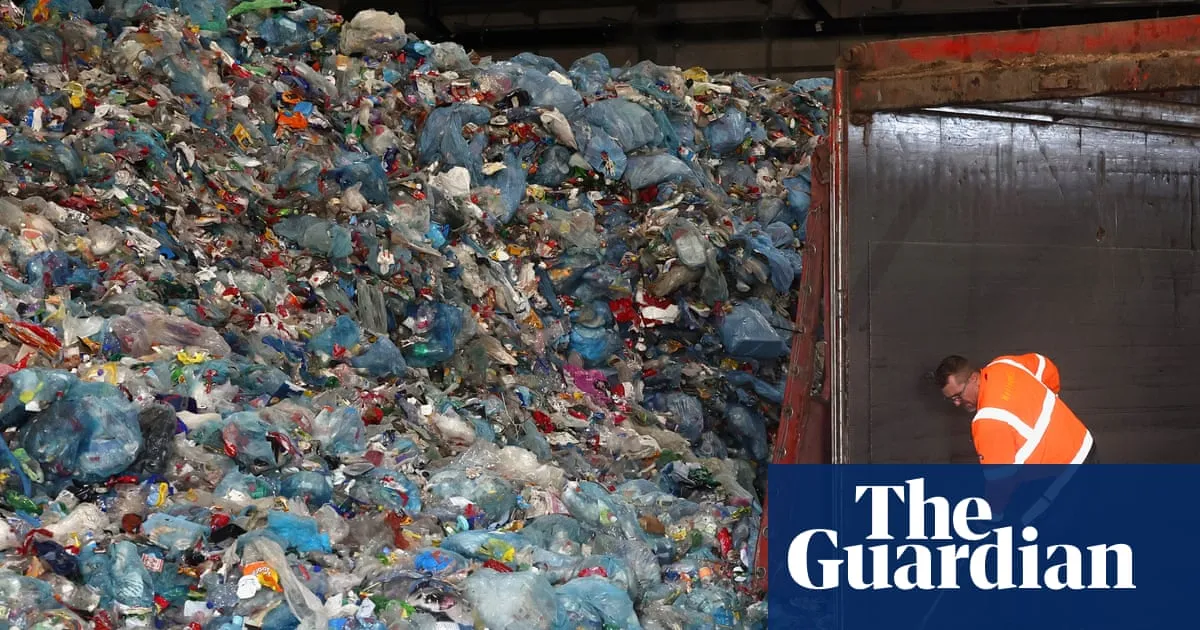
Europe’s supermarket shelves are packed with brands billing their plastic packaging as sustainable, but often only a fraction of the materials are truly recovered from waste, with the rest made from petroleum.Brands using plastic packaging – from Kraft’s Heinz Beanz to Mondelēz’s Philadelphia – use materials made by the plastic manufacturing arm of the oil company Saudi Aramco.The Saudi state-owned holding opposes production cuts under the UN plastic treaty and is the world’s largest corporate greenhouse gas emitter (more than 70m tonnes up to 2023).Aramco’s petrochemical subsidiary, Sabic, along with other big players, devised a successful way to rebrand their harmful business as “planet saver”. They label plastic as “circular” and climate-friendly, although in practice it remains almost entirely fossil-based, exacerbating global warming and the plastic crisis.Under industry pressure, Europe is on track to legalise this practice, which independent experts have described as greenwashing, with lax EU rules set to take effect in 2026 and similar UK regulations to be enforced as of 2027.To promote so-called sustainable plastic, the petrochemical industry is pushing pyrolysis, the most common type of chemical recycling. This highly energy- and carbon-intensive process converts plastic waste into recycled feedstock: pyrolysis oil. This hazardous compound, however, can make up at most 5% of total feedstock and must be diluted with 95% virgin naphtha, a petroleum derivative, to avoid damaging the steam-cracking plants that turn the input into new plastic.“The whole process is labelled as plastic recycling, while fossil fuel use expands because virgin feedstock must be added,” said Helmut Maurer, a former senior expert in the environment department of the European Commission.To present appealing figures of high recycling rates and low emissions for brands eager to attract customers, the industry relies on two controversial but lawful accounting tricks.“Mass-balance bookkeeping” attributes the recycled input to specific output batches. For example, if 5% pyrolysis oil (mixed with 95% naphtha) is credited to 5% of 100 tonnes, those 5 tonnes can be certified as “100% recycled” packaging, even if they contain only fossil feedstock and no actual recycled material.“This is unfair to consumers – recycled content should be physically part of the final product,” said Lauriane Veillard, a policy officer at the NGO Zero Waste.Also controversial is the “avoided emissions” approach. Subtracting the carbon that would have been released if a volume of waste equivalent to that recycled had been incinerated creates apparent savings compared with virgin plastic production.Recycling labels based on mass balance are issued by the industry-led platform, International Sustainability and Carbon Certification (ISCC), and passed from plastic producers to packaged-product brands.Public records suggest that the recycled material or pyrolysis oil used by Sabic (2,600 tonnes in 2022) to produce plastic may represent even less than 5% of the total feedstock, given the huge quantity of naphtha (4m tonnes) fed into the company’s European cracking plants in the Netherlands.The carbon footprint calculation, or life cycle assessment (LCA), by the petrochemical group admits that the full process from pyrolysis to cracking emits 6% to 8% more than producing plastic from fossil fuel. Only by counting avoided incineration do the net benefits appear positive: about 2kg of CO₂ less per kilogram of recycled plastic.“What matters is not hypothetical emissions from incineration that are ‘avoided’ on paper, but what is actually emitted in reality,” Maurer said.Sabic’s LCA claims a “rigorous critical review” by experts, including the co-founder of the London-based Plastic Energy, Sabic’s main feedstock supplier.The close business ties between reviewers and Sabic raise questions about the scrutiny’s impartiality. Sabic and Plastic Energy declined to disclose full LCAs or answer questions. The brands named also did not respond to requests for comment.“LCA documents serve no purpose other than advertising, because companies control the parameters to achieve desired results,” said Peter Quicker, a professor of emission control in waste management at Aachen University in Germany.Research on other LCAs has found that they can be selectively framed, masking the real climate footprint, and warns that carbon savings largely disappear when recycled feedstock replaces only a small fraction of fossil-based plastic.“The overestimated carbon savings follow the downstream value chain, amplified by mass-balance credit, to packaged products, potentially making consumer brands’ statements unreliable and misleading,” said Margaux Le Gallou, the senior programme manager at the NGO Ecos.Over the past three years, petrochemical companies have intensified lobbying EU institutions to ensure upcoming laws accommodate mass balance, while rushing to secure offtake deals with pyrolysis oil suppliers.Despite brands’ pledges, mandatory recycled-content targets intended to curb waste and emissions may technically be met even as big oil expands virgin plastic production.As demand for fossil fuels declines, replaced by renewables, plastic is set to become a critical growth engine for oil majors’ future profits, according to the International Energy Agency. This article is part of a cross-border investigation, supported by IJ4EU and coordinated by the independent journalist Ludovica Jona, with the media outlets the Guardian, Voxeurop, Mediapart (France), Altreconomia (Italy), Público (Spain), Investigative Reporting Denmark, Deutsche Welle (Germany) and with reporters Lorenzo Sangermano and Lucy Taylor
SRCThe Guardian - World News
LANGEN
LEANCenter-Left
WORDS827
ENT3
TUE · 2026-01-27 · 13:48 GMTBRIEF NSR-2026-0127-11023
NSR-2026-0127-11023News Report·EN·Environmental
Europe’s supermarket shelves packed with ‘misleading’ claims about recycled plastic packaging
Many brands in European supermarkets are misleadingly labeling plastic packaging as sustainable, despite it being largely derived from petroleum. Companies like Kraft Heinz and Mondelēz are using plastic from Saudi Aramco's petrochemical subsidiary, Sabic, which promotes "circular" plastic despite its reliance on fossil fuels.
Stefano ValentinoThe Guardian - World NewsFiled 2026-01-27 · 13:48 GMTLean · Center-LeftRead · 4 min
The Guardian - World NewsFIG 01
Reading time
4min
Word count
827words
Sources cited
3cited
Entities identified
3entities
Quality score
100%
§ 01
Briefing Summary
AI-generatedNEWSAR · AI
Many brands in European supermarkets are misleadingly labeling plastic packaging as sustainable, despite it being largely derived from petroleum. Companies like Kraft Heinz and Mondelēz are using plastic from Saudi Aramco's petrochemical subsidiary, Sabic, which promotes "circular" plastic despite its reliance on fossil fuels. This practice, often involving pyrolysis, a carbon-intensive chemical recycling process, allows companies to claim high recycling rates through controversial accounting methods like "mass-balance bookkeeping," where a small amount of recycled material is attributed to a larger batch. Independent experts and NGOs criticize this as greenwashing, yet the EU and UK are poised to legalize these practices in 2026 and 2027, respectively. The industry's tactics allow them to present appealing figures of high recycling rates and low emissions for brands eager to attract customers.
Confidence 0.90Sources 3Claims 5Entities 3
§ 02
Article analysis
Model · rule-basedFraming
Environmental
Economic Impact
Tone
Mixed Tone
AI-assessed
CalmNeutralAlarmist
Factuality
0.70 / 1.00
Factual
LowHigh
Sources cited
3
Well sourced
FewMany
§ 03
Key claims
5 extracted01
"The whole process is labelled as plastic recycling, while fossil fuel use expands..."
quoteHelmut Maurer, a former senior expert in the environment department of the European Commission
Confidence
1.00
02
Pyrolysis oil can make up at most 5% of total feedstock and must be diluted with 95% virgin naphtha.
factual
Confidence
1.00
03
Aramco is the world’s largest corporate greenhouse gas emitter (more than 70m tonnes up to 2023).
statistic
Confidence
1.00
04
Brands are using plastic packaging made by the plastic manufacturing arm of the oil company Saudi Aramco.
factual
Confidence
1.00
05
Europe is on track to legalise greenwashing with lax EU rules set to take effect in 2026.
factual
Confidence
0.90
§ 04
Full report
4 min read · 827 words§ 05
Entities
3 identifiedKey playerOppositionContextPositiveNeutralNegative
§ 06
Keywords & salience
9 termsplastic packaging
1.00
recycling
0.90
greenwashing
0.80
fossil fuels
0.70
pyrolysis
0.60
sustainable
0.60
saudi aramco
0.50
mass-balance bookkeeping
0.50
circular economy
0.40
§ 07
Topic connections
Interactive graph Network visualization showing 14 related topics
View Full Graph Person Organization Location Event|Click node to navigate|Edge numbers = shared articles