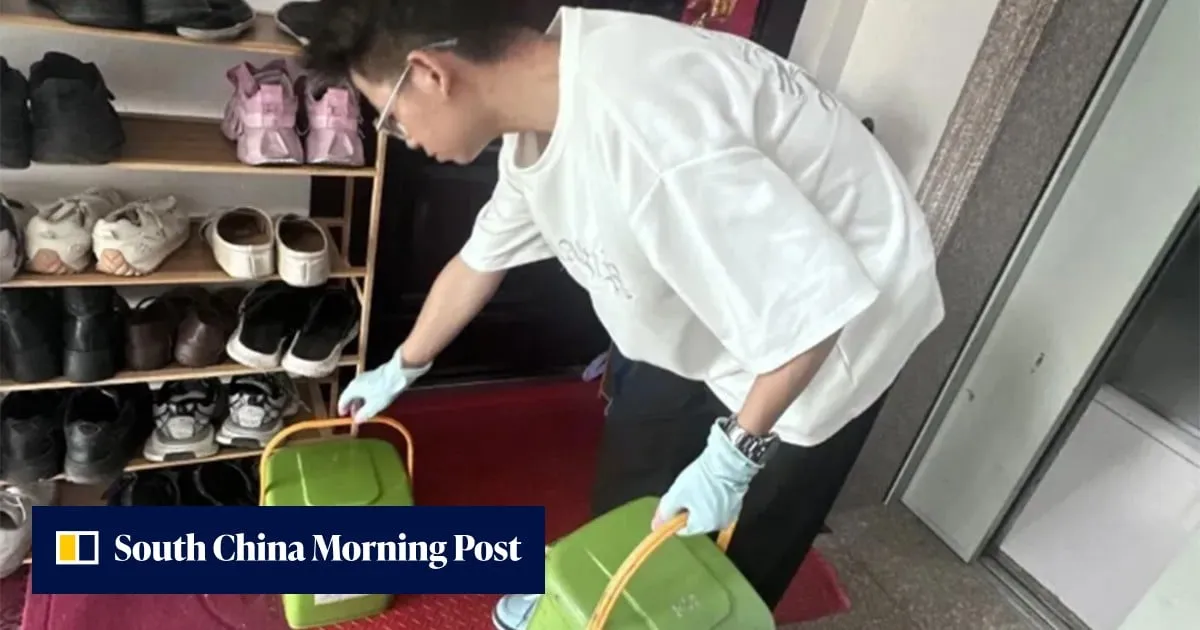
A new business trend has emerged in China where young people get paid to throw out rubbish for others at a small fee – and it is proving to be a surprising success.While many people consider taking out the rubbish merely an incidental chore, it has evolved into a paid service in China.On social media platforms, some entrepreneurs promote their rubbish disposal services. Their fees range from three to five yuan (45 to 75 US cents) per pickup, with an option for a monthly package priced at around 100 yuan (US$15).The monthly service includes daily rubbish collection, requiring clients only to place their bag of rubbish outside their door for easy pickup.This represents a novel aspect of the lazy economy, characterised by time-saving, labour-saving, and convenient services, following in the footsteps of other viral offerings, such as picking up children from school and collecting parcels for clients.According to one provider, the ultimate key to the business model’s success and rapid adoption is affordability. Photo: QQ.comSome people find this business model puzzling.One person asked: “Isn’t this just a side task on your way out? Do people actually pay for such a service?”To their surprise, many people expressed a genuine need for this rubbish disposal service.One individual, coping with depression, shared: “I only dispose of rubbish late at night, worried about encountering others. This service is a necessity for me.”Another client from Shanghai, China’s first city to implement a mandatory household waste-sorting system, highlighted that certain residential compounds permit rubbish collection only for two hours in the morning and another two in the evening.“As an ordinary office worker, it’s easy for me to miss those four hours,” they explained.Strict community rubbish collection hours make this service a lifesaver for busy, overworked professionals. Photo: ShutterstockAdditionally, homebodies who prefer staying indoors consistently find the service beneficial.Moreover, a service provider in Jiaxing, in eastern China’s Zhejiang province, known by her surname Fei, mentioned that her team also assists elderly individuals with mobility issues who live on upper floors without lifts.Fei reported receiving three orders in her first month but remains optimistic about growth, planning to collaborate with communities while focusing on the needs of elderly clients.Another service provider from Hangzhou, Zhejiang, named Mihan, claimed to have secured over 20 orders just three days after launching her business.Residential complexes serve as the most lucrative client base for waste disposal service providers due to their high volume and centralised locations. Photo: ShutterstockShe occasionally picks up parcels for her clients as an additional service.Discussing the advantages of this job, Mihan noted: “I barely need to meet my clients in person.”She emphasised that the key to the success of this business model is affordability: “Today’s office workers are willing to spend a little money to save time.”Similarly, parcel collection costs three to five yuan per parcel and around 100 yuan for daily collection over a month. Picking up children is pricier, costing around 50 yuan per trip, but parents unable to leave work early still require this service.Further Reading
SRCSouth China Morning Post
LANGEN
LEANCenter-Right
WORDS500
ENT8
TUE · 2026-09-15 · 10:00 GMTBRIEF NSR-2026-0915-111430
NSR-2026-0915-111430News Report·EN·Human Interest
‘Lazy economy’: US$15 monthly rubbish services in China gain popularity, benefitting elderly
A new service in China offers young people paid opportunities to collect rubbish for others, with monthly packages costing around US$15. This "lazy economy" trend provides convenience for busy professionals, individuals with mobility issues, and those facing strict community collection hours.
Fran LuSouth China Morning PostFiled 2026-09-15 · 10:00 GMTLean · Center-RightRead · 2 min
South China Morning PostFIG 01
Reading time
2min
Word count
500words
Sources cited
3cited
Entities identified
8entities
Quality score
100%
§ 01
Briefing Summary
AI-generatedNEWSAR · AI
A new service in China offers young people paid opportunities to collect rubbish for others, with monthly packages costing around US$15. This "lazy economy" trend provides convenience for busy professionals, individuals with mobility issues, and those facing strict community collection hours. Providers charge a few yuan per pickup or offer monthly subscriptions for daily collection. The service's affordability and ability to save clients time are key to its success. Elderly individuals and residents in large complexes are significant client bases, with some providers also offering parcel collection.
Confidence 0.90Sources 3Claims 5Entities 8
§ 02
Article analysis
Model · rule-basedFraming
Human Interest
Economic Impact
Tone
Measured
AI-assessed
CalmNeutralAlarmist
Factuality
0.60 / 1.00
Mixed
LowHigh
Sources cited
3
Well sourced
FewMany
§ 03
Key claims
5 extracted01
Affordability is cited as the ultimate key to the business model's success and rapid adoption.
quoteone provider
Confidence
0.90
02
Fees for rubbish disposal services range from 3-5 yuan (45-75 US cents) per pickup, with monthly packages around 100 yuan (US$15).
factual
Confidence
0.90
03
A new business trend in China involves young people being paid to dispose of rubbish for others for a small fee.
factual
Confidence
0.90
04
Service providers are also assisting elderly individuals with mobility issues, particularly those on upper floors without lifts.
factual
Confidence
0.80
05
The service is popular among individuals with depression, busy office workers facing strict collection hours, and homebodies.
factual
Confidence
0.80
§ 04
Full report
2 min read · 500 words§ 05
Entities
8 identifiedKey playerOppositionContextPositiveNeutralNegative
People2
Locations5
§ 06
Keywords & salience
9 termslazy economy
1.00
rubbish services
0.90
convenience services
0.80
elderly assistance
0.70
affordability
0.60
labor-saving
0.50
time-saving
0.50
china
0.40
waste sorting
0.40
§ 07
Topic connections
Interactive graph Network visualization showing 51 related topics
View Full Graph Person Organization Location Event|Click node to navigate|Edge numbers = shared articles