We have put together stories from our coverage on electric and new energy vehicles from the past two weeks to help you stay informed. If you would like to see more of our reporting, please consider subscribing.1. Market squeeze: Tesla revives China price cuts to stem slumping deliveriesTesla China has launched discounts on its Shanghai-made cars for the first time since the end of 2024, responding to falling deliveries in the world’s largest market for Electric Vehicles (EVs).2. ‘Key pillar’: the 5-year powerhouse plan for China’s car industryChina is set to secure its place among the global automotive powerhouses by 2030 through further efforts to boost domestic sales and foster technological innovation, while a capacity alert mechanism will be introduced to guard against disorderly competition.3. Over 65% of cars sold in China are now EVs as Iran-war" class="entity-link entity-event" data-entity-id="38748" data-entity-type="event">Iran war drives electric shiftTraffic is gridlocked during the morning rush hour on a sunny day in Beijing. Photo: ReutersChina’s EV adoption rate has hit an all-time high, as the Iran-war" class="entity-link entity-event" data-entity-id="38748" data-entity-type="event">Iran war drives motorists to shift away from petrol cars despite a sluggish automotive market.4. Will Tesla’s rare-earth-free motor put China’s trade trump card at risk?Tesla’s Cybercab, also known as the Robotaxi, is a two-passenger self-driving car which is fully autonomous with no steering wheel or pedals. Photo: TNSAs Tesla CEO Elon Musk touted the motor of his company’s Cybercab – which, he claims, contains no rare earth elements – debate has emerged over whether the technology could mark a meaningful shift in EV supply chains, or undercut one of China’s trump cards in its protracted trade conflict with the US.5. BYD, Leapmotor buck EV market slowdown as pressure piles up on small rivalsTop performers BYD and Leapmotor clawed their way up higher in terms of sales last month, even as China’s EV market was shrinking amid weaker consumer demand. However, smaller players were expected to face falling sales and mounting losses for the rest of the year as competition got fiercer, according to analysts.6. China’s EV makers see synergy in their race to beat Tesla in humanoid roboticsIllustration: Dennis YipWhen Nio CEO William Li outlined earnings prospects for the Shanghai-based carmaker in March, he could not help but liken the automotive business to the development of robots.7. Tesla to exhibit Cybercab robotaxi in China: can it spark buzz amid slow sales?Tesla is facing weaker sales in China this year, but the American EV manufacturer is looking to generate a buzz in its second-largest market by exhibiting its new self-driving vehicle, the Cybercab.Further Reading
SRCSouth China Morning Post
LANGEN
LEANCenter-Right
WORDS420
ENT11
WED · 2026-09-16 · 07:30 GMTBRIEF NSR-2026-0916-111631
NSR-2026-0916-111631News Report·EN·Economic Impact
Tesla revives China discounts; Iran war drives shift to electric cars: 7 EV reads
Tesla China has reintroduced discounts on its Shanghai-made vehicles to address declining deliveries in the world's largest EV market. China's automotive industry aims to become a global powerhouse by 2030 through domestic sales boosts and innovation, while implementing measures against disorderly competition.
SCMPSouth China Morning PostFiled 2026-09-16 · 07:30 GMTLean · Center-RightRead · 2 min
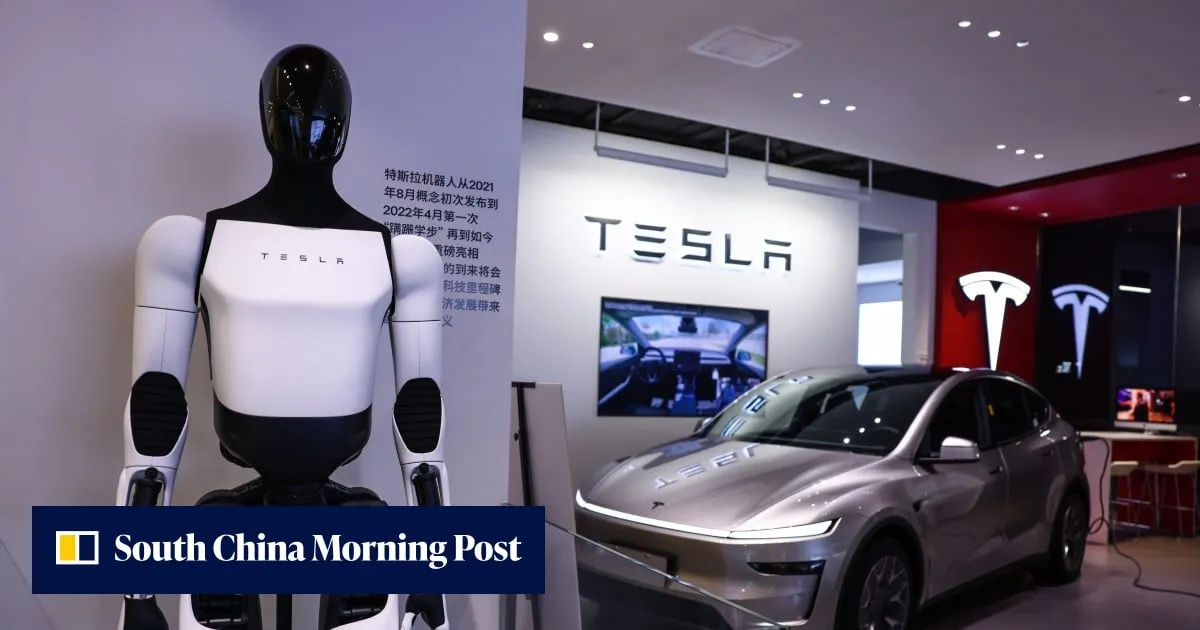
South China Morning PostFIG 01
Reading time
2min
Word count
420words
Sources cited
3cited
Entities identified
11entities
Quality score
100%
§ 01
Briefing Summary
AI-generatedNEWSAR · AI
Tesla China has reintroduced discounts on its Shanghai-made vehicles to address declining deliveries in the world's largest EV market. China's automotive industry aims to become a global powerhouse by 2030 through domestic sales boosts and innovation, while implementing measures against disorderly competition. Over 65% of cars sold in China are now electric, with the Iran war contributing to a shift away from petrol cars. Tesla's development of a rare-earth-free motor for its Cybercab raises questions about its impact on EV supply chains and China's trade position. Despite a market slowdown, BYD and Leapmotor have increased sales, while smaller EV makers face pressure. Chinese EV companies are exploring synergies in humanoid robotics development, and Tesla plans to exhibit its Cybercab in China to generate interest amidst slower sales.
Confidence 0.90Sources 3Claims 5Entities 11
§ 02
Article analysis
Model · rule-basedFraming
Economic Impact
Technology
Tone
Measured
AI-assessed
CalmNeutralAlarmist
Factuality
0.70 / 1.00
Factual
LowHigh
Sources cited
3
Well sourced
FewMany
§ 03
Key claims
5 extracted01
Tesla China has launched discounts on its Shanghai-made cars for the first time since the end of 2024, responding to falling deliveries.
factual
Confidence
0.90
02
BYD and Leapmotor saw increased sales last month, while smaller EV players face declining sales and mounting losses.
factualanalysts
Confidence
0.80
03
Over 65% of cars sold in China are now EVs as the Iran war drives electric shift.
statistic
Confidence
0.80
04
Tesla's Cybercab contains no rare earth elements, potentially impacting China's trade position.
factualElon Musk
Confidence
0.70
05
China is set to secure its place among the global automotive powerhouses by 2030 through further efforts to boost domestic sales and foster technological innovation.
prediction
Confidence
0.60
§ 04
Full report
2 min read · 420 words§ 05
Entities
11 identifiedKey playerOppositionContextPositiveNeutralNegative
Organizations3
§ 06
Keywords & salience
10 termselectric vehicles
1.00
tesla
0.90
china
0.90
ev market
0.80
price cuts
0.70
robotaxi
0.60
iran war
0.50
rare earth elements
0.50
byd
0.40
humanoid robotics
0.40
§ 07
Topic connections
Interactive graph No topic relationship data available yet. This graph will appear once topic relationships have been computed.