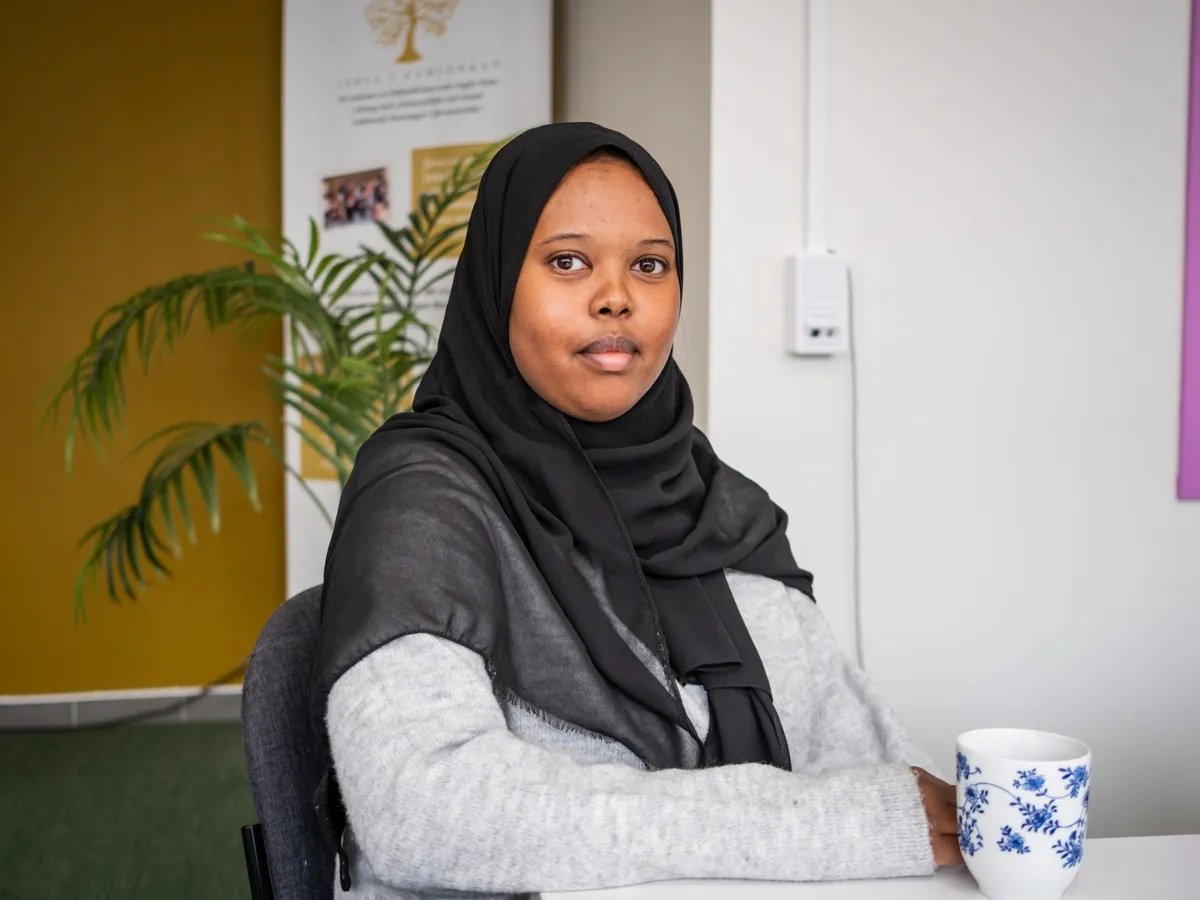
In Sweden, many breathe sigh of relief as far right suffers election lossesThe election is tight, but one result is clear: the Sweden-democrats" class="entity-link entity-organization" data-entity-id="9626" data-entity-type="organization">Sweden Democrats’ bid to turn hate into votes failed.Sumeyah Ali, pictured, says young people in her multicultural neighbourhood are protesting with their vote [Nils Adler/Al Jazeera]Published On 16 Sep 2026Stockholm, Sweden – Jimmie Akesson, leader of the far-right Sweden-democrats" class="entity-link entity-organization" data-entity-id="9626" data-entity-type="organization">Sweden Democrats (SD), cast his early ballot in Rinkeby, a Stockholm suburb where most residents have a minority background.“It was a political stunt,” said 18-year-old Sumeyah Ali. “It was meant to provoke.”Recommended Stories list of 3 itemslist 1 of 3‘I’ll never be Swedish enough’: Far-right campaign upsets minority groupslist 2 of 3As Sweden heads to polls, Israel and Palestine policies are on the ballotlist 3 of 3Multicultural Malmo: Swedish city loathed by far right braces for electionend of listAfter voting, Akesson told reporters Rinkeby “doesn’t look like Sweden … Sweden shouldn’t look like this, I think.”His provocative comments were designed to fuel the party’s anti-immigration and Islamophobic rhetoric, said Ali at an office space for Jarva i samverkan, a Stockholm-based network of local nonprofits that coordinates free activities and youth programmes.But his apparent bid failed.Although the overall general election is too close to call, one result is clear: the SD suffered its first-ever decline in a parliamentary election, falling three percentage points to 17.5 percent and slipping from second to third place behind the Moderate Party.Anti-Islam threatsThe party, which has neo-Nazi roots, has repeatedly targeted Islam.In 2023, Akesson called for a halt to new mosques and said Sweden should, in the longer term, begin “seizing and demolishing mosques” that spread “anti-democratic, anti-Swedish” propaganda, a proposal rejected by Prime Minister Ulf Kristersson.Akesson has said he targets Islamism, not Muslims, but senior SD MP Richard Jomshof abandoned that distinction during the campaign.When asked by the newspaper Dagens Nyheter in August what message he had for Muslims living peacefully in Sweden, he replied: “They can stop being Muslims, for a start.”Jimmie Akesson (L) shakes hands at a polling station in Rinkeby, Sweden, on September 12, 2026 [Claudio Bresciani/TT via AFP]Zack*, a 27-year-old resident, told Al Jazeera that many have grown thicker skin in response to the SD, which has also proposed banning the hijab and intimidated people with posters reading “We make Sweden, Sweden again”.“It was rage-bait, but it didn’t work,” said Sara, a 25-year-old business owner.She recalled when Rasmus Paludan, the Danish-Swedish far-right politician, burned a Quran in Rinkeby Square in 2022. Riots, as well as peaceful protests, took over several Swedish cities.“It was chaos then, but people know now we can’t be provoked, as that is what they [the far right] want,” she said.In the end, there was no response to Akesson’s visit. He enjoyed a seamless visit, reportedly welcomed by a young boy who held the door open and later shook hands with a poll clerk.A setback for SDFor the SD, once considered a political pariah, this election signalled an opportunity to capitalise on two decades of steady growth and enter government with the right-wing bloc that includes the Moderates, the Christian Democrats and the Liberals.By the early hours of Monday, preliminary results gave Sweden’s centre-left opposition bloc a razor-thin lead of 176 seats to 173 over Kristersson’s right-wing alliance. But the numbers settled little; some votes are still to be counted on Wednesday, and the final results are not expected for several days.With a margin of just three seats, even a small shift could change the outcome, and even with a majority, the opposition’s four parties would still have to agree on a government.Analysts warned of a deadlock that could drag on for weeks and possibly end in a snap election.Young people feel ‘their vote will count’Voter turnout largely rose in multicultural areas like Rinkeby, but fell across the country overall. With little margin between the blocs, every vote counts.“Before, young people felt like their vote didn’t matter, but now they feel their vote will count for a united society; even their parents are telling their kids to go and vote,” said Ali.Sweden’s public broadcaster published a poll showing that voters with a non-European background favour the left bloc, with the Left Party, sitting at the opposite end of the political spectrum to SD, rising from 17 percent of the vote in 2022 to 21 percent this year.In Rinkeby central, preliminary results show more than half of voters backed the Left Party.One stop away on the underground is Tensta, an area equally maligned by right-wing politicians; 54.35 percent of voters backed the Left Party, with only six votes for SD despite the party placing a poster in the central square.A poster for the Left Party (L) and the Sweden-democrats" class="entity-link entity-organization" data-entity-id="9626" data-entity-type="organization">Sweden Democrats (R) stand side by side in the Stockholm suburb of Tensta [Nils Adler/Al Jazeera]The Trump effectAli believes the SD election campaign was driven by an “Americanisation” of Swedish politics, where politicians try to emulate United States President Donald Trump’s divisive politics.In Stockholm’s central station, SD spent about $100,000 on a weeklong summer campaign that included posters that read: “If you commit crimes, live off benefits, don’t learn Swedish or misbehave, you’re not welcome.”In Skaraborg, western Sweden, SD bus s asking “Missing Mogadishu?” and promoting a grant to help migrants return home were pulled by the transport operator in August after about 20 drivers of Somali heritage called in sick in protest.Ali remains optimistic as many Swedes embrace diversity and several initiatives are working to reduce segregation.Stockholm City has launched Fokus Jarva, a project that aims to close the gap in conditions between the district and the rest of the city, with plans for some 15,000 new homes alongside upgrades to schools, services, jobs, safety and public spaces.Ali suggested that Akesson should look beyond Rinkeby’s beige and grey housing blocks to see its vibrant, diverse and supportive community.“In the end, that’s what makes a place, however it looks,” she said.*Some interviewees asked that their surnames be withheld because of the political nature of the interviews.
SRCAl Jazeera
LANGEN
LEANCenter
WORDS995
ENT12
WED · 2026-09-16 · 12:22 GMTBRIEF NSR-2026-0916-111739
NSR-2026-0916-111739News Report·EN·Political Strategy
In Sweden, many breathe sigh of relief as far right suffers election losses
In Sweden's recent general election, the far-right Sweden Democrats (SD) experienced their first-ever decline in parliamentary support, falling to 17.5 percent and slipping to third place. Despite the overall election results being too close to call, this outcome was seen as a clear failure of the SD's anti-immigration and Islamophobic rhetoric, which included provocative comments from leader Jimmie Akesson and controversial statements from other party members.
Nils AdlerAl JazeeraFiled 2026-09-16 · 12:22 GMTLean · CenterRead · 4 min
Al JazeeraFIG 01
Reading time
4min
Word count
995words
Sources cited
4cited
Entities identified
12entities
Quality score
100%
§ 01
Briefing Summary
AI-generatedNEWSAR · AI
In Sweden's recent general election, the far-right Sweden Democrats (SD) experienced their first-ever decline in parliamentary support, falling to 17.5 percent and slipping to third place. Despite the overall election results being too close to call, this outcome was seen as a clear failure of the SD's anti-immigration and Islamophobic rhetoric, which included provocative comments from leader Jimmie Akesson and controversial statements from other party members. While the SD aimed to capitalize on anti-immigrant sentiment and potentially enter government, their bid to "turn hate into votes" did not succeed as anticipated. Voter turnout increased in multicultural areas, with young people feeling their votes could contribute to a more united society. Preliminary results in areas like Rinkeby and Tensta showed strong support for the Left Party, while the SD received minimal votes in these locations.
Confidence 0.90Sources 4Claims 5Entities 12
§ 02
Article analysis
Model · rule-basedFraming
Political Strategy
Social Justice
Tone
Mixed Tone
AI-assessed
CalmNeutralAlarmist
Factuality
0.60 / 1.00
Mixed
LowHigh
Sources cited
4
Well sourced
FewMany
§ 03
Key claims
5 extracted01
Sumeyah Ali described Akesson's visit to Rinkeby as a 'political stunt' meant 'to provoke.'
quoteSumeyah Ali
Confidence
1.00
02
Senior SD MP Richard Jomshof told Muslims living peacefully in Sweden: 'They can stop being Muslims, for a start.'
quoteRichard Jomshof
Confidence
1.00
03
Jimmie Akesson stated that Rinkeby 'doesn’t look like Sweden … Sweden shouldn’t look like this, I think.'
quoteJimmie Akesson
Confidence
1.00
04
The Sweden Democrats (SD) suffered their first-ever decline in a parliamentary election, falling three percentage points to 17.5 percent.
statistic
Confidence
1.00
05
The SD has previously proposed banning the hijab and intimidated people with posters reading 'We make Sweden, Sweden again.'
factual
Confidence
0.90
§ 04
Full report
4 min read · 995 words§ 05
Entities
12 identifiedKey playerOppositionContextPositiveNeutralNegative
People4
Organizations4
Events1
§ 06
Keywords & salience
10 termselection losses
1.00
far right
1.00
sweden democrats
0.90
anti-immigration
0.80
islamophobic rhetoric
0.80
multicultural neighbourhood
0.70
parliamentary election
0.60
neo-nazi roots
0.50
anti-islam threats
0.50
hijab ban
0.40
§ 07
Topic connections
Interactive graph Network visualization showing 51 related topics
View Full Graph Person Organization Location Event|Click node to navigate|Edge numbers = shared articles