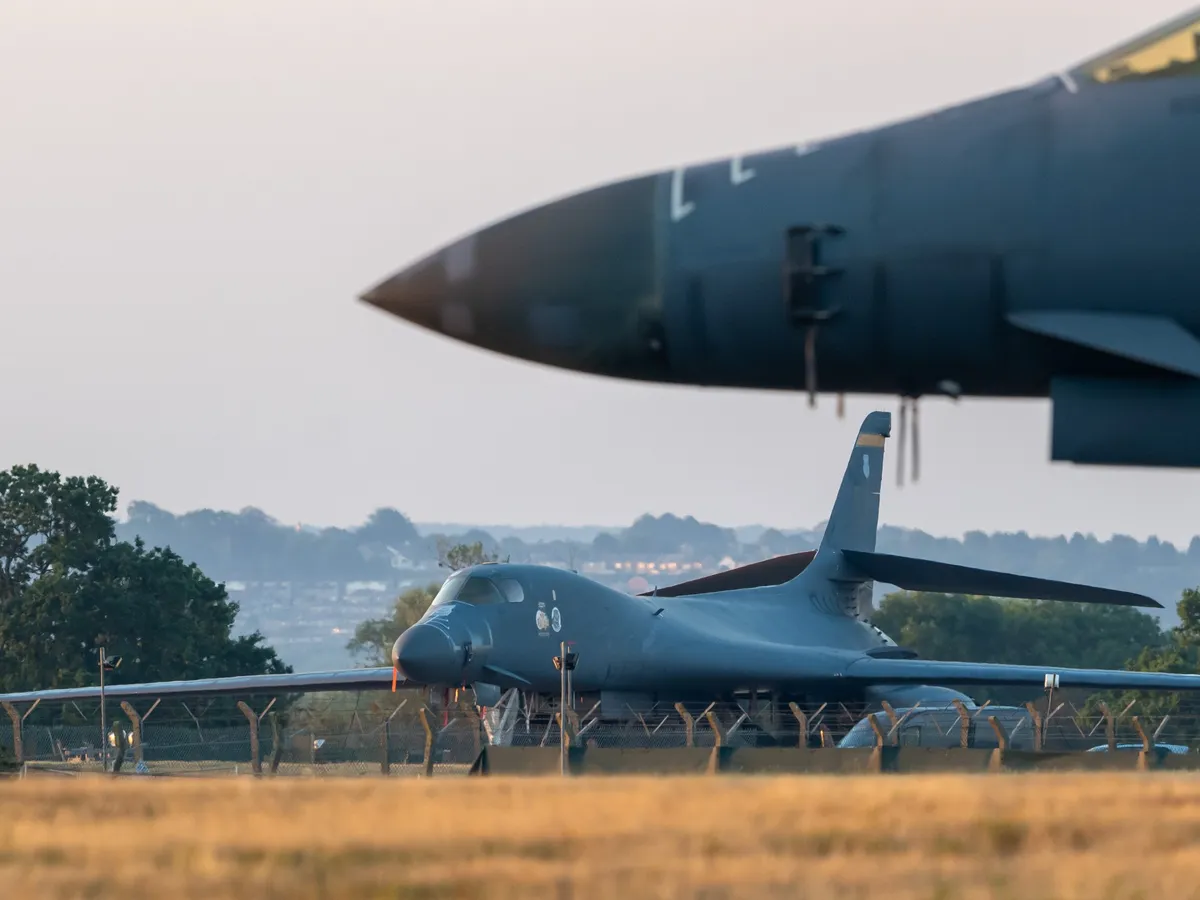
EXPLAINERHigh energy costs at the pump and strategic setback for US in the Iran war will likely cost Trump in the midterm elections.US Air Force B-1B Lancer bombers at a British base for defensive bombing missions against Iranian military targets [File: Matthew Horwood/Getty Images]Published On 16 Sep 2026The United States war on Iran has cost the country $38bn so far, the Congressional Budget Office (CBO) said this week, adding that an estimated $3bn will be added every month if the conflict continues, placing strain on the country’s finances and economy.The report, which was released on Tuesday, revealed that the protracted war is straining US munitions stockpiles and fuelling inflation as the Strait of Hormuz, a global oil export chokepoint, remains under Iranian blockade. The shortage of munitions poses a major security risk in the event of a new conflict.The findings of the inquiry will likely add fuel to the wave of criticism about the six-month-old war, which the US launched alongside Israel on February 28, and which US President Donald Trump claimed would only last a few weeks.The conflict has rattled the global energy market and contributed to rising prices as US voters express concern about the cost of living in the run-up to the November US midterm elections.The CBO’s report also comes on Monday’s report from the Pentagon’s official watchdog about the losses the US has incurred throughout the war – including the first admission by the body of low weapons stockpiles.Here’s what we know about how the war continues to affect domestic US politics, as well as its economy.What did the congressional report find?The $38bn cost cited is close to the $37.5bn shared by Defense Secretary Pete Hegseth at a Senate hearing on July 21.It does not include the costs of recent US strikes on vessels in the Strait of Hormuz or of Iranian attacks on US military installations in the region. Nor does it count borrowing expenses, which could add tens of billions of dollars to the total cost.Dwindling weapons stockpiles have made up the bulk of the costs – $25bn of weapons have been used up so far – with the budget office estimating it could take five years to restore expended US stockpiles.The conflict is likely to fuel inflation, which is expected to rise by 0.5 percentage points in the first three months of 2027, said the Congress’s nonpartisan bookkeeper.The rising cost of the war will also act as a drag on US fiscal health as the country’s national debt topped a record $40 trillion last month.The top Democrat on the US House of Representatives Budget Committee, Brendan Boyle of Pennsylvania, requested the inquiry into the US’s war expenditure. The Department of Defense did not cooperate with the inquiry, he said.“Donald Trump’s disastrous war in Iran has already taken the lives of brave American servicemembers and left others wounded,” Boyle said in a statement.How does this compare to the Pentagon watchdog’s report?On Monday, a separate report by the Pentagon’s Office of the Inspector General also outlined US losses in the war – the first such public acknowledgement by US authorities.That report found that the war had cost $33bn between February 28 and June 30 – with an estimated $22bn spent on expended munitions.In a turnabout from the Trump administration’s repeated assurances that US stockpiles of weapons remain healthy, the Pentagon admitted it is indeed running out of munitions – particularly defensive systems – and is facing “bottlenecks” in supply chains.US officials have continued to publicly reject US media reports about the shortage of munitions and missile interceptors as the war, which Trump initially said would last “four to five weeks”, has entered its seventh month. Trump has claimed that Washington has “virtually unlimited” ammunition.The White House and Pentagon disputed the findings of the CBO on munitions shortages.Monday’s Pentagon report also found that up to June 30, the war had caused $184m in damage to US facilities in the Gulf and killed at least 18 US military personnel.Iranian attacks, the report said, destroyed or damaged dozens of aircraft, including at least 30 MQ-9 Reaper drones.What has been the political opposition to the US war on Iran?Opposition to Trump’s war on Iran is mounting, with several Republicans joining the Democrats on Tuesday to vote for a third time to end the conflict.Seven House Republicans backed the resolution, including three voting in favour for the first time, joining all House Democrats who are opposed to the war. It will likely fail to pass in the Senate, where the Republicans hold a majority.Even if it were to clear the Senate, Trump can still veto it.Congress has the authority to declare war, but the president, as the commander in chief, can authorise military actions. Trump started the war before getting approval from Congress.Past US presidents from both parties have done the same – from Democrat President Harry Truman in 1950 when sending troops to the Korean War, to Republican President Richard Nixon before the US invaded Cambodia.Meanwhile, public approval for the war is at an all-time low. Just 31 percent of Americans support US military action against Iran, according to a Reuters/Ipsos poll from late August, down from 37 percent in March.How has the war impacted the US economy?The most salient effect of the war for everyday Americans throughout the conflict has been soaring fuel prices. On Tuesday, the average price of a gallon of diesel in the US hit a new record high of $6.27 ($1.66 per litre), according to the American Automobile Association.US consumers paid an additional $100bn for petrol and diesel in the first six months of the war, according to a tracker from Brown University’s Watson Institute for International and Public Affairs.Across the country, the added cost amounts to roughly $763 per household, based on an estimated 131 million households nationwide.Higher fuel costs are also driving up the cost of food – with the shortages of oil and gas affecting nearly every stage of the food-supply chain.In line with his dismissive statements on dwindling weapons stockpiles, Trump has also made flippant remarks about fuel prices, telling the Reuters news agency earlier this month: “If they rise, they rise.”Democrats have made the cost of living a key issue in the approaching midterm elections in November, which appears to have resonated with voters. The party registered wins for a number of progressives this year, from Abdul El-Sayed’s victory in Michigan’s Democratic Senate primary to Peggy Flanagan’s Minnesota win, also in the Democratic Senate primary.On Tuesday, several Democratic lawmakers pressed US Treasury Secretary Scott Bessent on the state of the economy, inflation and the rising cost of living – tying these issues to the Iran war and the rise in global oil prices. Bessent blamed inflation on the previous Biden administration and claimed Americans are better off under Trump.The war is also affecting US fiscal health. National debt surpassed $40 trillion in August, and the 30-year treasury yield jumped to 5.32 percent that same month, the highest cost of borrowing for the US government in nearly two decades, according to the Center for American Progress.How will the cost of the war impact the US midterm elections?Opinion polls suggest that the Republican Party could struggle to hold onto control of both the House of Representatives and the Senate when voters go to the polls on November 3 for the midterm elections.The rise in oil and gas prices due to the war has also become a major issue for Republicans in the lead-up to the elections.
SRCAl Jazeera
LANGEN
LEANCenter
WORDS1 245
ENT12
WED · 2026-09-16 · 14:53 GMTBRIEF NSR-2026-0916-111771
NSR-2026-0916-111771Analysis·EN·Economic Impact
Iran war has cost the US $38bn: How will it impact US economy, politics?
A Congressional Budget Office report states the US war on Iran has cost $38 billion, with an additional $3 billion monthly if it continues. This conflict, launched by President Trump alongside Israel on February 28, has strained US munitions stockpiles and is fueling inflation, with the Strait of Hormuz remaining under Iranian blockade.
Urooba JamalAl JazeeraFiled 2026-09-16 · 14:53 GMTLean · CenterRead · 5 min
Al JazeeraFIG 01
Reading time
5min
Word count
1 245words
Sources cited
3cited
Entities identified
12entities
Quality score
100%
§ 01
Briefing Summary
AI-generatedNEWSAR · AI
A Congressional Budget Office report states the US war on Iran has cost $38 billion, with an additional $3 billion monthly if it continues. This conflict, launched by President Trump alongside Israel on February 28, has strained US munitions stockpiles and is fueling inflation, with the Strait of Hormuz remaining under Iranian blockade. A separate Pentagon watchdog report corroborated significant US losses, including depleted weapons and damage to facilities, contradicting administration claims of ample supplies. Rising energy costs and the war's strategic setbacks are expected to negatively impact Trump in the upcoming midterm elections. Opposition to the war is growing in Congress, with some Republicans joining Democrats in voting to end the conflict, though it faces likely failure in the Senate and a potential presidential veto.
Confidence 0.90Sources 3Claims 5Entities 12
§ 02
Article analysis
Model · rule-basedFraming
Economic Impact
Political Strategy
Tone
Mixed Tone
AI-assessed
CalmNeutralAlarmist
Factuality
0.70 / 1.00
Factual
LowHigh
Sources cited
3
Well sourced
FewMany
§ 03
Key claims
5 extracted01
Donald Trump’s disastrous war in Iran has already taken the lives of brave American servicemembers and left others wounded.
quoteBrendan Boyle
Confidence
1.00
02
The United States war on Iran has cost the country $38bn so far, with an estimated $3bn to be added monthly if the conflict continues.
statisticCongressional Budget Office (CBO)
Confidence
1.00
03
Dwindling weapons stockpiles have accounted for $25bn of the war's costs.
statisticCongressional Budget Office (CBO)
Confidence
0.90
04
The protracted war is straining US munitions stockpiles and fuelling inflation.
factualCongressional Budget Office (CBO)
Confidence
0.90
05
The conflict is likely to fuel inflation, expected to rise by 0.5 percentage points in the first three months of 2027.
predictionCongressional Budget Office (CBO)
Confidence
0.80
§ 04
Full report
5 min read · 1 245 words§ 05
Entities
12 identifiedKey playerOppositionContextPositiveNeutralNegative
Organizations3
Locations4
§ 06
Keywords & salience
10 termsiran war
1.00
us economy
0.90
us politics
0.90
energy costs
0.80
inflation
0.70
munitions stockpiles
0.70
strait of hormuz
0.60
midterm elections
0.50
congressional budget office
0.50
national debt
0.40
§ 07
Topic connections
Interactive graph Network visualization showing 51 related topics
View Full Graph Person Organization Location Event|Click node to navigate|Edge numbers = shared articles