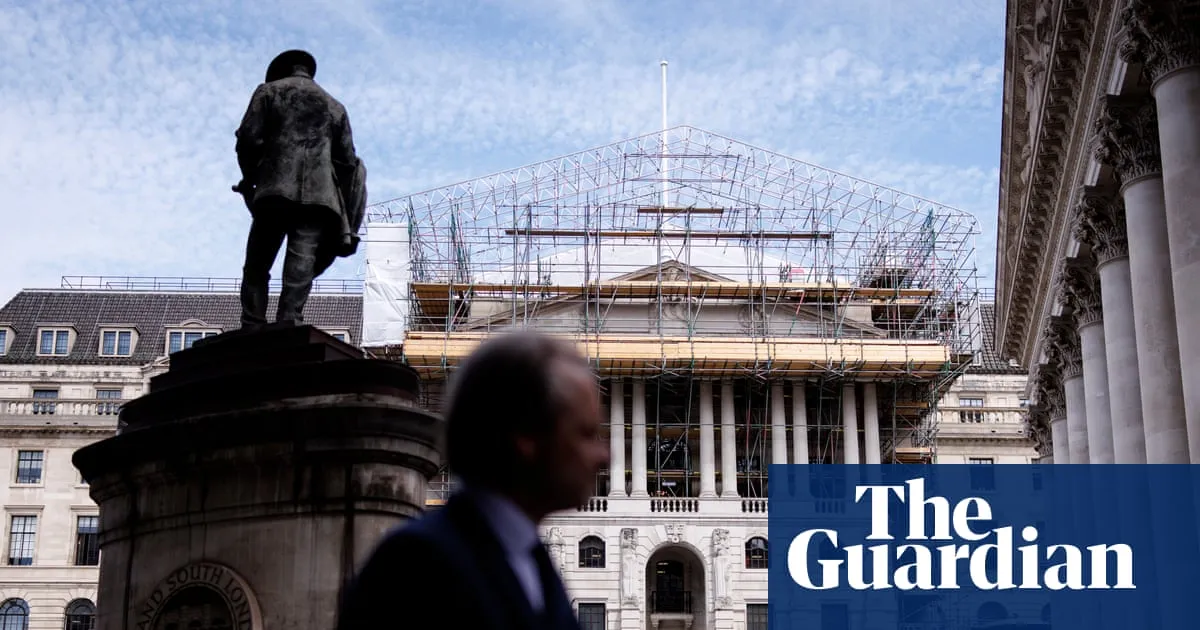
Good luck to Andy Burnham convincing voters he is giving them “breathing space”, if the England" class="entity-link entity-organization" data-entity-id="2477" data-entity-type="organization">Bank of England ratchets up interest rates in the coming months.That was the prospect opened up by Thursday’s minutes of the Bank’s monetary policy committee (MPC) meeting, which left rates unchanged at 3.75% – for now – but suggested policymakers may be unlikely to hold out much longer.“If the conflict in the Middle East persists for an extended period, as appears to be the case,” the Bank governor, Andrew Bailey said. “It is likely that policy may have to tighten.”With classic Bank understatement, Bailey said that since hostilities heated up again, there had been, “a seeming loss of urgency to find solutions”.When Burnham arrived in Downing Street in July, the war had abated, and the UK economy was puttering along nicely.Since then, the resumption of the Iran conflict has pushed global oil prices back above $100 a barrel, with painful knock-on effects across Europe and Asia.In the UK, inflation hit 3.1% in August, driven by rising fuel prices. And even without a interest rate rise from the Bank, mortgage rates have already jumped, as markets contemplate a period of higher inflation. The MPC now expects inflation to be above 4% in the first quarter of 2027.The minutes of its meeting suggested a marked reluctance to raise rates for now. While energy prices have shot up, the jobs market remains weak, helping to contain the risks of the “second-round effects” that allow inflation to become embedded.And the six-to-three vote for a hold was the same as at their last meeting in July, suggesting no rush to jump immediately. Yet there was also a growing sense of concern about the impact of soaring energy costs.The widely expected hold decision leaves the Bank an outlier among leading central banks.Kevin Warsh, the chair of the Federal Reserve, defied Donald Trump’s urgent calls for rate cuts on Wednesday by increasing US borrowing costs for the first time since 2023 – a move that went down well in financial markets, but predictably infuriated the president. The European Central Bank raised its rates last week; the Bank of Japan is expected to follow on Friday.skip past newsletter promotionafter newsletter promotionBurnham kicked off his premiership with modest but tangible cost of living measures, such as capping bus fares and slashing VAT on electricity bills.But he now faces a double whammy. Higher inflation and energy prices threaten to overwhelm the benefits of such handouts; but higher interest rates on government borrowing has increased the costs of future measures to protect consumers.All this at a time when – as the MPC acknowledges – weather shocks are likely to push up food prices, and bond markets remain fragile.The new prime minister has made clear he expects to focus more on domestic affairs and less on striding the global stage than his beleaguered predecessor Keir Starmer.But if – as currently seems likely – the Iran war goes on and on, the costs of geopolitics will be felt at home regardless.
SRCThe Guardian - World News
LANGEN
LEANCenter-Left
WORDS503
ENT12
THU · 2026-09-17 · 13:25 GMTBRIEF NSR-2026-0917-112003
NSR-2026-0917-112003Analysis·EN·Economic Impact
Burnham’s talk of ‘breathing space’ at odds with reality of future Bank rate rises
The Bank of England's Monetary Policy Committee has held interest rates at 3.75%, but indicated that future rate rises are likely due to persistent conflict in the Middle East driving up global oil prices and UK inflation. This situation challenges Prime Minister Andy Burnham's efforts to reduce the cost of living, as rising inflation and government borrowing costs could negate his initiatives.
Heather StewartThe Guardian - World NewsFiled 2026-09-17 · 13:25 GMTLean · Center-LeftRead · 3 min
The Guardian - World NewsFIG 01
Reading time
3min
Word count
503words
Sources cited
3cited
Entities identified
12entities
Quality score
100%
§ 01
Briefing Summary
AI-generatedNEWSAR · AI
The Bank of England's Monetary Policy Committee has held interest rates at 3.75%, but indicated that future rate rises are likely due to persistent conflict in the Middle East driving up global oil prices and UK inflation. This situation challenges Prime Minister Andy Burnham's efforts to reduce the cost of living, as rising inflation and government borrowing costs could negate his initiatives. While the Bank's decision to hold rates contrasts with other leading central banks, policymakers are concerned about soaring energy costs. The article suggests that geopolitical events, specifically the ongoing Iran conflict, will continue to impact the UK economy and consumers domestically.
Confidence 0.90Sources 3Claims 5Entities 12
§ 02
Article analysis
Model · rule-basedFraming
Economic Impact
Political Strategy
Tone
Mixed Tone
AI-assessed
CalmNeutralAlarmist
Factuality
0.70 / 1.00
Factual
LowHigh
Sources cited
3
Well sourced
FewMany
§ 03
Key claims
5 extracted01
The MPC now expects inflation to be above 4% in the first quarter of 2027.
statisticBank of England MPC
Confidence
1.00
02
Inflation hit 3.1% in August, driven by rising fuel prices.
statisticnull
Confidence
1.00
03
If the conflict in the Middle East persists, Bank policy may have to tighten.
quoteAndrew Bailey
Confidence
1.00
04
The Bank of England is an outlier among leading central banks in holding rates steady.
factualnull
Confidence
0.90
05
Bank of England policymakers may be unlikely to hold interest rates unchanged for much longer.
predictionBank of England MPC
Confidence
0.80
§ 04
Full report
3 min read · 503 words§ 05
Entities
12 identifiedKey playerOppositionContextPositiveNeutralNegative
People3
Organizations4
§ 06
Keywords & salience
9 termsbank rate rises
1.00
inflation
0.90
energy prices
0.80
monetary policy
0.70
interest rates
0.70
middle east conflict
0.60
cost of living
0.50
jobs market
0.40
mortgage rates
0.40
§ 07
Topic connections
Interactive graph Network visualization showing 51 related topics
View Full Graph Person Organization Location Event|Click node to navigate|Edge numbers = shared articles