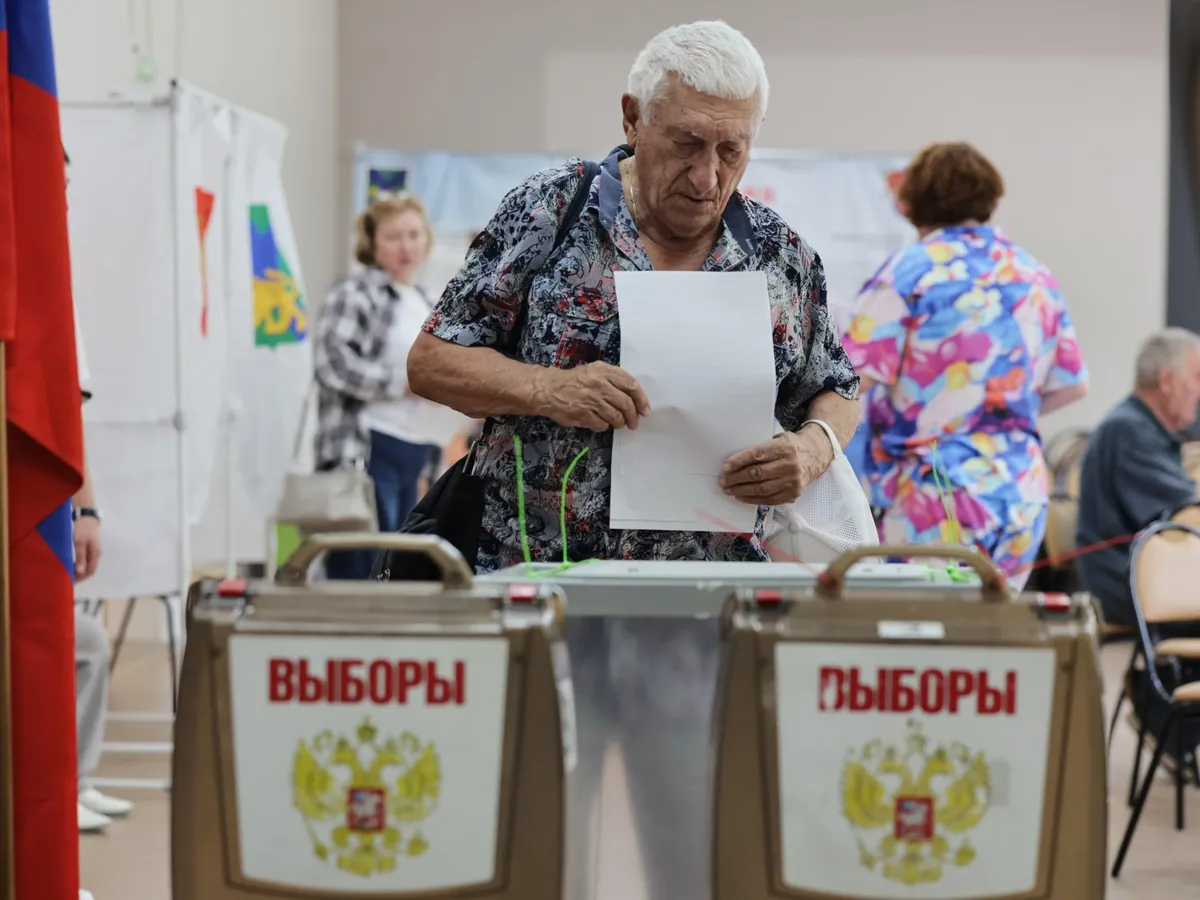
The risk of a protest vote was too high at the Duma elections so a pre-election crackdown was carried out.Political analyst.Published On 18 Sep 2026A voter casts his ballot in the parliamentary election in Vladivostok, Russia, Friday, Sept. 18, 2026 [AP Photo]In the weeks leading up to the Duma elections, the Kremlin accelerated what is known in the country as “ballot sterilisation”. It removed the remaining risk factors that could demonstrate any form of public dissatisfaction.Candidates of the so-called managed opposition parties, such as the Communist Party of the Russian Federation (CPRF), have been arrested or barred from running, thus diminishing the prospect for a protest vote against the governing Russia" class="entity-link entity-organization" data-entity-id="154443" data-entity-type="organization">United Russia. Last month, Yabloko, the only openly antiwar party, was barred from fielding candidates.In the past, voting for these parties has been encouraged by opposition leaders excluded from running, such as the late Kremlin critic Alexey Navalny, as a form of anti-regime vote.This time the Kremlin is not taking any chances. Public dissatisfaction is widespread and the risk of a display of dissent at the ballot box is too high to let the managed opposition run freely. The election must produce a result that “proves” national unity and full support for President Vladimir Putin and the governing Russia" class="entity-link entity-organization" data-entity-id="154443" data-entity-type="organization">United Russia party.The ‘threat’ of the managed oppositionYabloko is the only surviving officially registered political party in Russia that adheres to democratic principles and openly opposes the war in Ukraine. It has pulled through multiple waves of political repression over the years that destroyed or forced all others into exile.In July, Yabloko was allowed to register for the Duma elections. The decision to let the party run likely came out of the Kremlin’s desire to show confidence – to claim that elections in Russia are so free that even an openly antiwar party can participate amid the ongoing war with Ukraine.Yabloko had about 4 percent support just before the election campaign started and was likely going to get between 1 and 2 percent of the vote, like in previous Duma elections – well below the 5 percent threshold to enter the legislature.What changed? The registration of Yabloko prompted a mass, uncoordinated surge of interest due to its antiwar slogans. Searches in Russia’s top search engine, Yandex, containing the party’s name and the word “elections” increased fivefold , surpassing even those for the governing Russia" class="entity-link entity-organization" data-entity-id="154443" data-entity-type="organization">United Russia.The explosion of interest in Yabloko was apparent across all popular social media platforms in Russia and was followed by statements of support and calls to vote for the party from exiled political leaders, such as Yulia Navalnaya, Navalny’s widow.In August, the party’s registration for the election was revoked by the Supreme Court following accusations that it was seeking to undermine the electoral process.The case of the CPRF is slightly different. It is the second-largest party in the Duma, and it votes on major bills “as requested” with Russia" class="entity-link entity-organization" data-entity-id="154443" data-entity-type="organization">United Russia. It is not openly antiwar, but it has multiple strong regional branches that tend to be more critical of the governing party at the local level, as well as a number of charismatic leading members who have been very vocal about the war’s negative consequences.By building its campaign around targeted criticism, the CPRF has become a very attractive choice for protest voters.The party has not been deregistered, but some of its candidates have been removed from the ballot under various pretexts, and a number of restrictions have been imposed that limit its campaigning.For example, Nikolay Bondarenko, a popular communist with more than two million YouTube subscribers, was banned from participating in the Duma elections for the use of “extremist symbols”; the accusation is based on a social media post featuring Navalny’s photo.Managing an electionNeither Yabloko nor CPRF would have threatened Russia" class="entity-link entity-organization" data-entity-id="154443" data-entity-type="organization">United Russia’s majority in the Duma if there had been no crackdown.Years of perfected administrative pressure, investment in e-voting, the introduction of three-day voting, and the elimination of all independent election observers have made it extremely easy for the Kremlin to produce the outcome it desires.The Kremlin’s political managers set the parameters for the election results in advance of the vote. Currently, the target is 50 percent turnout with 50 percent of the vote for Russia" class="entity-link entity-organization" data-entity-id="154443" data-entity-type="organization">United Russia. Notably, the latter was lowered from 55 to 50 percent due to concerns about growing public dissatisfaction.So why the crackdown on the systemic opposition?The elections are being held at a time when the direct consequences of the war in Ukraine are felt by a growing number of Russians. Fuel shortages and rising inflation are increasingly impacting Russian families, especially those who have not sent a member to the front or are working in the war industries.People are growing more desperate and pessimistic about the future, especially in the more impoverished regions of the country. According to independent pollster Levada Center, public anxiety is at a level not seen since September 2022, when mass mobilisation was announced.The Kremlin clearly perceives that there is a chance this dissatisfaction could pour out into the ballot boxes, which would necessitate more drastic measures of manipulation to adjust the result to the desired one.If Yabloko, for example, were to get a double-digit result, this would be a nightmare for the Kremlin’s political managers. Even with all the tools for electoral manipulation at their disposal, it is impossible to make 10 percent into 1 percent without everyone knowing it.This could elevate the risk of protests or substantially hurt the reputation of President Putin, who this year is personally promoting Russia" class="entity-link entity-organization" data-entity-id="154443" data-entity-type="organization">United Russia.The results the Kremlin’s political managers must deliver need to demonstrate unity and full support – and those results need to be tacitly accepted by society at large.The crackdown on the managed opposition, therefore, means that they have turned on overkill mode and are micromanaging every aspect of the electoral process.The public mood would be a major concern for the Kremlin only until the elections are done. Once the vote has been conducted in a sufficiently satisfactory manner, the state apparatus will have a free hand to intensify political repression and adopt unpopular measures, such as total control over the internet or austerity policies.The task of the Kremlin’s political managers, like that of the security agencies, is to maintain control no matter what, so that Putin can continue the war in Ukraine for as long as he needs to.The views expressed in this article are the author’s own and do not necessarily reflect Al Jazeera’s editorial stance.
SRCAl Jazeera
LANGEN
LEANCenter
WORDS1 070
ENT12
FRI · 2026-09-18 · 09:10 GMTBRIEF NSR-2026-0918-112221
NSR-2026-0918-112221Analysis·EN·Political Strategy
Why the Kremlin fears even the ‘managed opposition’ in Russia
Ahead of the 2026 Duma elections, the Kremlin intensified "ballot sterilization" to prevent protest votes. Candidates from the "managed opposition," including the Communist Party of the Russian Federation (CPRF), faced arrests or disqualifications.
Anton BarbashinAl JazeeraFiled 2026-09-18 · 09:10 GMTLean · CenterRead · 5 min
Al JazeeraFIG 01
Reading time
5min
Word count
1 070words
Sources cited
1cited
Entities identified
12entities
Quality score
100%
§ 01
Briefing Summary
AI-generatedNEWSAR · AI
Ahead of the 2026 Duma elections, the Kremlin intensified "ballot sterilization" to prevent protest votes. Candidates from the "managed opposition," including the Communist Party of the Russian Federation (CPRF), faced arrests or disqualifications. The anti-war Yabloko party, initially allowed to register, was later barred after its anti-war platform saw a surge in public interest and support from exiled opposition figures. While the CPRF was not deregistered, some of its candidates were removed from ballots, and campaigning restrictions were imposed. This pre-election crackdown was implemented due to widespread public dissatisfaction, fueled by the war's economic consequences, and the Kremlin's desire to ensure a result demonstrating national unity and support for President Putin and United Russia.
Confidence 0.90Sources 1Claims 5Entities 12
§ 02
Article analysis
Model · rule-basedFraming
Political Strategy
Conflict
Tone
Mixed Tone
AI-assessed
CalmNeutralAlarmist
Factuality
0.40 / 1.00
Mixed
LowHigh
Sources cited
1
Limited
FewMany
§ 03
Key claims
5 extracted01
Yabloko, the only openly antiwar party, was barred from fielding candidates after its registration was revoked by the Supreme Court.
factual
Confidence
0.90
02
Candidates from managed opposition parties like the CPRF were arrested or barred from running to diminish the prospect of a protest vote.
factual
Confidence
0.80
03
The Kremlin accelerated "ballot sterilisation" by removing risk factors demonstrating public dissatisfaction before the Duma elections.
factual
Confidence
0.80
04
The election must produce a result that "proves" national unity and full support for President Putin and United Russia.
factual
Confidence
0.70
05
Searches for Yabloko and "elections" on Yandex increased fivefold, surpassing even those for United Russia, due to its antiwar slogans.
factual
Confidence
0.70
§ 04
Full report
5 min read · 1 070 words§ 05
Entities
12 identifiedKey playerOppositionContextPositiveNeutralNegative
Organizations4
Locations4
§ 06
Keywords & salience
10 termsmanaged opposition
1.00
duma elections
0.90
kremlin
0.80
protest vote
0.70
ballot sterilisation
0.70
public dissatisfaction
0.60
antiwar party
0.50
political repression
0.50
yabloko
0.40
united russia
0.40
§ 07
Topic connections
Interactive graph Network visualization showing 51 related topics
View Full Graph Person Organization Location Event|Click node to navigate|Edge numbers = shared articles