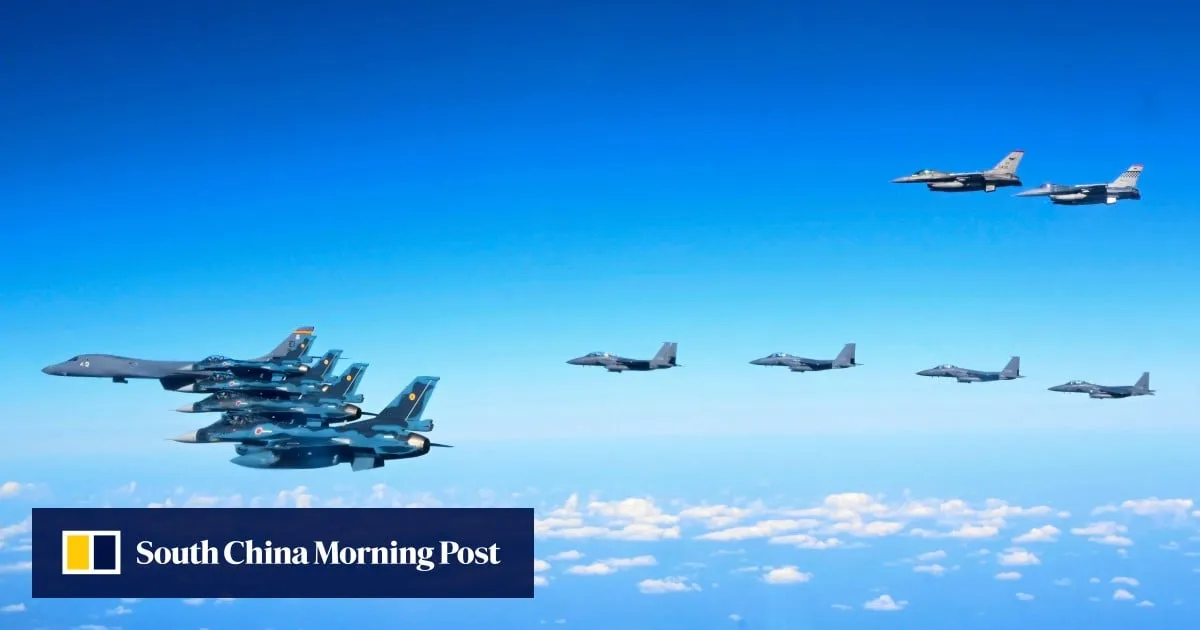
Washington’s latest defence strategy of providing “more limited US support” to its allies is expected to damage domestic backing for leaders in Japan and South Korea and spur greater momentum among regional countries towards military self-reliance.Analysts also warn that such a realignment could lead to a “radical swing” in regional security calculations, and in the case of South Korea, weaken its deterrence against the North.In the National Defence Strategy (NDS) released by the US Defence Department last Friday, Washington called on allies and partners to take “primary responsibility” for defending themselves.The Pentagon also made clear that Washington would offer limited support in line with the shift in US President Donald Trump’s security focus away from the Indo-Pacific region.“Ours is not a strategy of isolation,” the document states, adding that through the America-first lens, Washington’s “alliances and partners have an essential role to play”.Reiterating Trump’s long-standing view that the US alliance system was “one-sided” in favour of allies, the NDS echoes the National Security Strategy released last month, which urges America’s partners to raise their defence expenditure.Pointing to a “new global standard for defence spending” of 5 per cent of gross domestic product, the NDS states that this should apply to allies and partners around the world, “not just in Europe”.
SRCSouth China Morning Post
LANGEN
LEANCenter-Right
WORDS210
ENT10
WED · 2026-01-28 · 10:28 GMTBRIEF NSR-2026-0128-11225
NSR-2026-0128-11225News Report·EN·National Security
Why US defence strategy may push South Korea, Japan towards ‘radical’ security realignment
A new US defense strategy emphasizing "limited support" for allies is expected to push South Korea and Japan towards greater military self-reliance. The US National Defence Strategy (NDS), released by the Department of Defense, calls on allies to take "primary responsibility" for their own defense, reflecting a shift in focus away from the Indo-Pacific region.
Maria SiowSouth China Morning PostFiled 2026-01-28 · 10:28 GMTLean · Center-RightRead · 1 min
South China Morning PostFIG 01
Reading time
1min
Word count
210words
Sources cited
1cited
Entities identified
10entities
Quality score
100%
§ 01
Briefing Summary
AI-generatedNEWSAR · AI
A new US defense strategy emphasizing "limited support" for allies is expected to push South Korea and Japan towards greater military self-reliance. The US National Defence Strategy (NDS), released by the Department of Defense, calls on allies to take "primary responsibility" for their own defense, reflecting a shift in focus away from the Indo-Pacific region. Analysts warn this realignment could weaken deterrence, particularly for South Korea against North Korea, and cause a "radical swing" in regional security. The NDS reiterates the US view that allies should increase defense spending, suggesting a new global standard of 5% of GDP. This strategy, stemming from an "America-first" perspective, is prompting concerns about the future of US alliances in Asia.
Confidence 0.90Sources 1Claims 4Entities 10
§ 02
Article analysis
Model · rule-basedFraming
National Security
Political Strategy
Tone
Mixed Tone
AI-assessed
CalmNeutralAlarmist
Factuality
0.60 / 1.00
Mixed
LowHigh
Sources cited
1
Limited
FewMany
§ 03
Key claims
4 extracted01
The NDS states that a “new global standard for defence spending” of 5 per cent of gross domestic product should apply to allies and partners around the world.
factualNDS
Confidence
1.00
02
The Pentagon made clear that Washington would offer limited support in line with the shift in US President Donald Trump’s security focus away from the Indo-Pacific region.
factualPentagon
Confidence
0.90
03
Washington’s latest defence strategy of providing “more limited US support” to its allies is expected to damage domestic backing for leaders in Japan and South Korea.
predictionAnalysts
Confidence
0.70
04
Such a realignment could lead to a “radical swing” in regional security calculations.
predictionAnalysts
Confidence
0.60
§ 04
Full report
1 min read · 210 words§ 05
Entities
10 identifiedKey playerOppositionContextPositiveNeutralNegative
Locations6
§ 06
Keywords & salience
10 termsus defence strategy
0.90
security realignment
0.80
japan
0.70
military self-reliance
0.70
south korea
0.70
defence spending
0.60
deterrence
0.60
national defence strategy
0.50
alliances
0.50
indo-pacific region
0.40
§ 07
Topic connections
Interactive graph No topic relationship data available yet. This graph will appear once topic relationships have been computed.