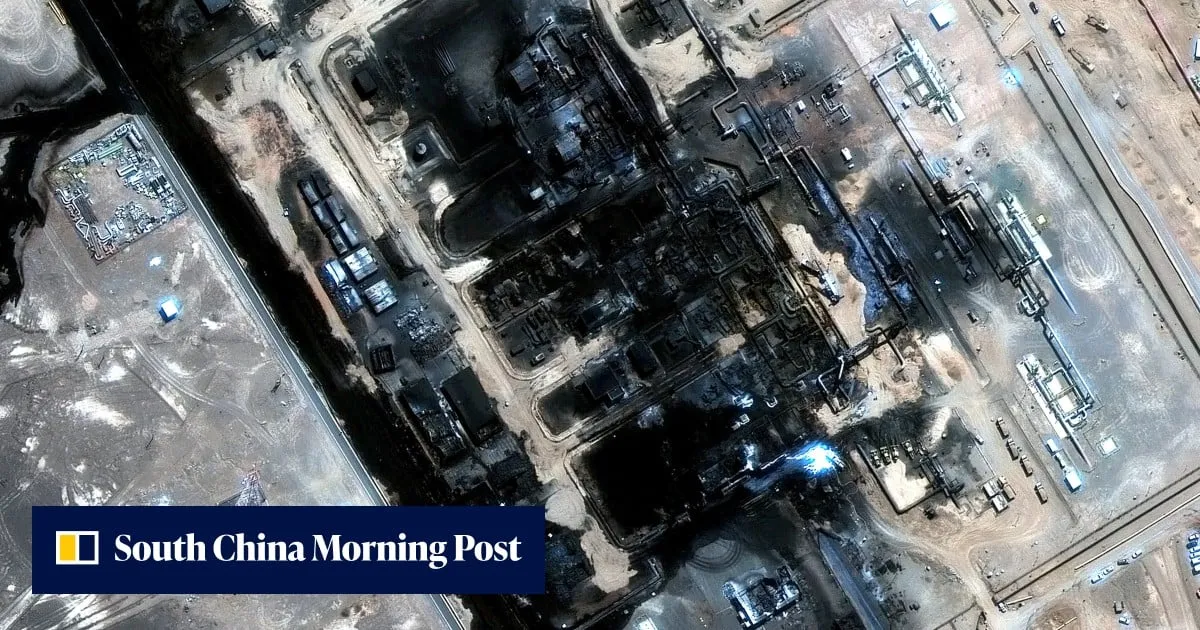
Asian economies heavily dependent on imported energy are facing an even sharper squeeze after the shutdown of Saudi Arabia’s East-West pipeline removed a key escape route from the disruption in the Strait of Hormuz, deepening an energy shock that has already pushed crude oil above US$100 a barrel.Analysts said the loss of that bypass would hit Asian refiners first before feeding through to inflation, currencies and economic growth across the region.Saudi Arabia, the world’s largest oil exporter, confirmed that the pipeline was shut as a precaution following an attack last week but did not disclose the extent of the damage, the number of affected pumping stations or a timetable for restarting operations, according to a Rystad Energy report on Monday.The closure leaves Saudi Arabia with fewer ways to keep crude moving to Asian buyers, raising the risk of delayed or reduced deliveries if the outage drags on.
SRCSouth China Morning Post
LANGEN
LEANCenter-Right
WORDS147
ENT10
FRI · 2026-09-18 · 13:50 GMTBRIEF NSR-2026-0918-112304
NSR-2026-0918-112304News Report·EN·Economic Impact
Saudi oil pipeline closure puts Asia’s economic resilience to the test
Saudi Arabia's East-West pipeline has been shut down as a precautionary measure following an attack last week. This closure removes a crucial bypass for oil shipments, particularly impacting Asian economies heavily reliant on imported energy.
Biman MukherjiSouth China Morning PostFiled 2026-09-18 · 13:50 GMTLean · Center-RightRead · 1 min
South China Morning PostFIG 01
Reading time
1min
Word count
147words
Sources cited
1cited
Entities identified
10entities
Quality score
100%
§ 01
Briefing Summary
AI-generatedNEWSAR · AI
Saudi Arabia's East-West pipeline has been shut down as a precautionary measure following an attack last week. This closure removes a crucial bypass for oil shipments, particularly impacting Asian economies heavily reliant on imported energy. The disruption exacerbates an existing energy shock that has already driven crude oil prices above $100 a barrel. Analysts predict this will first affect Asian refiners, subsequently leading to increased inflation, currency depreciation, and slower economic growth across the region. Saudi Arabia, the world's largest oil exporter, has not provided details on the extent of damage or a timeline for restarting operations, increasing the risk of delayed or reduced crude deliveries to Asian buyers if the outage persists.
Confidence 0.85Sources 1Claims 5Entities 10
§ 02
Article analysis
Model · rule-basedFraming
Economic Impact
Conflict
Tone
Measured
AI-assessed
CalmNeutralAlarmist
Factuality
0.70 / 1.00
Factual
LowHigh
Sources cited
1
Limited
FewMany
§ 03
Key claims
5 extracted01
Crude oil prices have already surpassed US$100 a barrel due to existing disruptions.
statistic
Confidence
0.95
02
Saudi Arabia confirmed the pipeline shutdown as a precaution after an attack.
factualSaudi Arabia
Confidence
0.90
03
Saudi Arabia's East-West pipeline closure removes a key escape route from Strait of Hormuz disruptions.
factual
Confidence
0.90
04
The closure leaves Saudi Arabia with fewer ways to deliver crude to Asian buyers, risking delays or reductions.
factual
Confidence
0.85
05
The pipeline closure will hit Asian refiners first, impacting inflation, currencies, and economic growth.
predictionAnalysts
Confidence
0.80
§ 04
Full report
1 min read · 147 words§ 05
Entities
10 identifiedKey playerOppositionContextPositiveNeutralNegative
Organizations1
Locations4
Events1
§ 06
Keywords & salience
10 termsenergy shock
1.00
oil pipeline closure
0.90
economic resilience
0.90
asian economies
0.80
strait of hormuz
0.80
energy dependence
0.70
crude oil
0.70
inflation
0.60
saudi arabia
0.50
rystad energy
0.40
§ 07
Topic connections
Interactive graph Network visualization showing 51 related topics
View Full Graph Person Organization Location Event|Click node to navigate|Edge numbers = shared articles