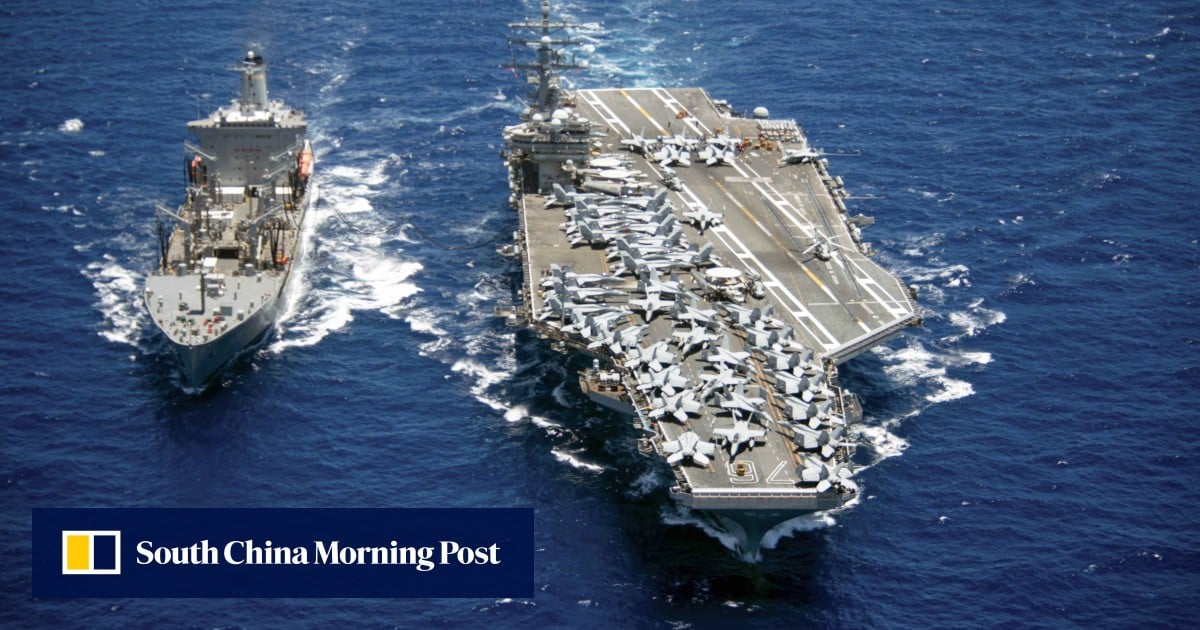
The US faces critical “sustainment risks” that might lead to rapid defeat in a conflict with China, according to a Heritage Foundation report, which also found that while such a scenario could start in the Taiwan Strait, it would not be contained there.Based on the findings of an AI-based study called Tidalwave – after a 1943 operation of the same name – the right-wing think tank urged Washington to immediately strengthen American fuel and munitions reserves and logistical networks.At the same time, China’s fuel and ammunition systems were “vulnerable to a range of US tools before and during conflict and more visible or exposed than the forces they support”, the study said.“Allowing the systems that support the PLA to operate with impunity before and during conflict would carry grave strategic consequences,” the report added, referring to the People’s Liberation Army.AI-assisted simulations based on more than 7,000 data sources focused on fuel and ammunition vulnerabilities for both sides in scenarios based on a 365-day US-China conflict in the western Pacific Ocean.The study found that both the Americans and Chinese faced critical risks in sustaining supplies of fuel and munitions, making the first 30-60 days crucial in determining the long-term shape of the war by quickly reducing numbers of aircraft and ships.
SRCSouth China Morning Post
LANGEN
LEANCenter-Right
WORDS210
ENT7
WED · 2026-01-28 · 14:00 GMTBRIEF NSR-2026-0128-11323
NSR-2026-0128-11323News Report·EN·National Security
Would Chinese or US supply lines be more vulnerable in a Pacific conflict?
A Heritage Foundation report, based on an AI-driven study called Tidalwave, assesses the vulnerability of US and Chinese supply lines in a hypothetical year-long conflict in the Western Pacific. The study, analyzing over 7,000 data points, found both nations face critical risks in sustaining fuel and ammunition supplies.
Liu ZhenSouth China Morning PostFiled 2026-01-28 · 14:00 GMTLean · Center-RightRead · 1 min
South China Morning PostFIG 01
Reading time
1min
Word count
210words
Sources cited
1cited
Entities identified
7entities
Quality score
100%
§ 01
Briefing Summary
AI-generatedNEWSAR · AI
A Heritage Foundation report, based on an AI-driven study called Tidalwave, assesses the vulnerability of US and Chinese supply lines in a hypothetical year-long conflict in the Western Pacific. The study, analyzing over 7,000 data points, found both nations face critical risks in sustaining fuel and ammunition supplies. While the report urges the US to bolster its reserves and logistical networks due to "sustainment risks" that could lead to defeat, it also identifies China's fuel and ammunition systems as vulnerable to US action. The report suggests the initial 30-60 days of a conflict would be crucial in determining the long-term outcome due to rapid depletion of resources on both sides. The study emphasizes the strategic importance of disrupting the PLA's support systems.
Confidence 0.90Sources 1Claims 5Entities 7
§ 02
Article analysis
Model · rule-basedFraming
National Security
Conflict
Tone
Mixed Tone
AI-assessed
CalmNeutralAlarmist
Factuality
0.70 / 1.00
Factual
LowHigh
Sources cited
1
Limited
FewMany
§ 03
Key claims
5 extracted01
AI-assisted simulations based on more than 7,000 data sources focused on fuel and ammunition vulnerabilities.
factualHeritage Foundation report
Confidence
0.90
02
Both the Americans and Chinese faced critical risks in sustaining supplies of fuel and munitions.
factualHeritage Foundation report
Confidence
0.80
03
The US faces critical “sustainment risks” that might lead to rapid defeat in a conflict with China.
quoteHeritage Foundation report
Confidence
0.80
04
China’s fuel and ammunition systems were “vulnerable to a range of US tools before and during conflict.
quoteHeritage Foundation report
Confidence
0.70
05
A US-China conflict could start in the Taiwan Strait, but it would not be contained there.
predictionHeritage Foundation report
Confidence
0.60
§ 04
Full report
1 min read · 210 words§ 05
Entities
7 identifiedKey playerOppositionContext
§ 06
Keywords & salience
9 termssupply lines
0.90
us-china conflict
0.80
vulnerabilities
0.70
fuel and munitions
0.70
pacific conflict
0.60
people's liberation army
0.50
sustainment risks
0.50
logistical networks
0.50
taiwan strait
0.40
§ 07
Topic connections
Interactive graph Network visualization showing 51 related topics
View Full Graph Person Organization Location Event|Click node to navigate|Edge numbers = shared articles