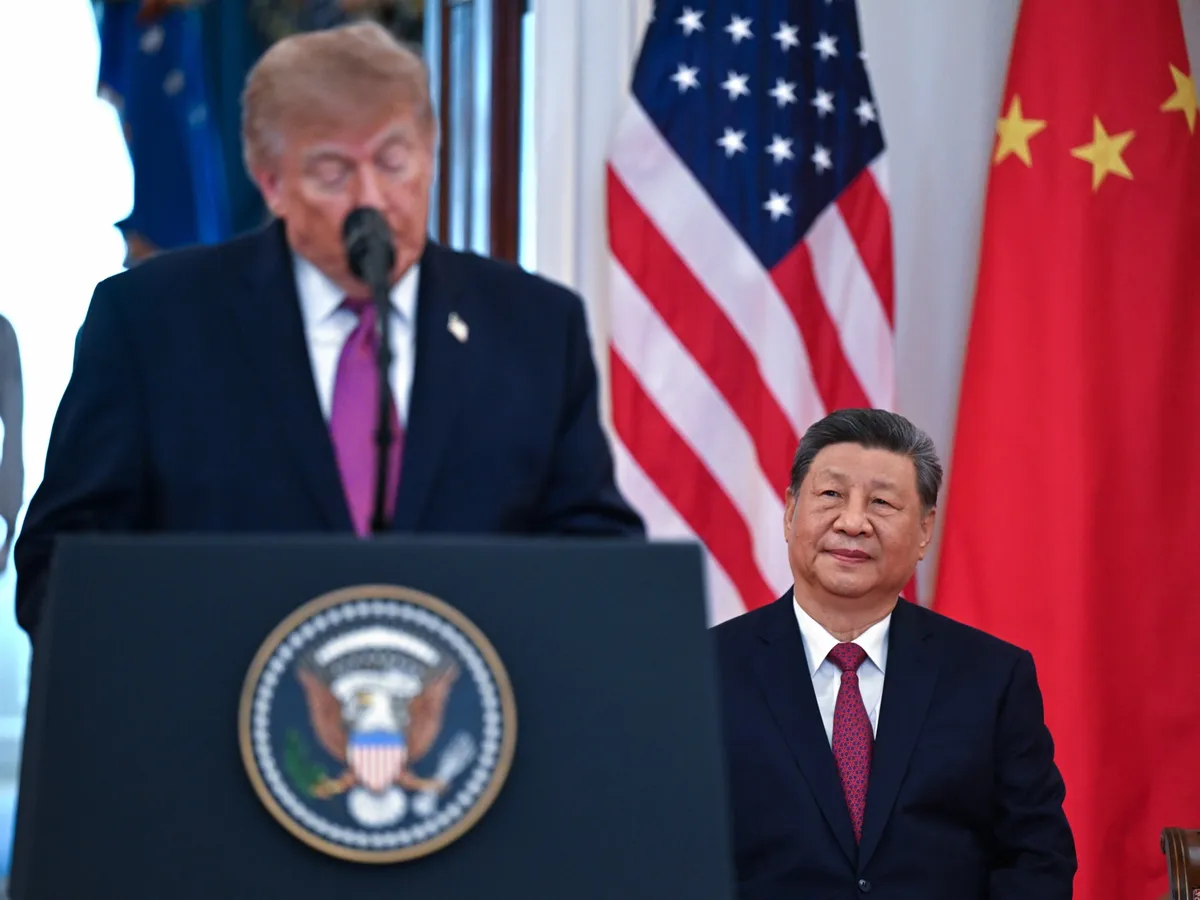
Trump and Xi seek stable US-China ties at the White House, but differences over Iran, Taiwan and trade remain unresolved.Chinese President Xi Jinping looks on as US President Donald Trump speaks during an arrival ceremony for Xi’s state visit in the Cross Hall of the White House in Washington, DC, on September 24, 2026 [Annabelle Gordon/Pool via EPA]Published On 24 Sep 2026US President Donald Trump and his Chinese counterpart Xi Jinping seemed to put sources of tension between their countries to the side during the second day of Xi’s three-day visit to the United States, where he met with Trump and toured the White House.Trump touted what he described as a “great meeting” with Xi on Thursday, as the two superpowers seek greater dialogue despite differences over issues such as Iran, Taiwan, AI and trade.Recommended Stories list of 3 itemslist 1 of 3Trump and Xi summit will focus on ‘stabilising’ ties, experts saylist 2 of 3Trump-Xi summit: Here’s what’s on the agenda, and why it matterslist 3 of 3‘Hostile, but hooked’: What’s behind the US-China trade truce extension?end of list“From the time of my first election in 2016, President Xi and I have forged a friendship, a truly great friendship, actually, built on mutual respect and the vital interests of our people,” Trump said.Here are a few key takeaways from Xi’s second day in the US.Emphasis on stable tiesWhen Trump first returned to the White House, he announced severe tariffs on Chinese goods that quickly set off a Trade War between the world’s two largest economies and warnings of wider fallout around the globe.Despite such a rocky start, Trump and Xi have sought to dial back tensions and improve their personal ties, even if there is an understanding that core areas of disagreement aren’t likely to change.The US president has sometimes talked about China’s status as a rising power as a source of admiration, even as those changes bring it into competition with the US.“We had a great meeting,” Trump told reporters on Thursday, without offering further details.For his part, Xi stated on Thursday that the US and China should take steps to avoid the “Thucydides Trap”, a term used by international relations scholars regarding the risk of conflict between a rising power and an existing power.“It should be a race of catching up with one another, not a wrestle in which one either wins or loses,” Xi said, adding that both countries were deeply interconnected and should engage in “healthy” competition that is “kept within bounds”.Iran war hangs over visitWhile Xi’s visit is focused on improving ties with Trump and the US, several issues have also been at the centre of discussions between the two leaders. One is the US war on Iran, which was launched by the US and Israel in February and has led to the closure of the Strait of Hormuz and surging global energy prices.Trump has called on China to support US efforts to isolate Tehran economically and reopen the strait, which was open before the war. Beijing, Iran’s largest trading partner, has been hesitant to get involved.No breakthroughs on the issue were reported during talks between Trump and Xi on Thursday, with the Chinese president stating that he supported the US and Iran returning to an interim agreement that was supposed to pave the way for a larger peace deal.That truce broke down shortly after it was announced in June.Visit gets mixed reception from US lawmakersWhile Xi’s visit to the US has been marked by pomp and ceremony, some Democratic and Republican lawmakers have complained that the spectacle amounts to a celebration of a US rival.“Quite frankly, had the White House asked me for advice, I would have suggested the president not invite Xi Jinping to Washington for such a lavish welcome here in the United States of America based on all of the troubling issues we have with President Xi and the Chinese Communist Party,” said Republican Senator Roger Wicker.That line of criticism was shared by Democratic Senator Chris Van Hollen, who said that Trump “always deludes himself into thinking that, by ingratiating himself with authoritarians, he’s somehow going to get his way”.Others said that diplomacy between the US and China is a positive thing that will help the two powers avoid potentially disastrous conflict.“I’m glad this meeting is happening; diplomacy is key,” Republican Senator Rand Paul said in a social media post. “Talk more, war less.”Xi urges Trump not to recognise Taiwan independenceUS ties with Taiwan, a self-governing island that China claims as part of its territory, remain a core flashpoint in relations between Washington and Beijing.During their meeting on Thursday, the Chinese state news agency Xinhua reported that Xi urged Trump to oppose Taiwanese independence and handle the issue “prudently”. The White House has yet to release its own summary of the talks and remarks on Taiwan.The Chinese leader is likely to continue pressing Trump to avoid acts that Beijing views as provocative.Trump stated after a meeting with Xi in May that he would postpone final approval of a $14bn arms package for Taipei, and has called arms sales a “very good negotiating chip” with China.That transactional approach has angered some in Washington, who see US promises of military aid to Taiwan as a core commitment.But the US has long taken an expedient approach to relations with Beijing and Taipei, seeking stronger ties with China as it emerged as an economic powerhouse and maintaining an official policy of encouraging a peaceful resolution of the dispute without taking either side.Taiwan has expressed concern that China could use coercion, both economic and military, to bring the island under its control.A May Economist/YouGov poll found that people in the US are much more likely to view Taiwan as an ally of the country than China. Asked whether the US should prioritise good relations with Beijing or preventing China from seizing control of Taiwan, respondents were split 36 percent to 35 percent.Less than 40 percent of those polled said the US should be prepared to use military force to stop China from controlling Taiwan.
SRCAl Jazeera
LANGEN
LEANCenter
WORDS1 009
ENT11
THU · 2026-09-24 · 23:51 GMTBRIEF NSR-2026-0925-113921
NSR-2026-0925-113921News Report·EN·Diplomatic
Trump-Xi summit: Four key takeaways from the Washington, DC, meeting
During a three-day visit to Washington D.C. on September 24, 2026, Chinese President Xi Jinping met with US President Donald Trump to seek stable ties between their nations.
Al Jazeera StaffAl JazeeraFiled 2026-09-24 · 23:51 GMTLean · CenterRead · 5 min
Al JazeeraFIG 01
Reading time
5min
Word count
1 009words
Sources cited
3cited
Entities identified
11entities
Quality score
100%
§ 01
Briefing Summary
AI-generatedNEWSAR · AI
During a three-day visit to Washington D.C. on September 24, 2026, Chinese President Xi Jinping met with US President Donald Trump to seek stable ties between their nations. While both leaders emphasized their personal friendship and the importance of dialogue, significant differences over Iran, Taiwan, AI, and trade remain unresolved. Trump described the meeting as "great," and Xi urged avoidance of the "Thucydides Trap," advocating for healthy competition. Discussions on the US war in Iran yielded no breakthroughs, with China hesitant to fully support US isolation efforts. Xi also pressed Trump to oppose Taiwanese independence. The visit received mixed reactions from US lawmakers, with some criticizing the lavish welcome while others supported diplomatic engagement.
Confidence 0.90Sources 3Claims 4Entities 11
§ 02
Article analysis
Model · rule-basedFraming
Diplomatic
Economic Impact
Tone
Measured
AI-assessed
CalmNeutralAlarmist
Factuality
0.60 / 1.00
Mixed
LowHigh
Sources cited
3
Well sourced
FewMany
§ 03
Key claims
4 extracted01
US and China should take steps to avoid the “Thucydides Trap”.
quoteXi Jinping
Confidence
1.00
02
Trump and Xi seek stable US-China ties at the White House, but differences over Iran, Taiwan and trade remain unresolved.
factual
Confidence
0.90
03
The US war on Iran has led to the closure of the Strait of Hormuz and surging global energy prices.
factual
Confidence
0.85
04
Trump and Xi have sought to dial back tensions and improve their personal ties.
factual
Confidence
0.80
§ 04
Full report
5 min read · 1 009 words§ 05
Entities
11 identifiedKey playerOppositionContextPositiveNeutralNegative
Locations6
§ 06
Keywords & salience
8 termstrump-xi summit
1.00
us-china relations
1.00
trade war
0.80
thucydides trap
0.70
taiwan
0.60
ai
0.50
iran
0.50
rising power
0.40
§ 07
Topic connections
Interactive graph Network visualization showing 51 related topics
View Full Graph Person Organization Location Event|Click node to navigate|Edge numbers = shared articles