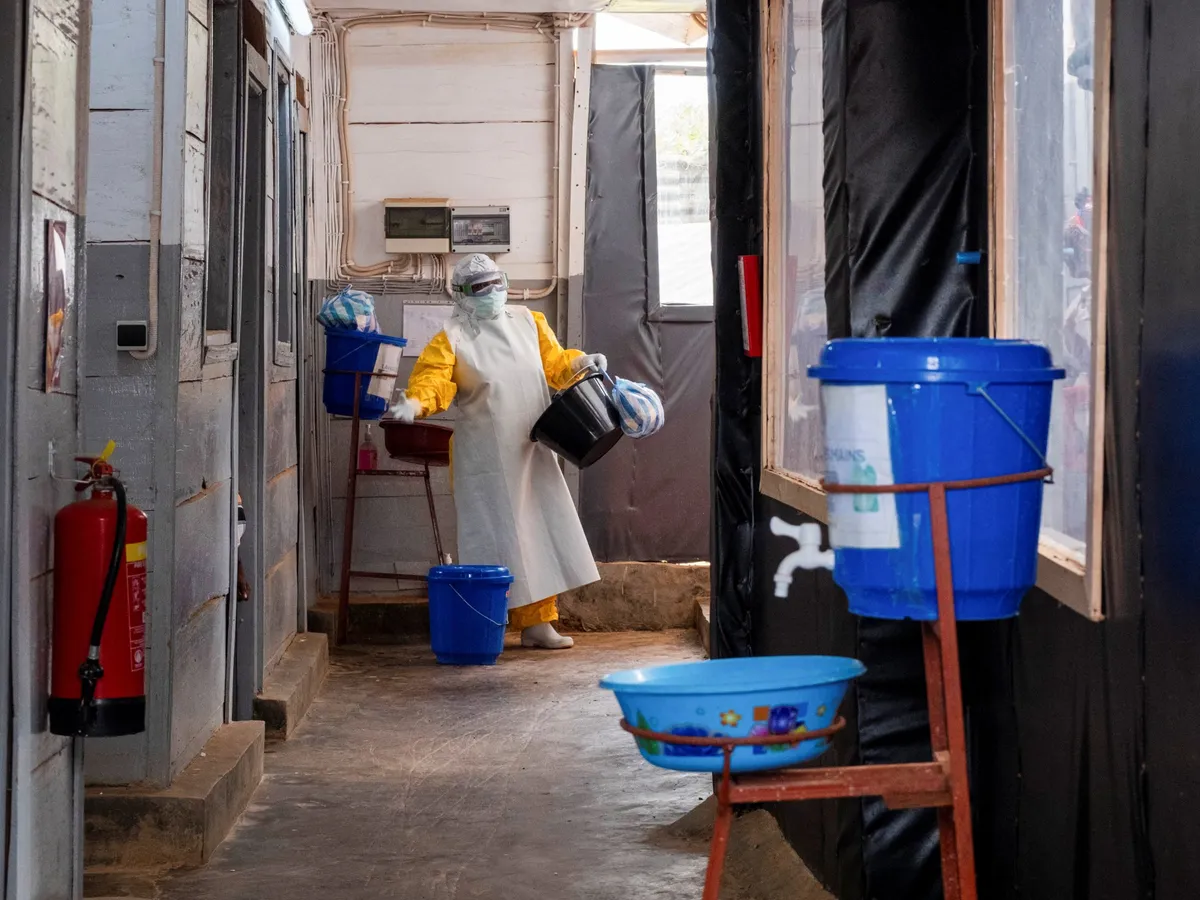
Health workers struggle as new Ebola cases are found in border regions of South Ubangi and Haut-Uele.The Ebola virus caused by the Bundibugyo strain has spread to two new health zones in the Democratic Republic of the Congo, according to the World Health Organization (WHO).New cases were found in Bulu in South Ubangi governorate on the border with the Central African Republic and Dungu in Haut-Uele province on the border with South Sudan, the WHO said on Friday.Recommended Stories list of 3 itemslist 1 of 3Ebola fight in DRC ‘far from over,’ warns WHO chieflist 2 of 3DR Congo rolls out Ebola vaccine for health workers as death toll riseslist 3 of 3DR Congo begins Ebola vaccination trials for frontline health workersend of listThe additional cases bring the number of health zones affected to 63 across seven provinces as authorities struggle to control the outbreak.As of September 23, the Democratic Republic of the Congo, or DRC, has reported 7,890 confirmed cases and 3,799 deaths, according to the WHO. That means that almost half the people who contracted the infection have died.WHO Director-General Tedros Adhanom Ghebreyesus said conflict and population displacement were making it more difficult for health workers to reach affected communities and trace people who may have been exposed to the virus.“It’s very difficult to see Ebola in isolation because even our response to Ebola is affected by the conflict, because there is displacement and there is an access problem to some areas,” Tedros said.The Bundibugyo strain is difficult to treat because there are no approved vaccines, Tedros said, adding that the WHO is accelerating clinical trials of vaccines and treatments.Contact tracing falling shortMeanwhile, health workers looking for people who may have been exposed to the Bundibugyo strain are falling short of their targets.According to Dr Jean Kaseya, the director-general of the Africa Centres for Disease Control and Prevention (Africa CDC), the more than 7,000 confirmed cases should translate to about 420,000 contacts.
SRCAl Jazeera
LANGEN
LEANCenter
WORDS324
ENT11
FRI · 2026-09-25 · 22:16 GMTBRIEF NSR-2026-0926-114153
NSR-2026-0926-114153News Report·EN·Public Health
DR Congo’s Ebola outbreak spreads to two new health zones, WHO says
The Democratic Republic of the Congo's Ebola outbreak, caused by the Bundibugyo strain, has expanded to two new health zones: Bulu in South Ubangi and Dungu in Haut-Uele. These areas are located in border regions with the Central African Republic and South Sudan, respectively.
Al Jazeera StaffAl JazeeraFiled 2026-09-25 · 22:16 GMTLean · CenterRead · 2 min
Al JazeeraFIG 01
Reading time
2min
Word count
324words
Sources cited
3cited
Entities identified
11entities
Quality score
100%
§ 01
Briefing Summary
AI-generatedNEWSAR · AI
The Democratic Republic of the Congo's Ebola outbreak, caused by the Bundibugyo strain, has expanded to two new health zones: Bulu in South Ubangi and Dungu in Haut-Uele. These areas are located in border regions with the Central African Republic and South Sudan, respectively. This brings the total number of affected health zones to 63 across seven provinces. As of September 23, the DRC has reported 7,890 confirmed cases and 3,799 deaths. The World Health Organization (WHO) notes that conflict and population displacement are hindering health workers' efforts to reach affected communities and trace contacts. The Bundibugyo strain is challenging to treat due to the absence of approved vaccines, though the WHO is accelerating clinical trials. Contact tracing efforts are reportedly falling short of targets.
Confidence 0.90Sources 3Claims 5Entities 11
§ 02
Article analysis
Model · rule-basedFraming
Public Health
Conflict
Tone
Measured
AI-assessed
CalmNeutralAlarmist
Factuality
0.90 / 1.00
Factual
LowHigh
Sources cited
3
Well sourced
FewMany
§ 03
Key claims
5 extracted01
Over 7,000 confirmed cases should translate to about 420,000 contacts that need tracing.
statisticDr Jean Kaseya (Africa Centres for Disease Control and Prevention)
Confidence
1.00
02
The Bundibugyo strain is difficult to treat because there are no approved vaccines.
factualTedros Adhanom Ghebreyesus (WHO Director-General)
Confidence
1.00
03
Conflict and population displacement make it difficult for health workers to reach affected communities and trace exposed individuals.
quoteTedros Adhanom Ghebreyesus (WHO Director-General)
Confidence
1.00
04
As of September 23, the DRC has reported 7,890 confirmed cases and 3,799 deaths.
statisticWorld Health Organization (WHO)
Confidence
1.00
05
Ebola virus caused by the Bundibugyo strain has spread to two new health zones in the Democratic Republic of the Congo.
factualWorld Health Organization (WHO)
Confidence
1.00
§ 04
Full report
2 min read · 324 words§ 05
Entities
11 identifiedKey playerOppositionContextPositiveNeutralNegative
Organizations2
Locations5
Events1
§ 06
Keywords & salience
9 termsebola outbreak
1.00
bundibugyo strain
0.90
democratic republic of the congo
0.80
world health organization
0.70
health zones
0.60
contact tracing
0.50
conflict
0.40
population displacement
0.40
vaccine trials
0.40
§ 07
Topic connections
Interactive graph Network visualization showing 51 related topics
View Full Graph Person Organization Location Event|Click node to navigate|Edge numbers = shared articles