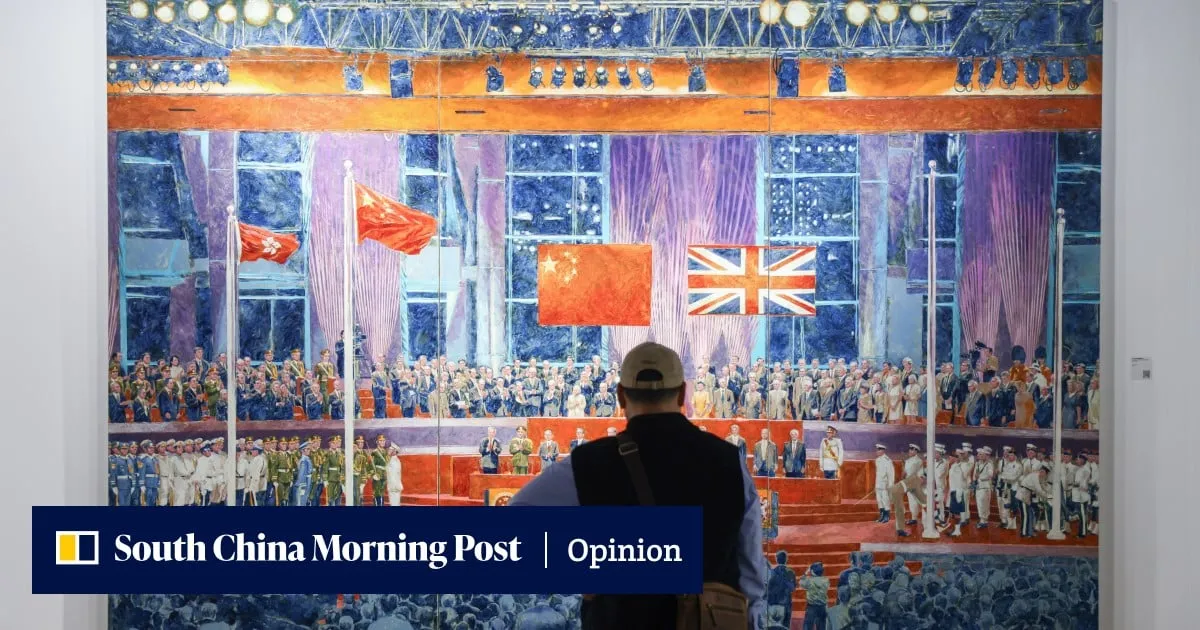
On September 8, Tung Chee-hwa, Hong Kong’s first chief executive, died. It prompted reflection, not only on a political figure who once stood at the centre of the city’s public life, but also on nearly three decades of change since its return to China.History is rarely shaped by a single person or isolated decisions. Individual choices, institutional adjustments, social expectations and external circumstances all interact to form the historical process. This is particularly true in Tung’s case. To understand the significance of Hong Kong’s first chief executive, one must return to the historical context.British colonial rule left Hong Kong with a highly developed administrative system built around efficiency, procedure and order. This administrative tradition became an important part of Hong Kong’s identity. However, colonial governance also operated under a distinct political structure, where questions of legitimacy, public participation and political accountability were addressed differently from those in modern constitutional systems.After 1997, Hong Kong entered a new stage. The transition was not merely a change of political authority or government institutions. It also involved a transformation in how society understood public power. Citizens increasingly cared not only about whether policies could achieve results, but also why decisions were made, how different views were considered, and who should bear responsibility for consequences.The challenges faced by Tung’s administration reflected a broader tension as Hong Kong moved from a long-established administrative model towards a more complex form of governance. Balancing administrative efficiency with social legitimacy, expert decision-making with public participation, and long-term planning with immediate expectations has become an issue that continues to shape Hong Kong’s public life.It is easy to overlook the uncertainty of that moment. Hong Kong was entering a new stage for which there was no ready-made blueprint.Chinese president Jiang Zemin and Hong Kong chief executive Tung Chee-hwa celebrating Hong Kong’s return on July 1, 1997. The calligraphy, by Jiang, translates as: Hong Kong’s tomorrow will be better. Photo: AFPHow to build a governance system under “one country, two systems” and the Basic Law; how to integrate institutions into a new constitutional arrangement; and how an international city should redefine its relationship with national development – these questions required answers to be discovered gradually through practice.
SRCSouth China Morning Post
LANGEN
LEANCenter-Right
WORDS365
ENT7
SUN · 2026-09-27 · 01:30 GMTBRIEF NSR-2026-0927-114374
NSR-2026-0927-114374Analysis·EN·Political Strategy
To understand where Hong Kong is going, start with Tung Chee-hwa
The death of Tung Chee-hwa, Hong Kong's first chief executive, on September 8, has prompted reflection on his tenure and the nearly three decades of change since Hong Kong's return to China. Tung's administration navigated Hong Kong's transition from a British colonial administrative model, characterized by efficiency and order, to a new stage under "one country, two systems." This transition involved a societal shift in understanding public power, with citizens increasingly concerned about the reasoning behind decisions and accountability.
Cheng XianyueSouth China Morning PostFiled 2026-09-27 · 01:30 GMTLean · Center-RightRead · 2 min
South China Morning PostFIG 01
Reading time
2min
Word count
365words
Sources cited
0cited
Entities identified
7entities
Quality score
100%
§ 01
Briefing Summary
AI-generatedNEWSAR · AI
The death of Tung Chee-hwa, Hong Kong's first chief executive, on September 8, has prompted reflection on his tenure and the nearly three decades of change since Hong Kong's return to China. Tung's administration navigated Hong Kong's transition from a British colonial administrative model, characterized by efficiency and order, to a new stage under "one country, two systems." This transition involved a societal shift in understanding public power, with citizens increasingly concerned about the reasoning behind decisions and accountability. Tung's challenges reflected a broader tension between administrative efficiency and social legitimacy, expert decision-making and public participation. The article suggests that understanding Tung's significance requires examining the historical context and the complex process of establishing a new governance system without a pre-existing blueprint.
Confidence 0.90Claims 4Entities 7
§ 02
Article analysis
Model · rule-basedFraming
Political Strategy
Human Interest
Tone
Measured
AI-assessed
CalmNeutralAlarmist
Factuality
0.30 / 1.00
Opinion-Heavy
LowHigh
Sources cited
0
No named sources
FewMany
§ 03
Key claims
4 extracted01
Tung Chee-hwa, Hong Kong’s first chief executive, died on September 8.
factual
Confidence
1.00
02
Balancing administrative efficiency with social legitimacy, expert decision-making with public participation, and long-term planning with immediate expectations has become an issue that continues to shape Hong Kong’s public life.
factual
Confidence
0.90
03
British colonial rule left Hong Kong with a highly developed administrative system built around efficiency, procedure and order.
factual
Confidence
0.90
04
After 1997, Hong Kong citizens increasingly cared not only about whether policies could achieve results, but also why decisions were made, how different views were considered, and who should bear responsibility.
factual
Confidence
0.80
§ 04
Full report
2 min read · 365 words§ 05
Entities
7 identifiedKey playerOppositionContextPositiveNeutralNegative
Organizations1
§ 06
Keywords & salience
9 termshong kong governance
1.00
tung chee-hwa
1.00
post-colonial transition
0.90
administrative system
0.80
public participation
0.70
political legitimacy
0.70
one country two systems
0.60
national development
0.50
institutional adjustments
0.40
§ 07
Topic connections
Interactive graph Network visualization showing 51 related topics
View Full Graph Person Organization Location Event|Click node to navigate|Edge numbers = shared articles