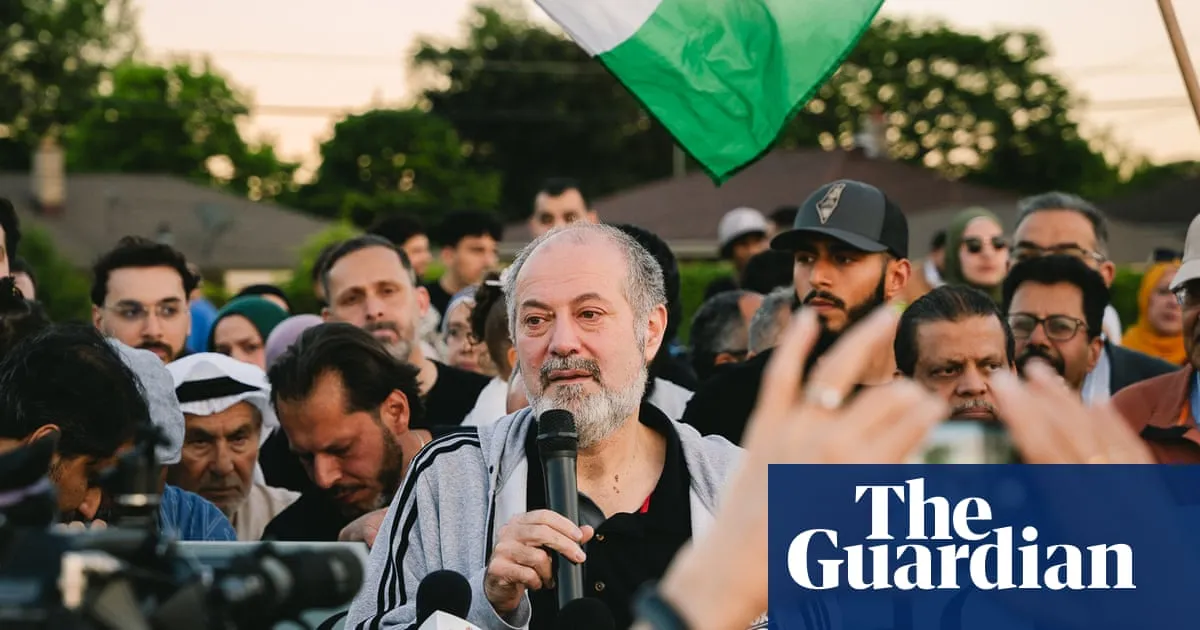
An Immigration judge has ruled that the president of Wisconsin’s largest mosque can be deported under a controversial, cold-war era law the Trump administration has sought to wield against foreign nationals who have been outspoken about Palestinian rights.Salah Sarsour, a US permanent resident for nearly three decades, was detained by Immigration-and-customs-enforcement" class="entity-link entity-organization" data-entity-id="158625" data-entity-type="organization">US Immigration and Customs Enforcement in March. He was released after a federal judge found he had probably been detained in retaliation of his advocacy for Palestinian rights, which the federal judge said would render his detention unlawful.Despite that ruling, the administration pressed forward and fast-tracked Sarsour’s Immigration case – a separate legal track – and on Tuesday night an Immigration judge ruled he is “removable”.Judge Jayme Salinardi, who was brought in from out of state to oversee the case, announced he would be retiring shortly after issuing the decision.In a statement, Sarsour’s attorneys called the ruling “a setback for free speech rights”.“The case we presented compels only one conclusion, which is that Salah is not deportable, he has done nothing wrong,” Patrick Taurel, one of Sarsour’s attorneys, said during a press conference shortly after the hearing. “He should be given back his green card with an apology for what’s been done to him.”The Department of Homeland Security did not immediately respond to a request for comment, but claimed before that Sarsour was “suspected of funding terror organizations and lying on Immigration forms”. He has denied both claims.In a statement issued shortly after his arrest, the DHS cited Sarsour’s decades-old military court convictions in Israel for, it said, “throwing a Molotov cocktail at the homes of Israeli armed forces and illegally attempting to possess weapons and ammunition”.Sarsour said those accusations stemmed from an arrest as a teenager by Israeli soldiers in 1989, during the first intifada. He also says he was forced, under torture and threat of rape, to sign documents in Hebrew without understanding them.He ultimately spent two years in an Israeli prison after being convicted in a military court system that has a conviction rate of over 96% for Palestinians. Sarsour was again detained by Israeli authorities for nearly three months when he last visited Palestine in 1995.His lawyers detailed those facts over four Immigration court hearings, during which they noted that the government had for years known about Sarsour’s arrests in Israel.In addition to his involvement with several local organizations, Sarsour is a board member of American Muslims for Palestine (AMP), a national advocacy group that Trump administration officials have accused of countering US foreign policy interests.“They’re retaliating against him for speaking out about Palestinian human rights,” said Luna Droubi, another attorney. “That should terrify all of us.”“It’s a principle of this country that people should feel that they can speak freely, and that’s being eradicated”.In a statement, Sarsour, who has six children and nine grandchildren, all US citizens, called the decision “deeply disappointing” but vowed to “continue fighting”.“We have a mission: let’s continue to make our voice clear, to protect the first amendment, to support justice,” he told the Guardian in July. “I’ll continue with that message whether I’m inside or outside.”
SRCThe Guardian - World News
LANGEN
LEANCenter-Left
WORDS516
ENT12
WED · 2026-09-30 · 17:53 GMTBRIEF NSR-2026-0930-115361
NSR-2026-0930-115361News Report·EN·Human Rights
US immigration judge allows cold war-era law to deport Wisconsin mosque’s president
An immigration judge has ruled that Salah Sarsour, president of Wisconsin's largest mosque and a US permanent resident for nearly three decades, can be deported under a Cold War-era law. The Trump administration fast-tracked Sarsour's case after a federal judge previously found his initial detention may have been retaliatory for his advocacy for Palestinian rights.
Alice SperiThe Guardian - World NewsFiled 2026-09-30 · 17:53 GMTLean · Center-LeftRead · 3 min
The Guardian - World NewsFIG 01
Reading time
3min
Word count
516words
Sources cited
4cited
Entities identified
12entities
Quality score
100%
§ 01
Briefing Summary
AI-generatedNEWSAR · AI
An immigration judge has ruled that Salah Sarsour, president of Wisconsin's largest mosque and a US permanent resident for nearly three decades, can be deported under a Cold War-era law. The Trump administration fast-tracked Sarsour's case after a federal judge previously found his initial detention may have been retaliatory for his advocacy for Palestinian rights. Sarsour's attorneys stated the ruling is a setback for free speech rights, while the Department of Homeland Security cited decades-old Israeli military court convictions for alleged actions as a teenager and accusations of funding terror organizations, which Sarsour denies. Sarsour, who has six children and nine grandchildren who are US citizens, vowed to continue fighting the decision.
Confidence 0.90Sources 4Claims 5Entities 12
§ 02
Article analysis
Model · rule-basedFraming
Human Rights
Legal & Judicial
Tone
Mixed Tone
AI-assessed
CalmNeutralAlarmist
Factuality
0.70 / 1.00
Factual
LowHigh
Sources cited
4
Well sourced
FewMany
§ 03
Key claims
5 extracted01
Sarsour’s attorneys stated that the ruling is a setback for free speech rights and that he should be given back his green card.
quoteSalah Sarsour's attorneys
Confidence
1.00
02
An immigration judge ruled that the president of Wisconsin’s largest mosque can be deported under a cold-war era law.
factualImmigration Judge Jayme Salinardi
Confidence
0.90
03
Sarsour was convicted in an Israeli military court as a teenager for throwing a Molotov cocktail and attempting to possess weapons.
factualDepartment of Homeland Security
Confidence
0.80
04
Sarsour was previously detained by ICE, and a federal judge found his detention was likely in retaliation for his advocacy for Palestinian rights.
factualFederal Judge
Confidence
0.80
05
The Department of Homeland Security suspects Sarsour of funding terror organizations and lying on immigration forms.
factualDepartment of Homeland Security
Confidence
0.70
§ 04
Full report
3 min read · 516 words§ 05
Entities
12 identifiedKey playerOppositionContextPositiveNeutralNegative
Organizations3
Events1
§ 06
Keywords & salience
10 termsimmigration law
1.00
deportation
0.90
free speech rights
0.80
salah sarsour
0.70
palestinian rights
0.70
cold war-era law
0.60
mosque president
0.50
trump administration
0.50
us immigration and customs enforcement
0.40
israeli military court
0.40
§ 07
Topic connections
Interactive graph Network visualization showing 14 related topics
View Full Graph Person Organization Location Event|Click node to navigate|Edge numbers = shared articles