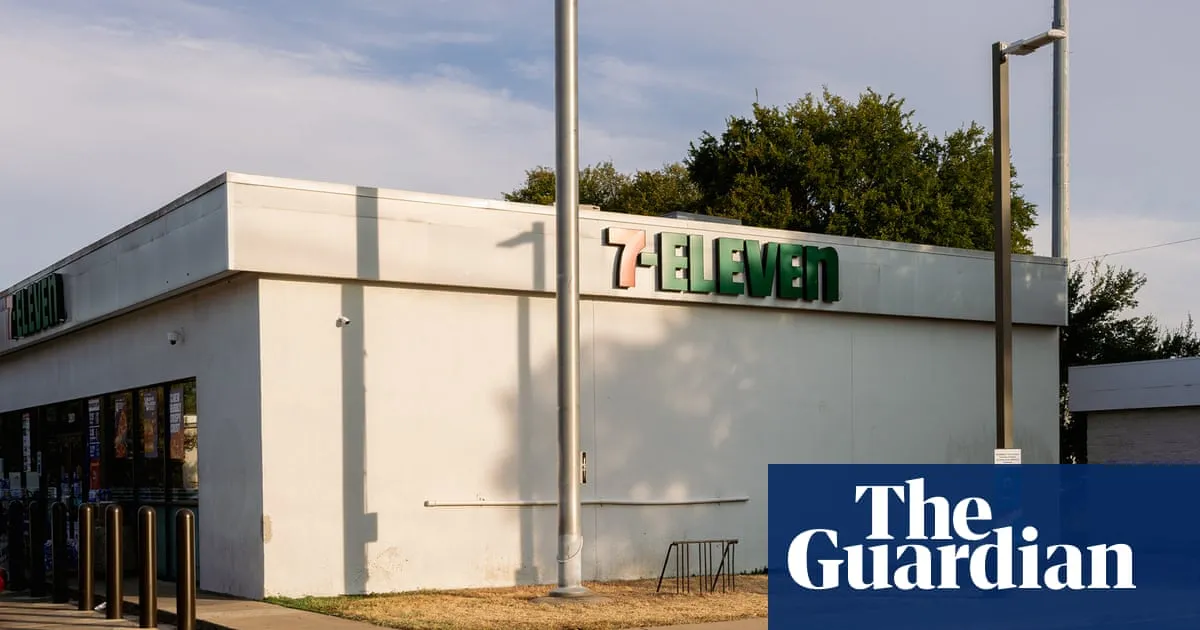
Between 2023 and 2025, 7-Eleven failed at least 40% of its price inspections in Arizona, Colorado and Utah. Photograph: Liz Moskowitz/The Guardian View image in fullscreen Between 2023 and 2025, 7-Eleven failed at least 40% of its price inspections in Arizona, Colorado and Utah. Photograph: Liz Moskowitz/The Guardian ‘It’s enraging’: lawmakers call for action after Guardian investigation into convenience store overcharges Congress members say pricing practices at 7-Eleven and Circle K stores underscore everyday Americans’ affordability struggles Five US House members have called out pricing practices at the US’s two largest convenience store chains in response to an investigation by The Guardian. The Guardian found that 7-Eleven and Circle K stores frequently charge customers more at the register or pump for snacks, gas and other items than the prices they promise on the shelf or on outdoor fuel signs. “It’s enraging that these massive companies are now essentially forcing us to fact-check every price tag and receipt just to make sure we’re not getting ripped off,” the representative Becca Balint, a Democrat from Vermont, said in a statement. “7-Eleven and Circle K have a responsibility to make sure the price we see on the shelf is the price we pay at the register.” She called on the Federal Trade Commission to “investigate this trend and hold these companies accountable if they’re deliberately misleading customers”. “This story is disturbing,” added the California representative Nanette Barragán, whose congressional district covers a swath of Los Angeles county. “Americans work hard to feed their families. As Trump and Republicans continue to skyrocket the cost of food and other basic necessities, businesses need to keep their prices transparent and fair.” Balint and Barragán are part of a growing wave of politicians who have made inflation and affordability centerpieces of their pitches to voters. Others include New York’s mayor, Zohran Mamdani; the Texas Democratic US Senate candidate James Talarico; and Rick Fazio, a Republican state legislator who is running for governor in Connecticut. Donald Trump has dismissed affordability concerns as a “hoax” and “con job” perpetrated by Democrats. An AP-NORC poll released on Thursday found that just 17% of Americans approve of the president’s handling of the cost of living. The Guardian’s convenience store investigation included a review of customer complaints and state and local price-accuracy inspections. Between 2023 and 2025, for example, 7-Eleven failed 41% of its price inspections in Arizona and 47% of price inspections in both Colorado and Utah. Over the same span, Circle K failed 35% of its inspections in Florida, 39% in Arizona and 62% in North Carolina. The two chains did not answer detailed lists of questions from The Guardian. In brief statements, 7-Eleven said it takes pricing accuracy “very seriously” and Circle K said it is “committed to complying with all applicable laws and regulations”. Convenience stores are not the only retail outlets where customers often pay more at checkout than what shelf tags declare. The Guardian reported in December that the nation’s two largest dollar store chains, Dollar General and Family Dollar, had repeatedly failed to honor their shelf prices, charging more at checkout for everything from frying pans to Frosted Flakes. Both chains told The Guardian they were committed to pricing accuracy. In response to the findings, 30 US House members signed a letter demanding answers from the two dollar store chains about their pricing practices. The lead author of the letter, the Illinois representative Nikki Budzinski, said The Guardian’s new reporting on convenience stores “shows the problem goes even deeper … We will not let up on federal oversight until these chains fix this glaring issue and treat consumers with the fairness and respect they deserve.” In response to the new reporting on convenience stores, the Illinois representative Delia Ramirez said she is concerned about people in her district who are vulnerable to unfair practices in the marketplace. “Through price gouging, price fixing, predatory algorithms and corporate monopolies, corporations have put profits and production over people, and our government has allowed it,” Ramirez said. “People in my district are tired. Our communities want their representative to put an end to corporate greed” and to fight for lower prices and higher wages. In Los Angeles county – where 7-Eleven stores failed 37% of their price-accuracy inspections between 2023 and 2025 – the Democratic representative Laura Friedman said the “last thing” families already paying high prices for gas and groceries need is to be charged more at checkout than what is promised on the shelf. “California law says you must charge the price on the sign, so these reports of overcharging, including in our own communities, are deeply concerning,” said Friedman, whose district includes West Hollywood and Burbank. “State and local officials should investigate, and any store found breaking the law needs to be held accountable.” Experts told The Guardian that one of the challenges to solving the problem is a lack of inspection and enforcement resources across much of the country. When state and local agencies do take action, modest fines and even large settlements often do not stop deep-pocketed retail chains from charging customers more than their posted prices. “If the goal is to prevent stores from ripping off their customers by posting phony prices on their shelves, this can be done by imposing serious fines,” Dean Baker, senior economist at the Center for Economic and Policy Research, wrote in an article about The Guardian’s investigation. “If a store had to pay a $50 fine for every instance where they overcharged someone 10 or 20 cents on a pound of apples, they would very quickly figure out how to get their shelf prices to agree with their cash register prices.” Explore more on these topics Consumer affairs The price we pay House of Representatives Cost of living crisis Consumer rights Regulators Retail industry US Congress news Share Reuse this content
SRCThe Guardian - World News
LANGEN
LEANCenter-Left
WORDS974
ENT12
SAT · 2026-10-03 · 10:00 GMTBRIEF NSR-2026-1003-116048
NSR-2026-1003-116048News Report·EN·Economic Impact
‘It’s enraging’: lawmakers call for action after Guardian investigation into convenience store overcharges
Five US House members are calling for action following a Guardian investigation revealing that 7-Eleven and Circle K stores frequently overcharge customers. The investigation found that prices at the register or pump often exceed those displayed on shelves or fuel signs.
Byard Duncan, Sophie Sullivan, Michael Hudson, Barry Yeoman and Jocelyn ZuckermanThe Guardian - World NewsFiled 2026-10-03 · 10:00 GMTLean · Center-LeftRead · 4 min
The Guardian - World NewsFIG 01
Reading time
4min
Word count
974words
Sources cited
5cited
Entities identified
12entities
Quality score
100%
§ 01
Briefing Summary
AI-generatedNEWSAR · AI
Five US House members are calling for action following a Guardian investigation revealing that 7-Eleven and Circle K stores frequently overcharge customers. The investigation found that prices at the register or pump often exceed those displayed on shelves or fuel signs. Between 2023 and 2025, 7-Eleven failed a significant percentage of price inspections in Arizona, Colorado, and Utah, while Circle K also had numerous failures in Florida, Arizona, and North Carolina. Lawmakers expressed outrage, citing these practices as exacerbating affordability struggles for Americans and urged the Federal Trade Commission to investigate. This follows similar findings by the Guardian regarding Dollar General and Family Dollar stores.
Confidence 0.90Sources 5Claims 5Entities 12
§ 02
Article analysis
Model · rule-basedFraming
Economic Impact
Social Justice
Tone
Mixed Tone
AI-assessed
CalmNeutralAlarmist
Factuality
0.70 / 1.00
Factual
LowHigh
Sources cited
5
Well sourced
FewMany
§ 03
Key claims
5 extracted01
17% of Americans approve of the president's handling of the cost of living.
statisticAP-NORC poll
Confidence
1.00
02
Lawmakers are calling for action and investigations into convenience store pricing practices.
quoteRep. Becca Balint, Rep. Nanette Barragán
Confidence
1.00
03
Circle K failed 35% of its inspections in Florida, 39% in Arizona, and 62% in North Carolina between 2023 and 2025.
statisticThe Guardian
Confidence
1.00
04
7-Eleven failed at least 40% of its price inspections in Arizona, Colorado, and Utah between 2023 and 2025.
statisticThe Guardian
Confidence
1.00
05
Convenience stores frequently charge customers more at the register than prices displayed on shelves or signs.
factualThe Guardian
Confidence
0.90
§ 04
Full report
4 min read · 974 words§ 05
Entities
12 identifiedKey playerOppositionContextPositiveNeutralNegative
People6
Organizations4
Locations1
§ 06
Keywords & salience
8 termsconvenience store overcharges
1.00
pricing practices
0.90
affordability struggles
0.80
price inspections
0.70
guardian investigation
0.60
federal trade commission
0.50
transparency
0.40
accountability
0.40
§ 07
Topic connections
Interactive graph Network visualization showing 2 related topics
View Full Graph Person Organization Location Event|Click node to navigate|Edge numbers = shared articles