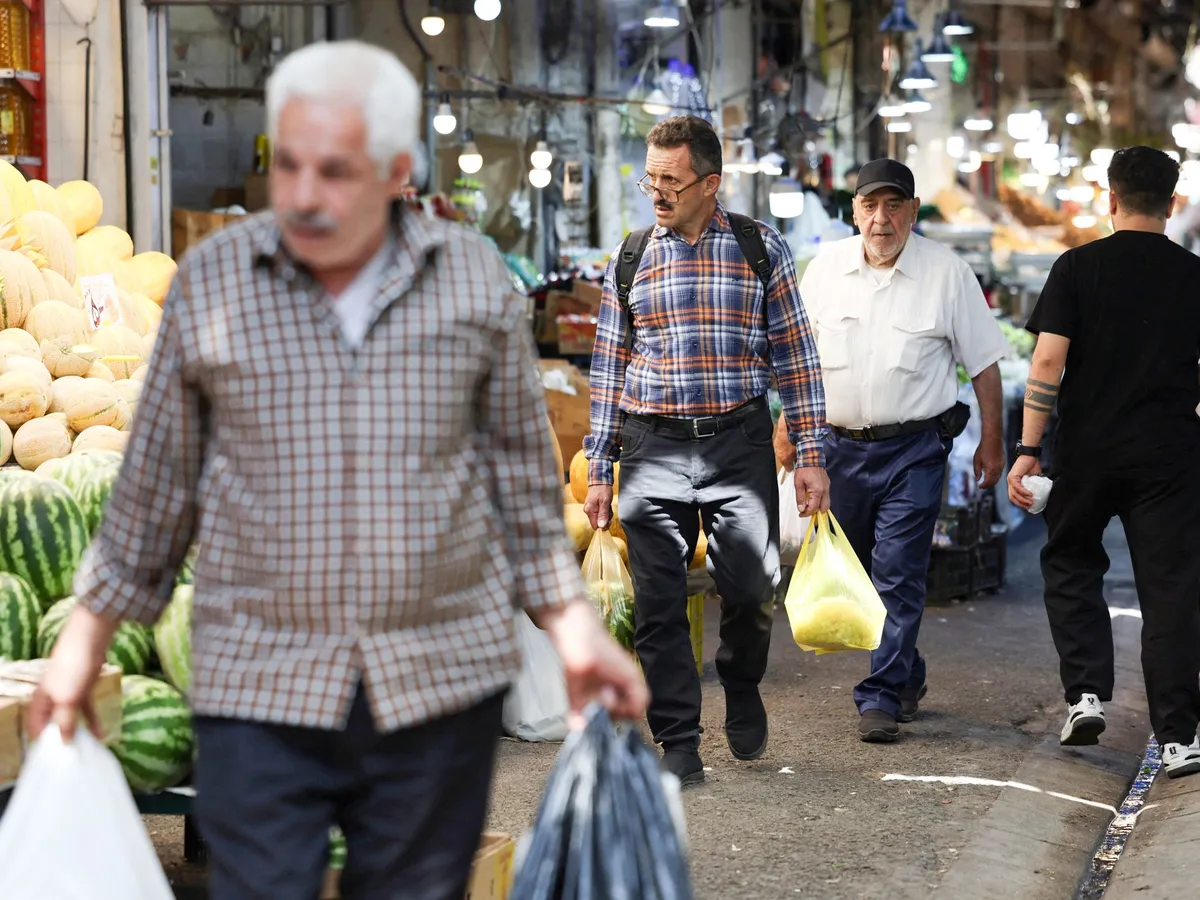
President Pezeshkian is spearheading a new coordinated effort to reduce the strain on Iranians.People walk at a local market in Tehran, Iran, September 9, 2026 [Majid Asgaripour/WANA]Published On 6 Oct 2026The Iranian government seeking to reduce the severe financial pressure on its populace from the United States’s siege and sanctions on the country.President Masoud Pezeshkian recently discussed measures with several cabinet members to ameliorate the economic effects of the US-Israeli war on Iran, including the depreciation of the Iranian lira and the cost-of-living crisis.Recommended Stories list of 3 itemslist 1 of 3Is Iran charging a toll to allow oil traffic through Hormuz?list 2 of 3Medicine shortages grow in Iran as US tightens sanctions, blockadelist 3 of 3How oil, gas losses have shrunk Iran’s GDP by 10 percent during warend of list“The enemy’s plan in recent months has been to cut off the country’s vital arteries with the aim of pressuring the noble people of Iran,” Pezeshkian said on social media,Though full details of the government response are not known, the scope of the meeting and Pezeshkian’s subsequent comments give some insights into these policies.Here’s what we know.How are Iranians faring as the war drags on?Iran’s economic situation has deteriorated sharply since the war started on February 28, with US and Israeli strikes killing top Iranian political and military figures.US-Israeli bombing since then has inflicted an estimated $270bn in damages on the country.The situation worsened further after the US launched Operation Economic Outcast in late August, seeking to totally isolate the country from international trade.Iran’s gross domestic product (GDP) has contracted by 10 percent with the collapse in energy exports due to the US naval blockade. The Iranian rial has in turn sunk to record lows.Iran has made the lifting of the blockade a key demand in negotiations with the US about reopening of the Strait of Hormuz.Maryam Ashrafi from the Bourse and Bazaar Foundation, a London-based think tank, told Al Jazeera that the economic situation has deteriorated for Iranian consumers, particularly in higher food prices.In turn, Iranians are “increasingly turn[ing] to cheaper, inferior goods”. Shortages of raw materials used in the production of some staples, such as margarine, have also affected prices.Imports of wheat and grains have also declined due to the US naval blockade on Iran’s southern ports.“Large bulk carriers serving … [these] can carry upwards of 80,000 tonnes of agricultural commodities,” she told Al Jazeera.Some ships using the alternative route of the Caspian Sea ports, which are not under the embargo, have loads of only 7,200 tonnes, she said. Trucks using land routes are limited to about 20 tonnes per vehicle.Increases in the price of packaging has also left businesses facing supply chain disruptions.Insurance costs have also increased, even as war-related losses are generally not covered by insurers.While medicines are not sanctioned, the raw materials used by Iran’s pharmaceutical industry are “increasingly difficult and expensive” to find, she said.The disruptions to air travel caused by US sanctions on Iranian airlines have added to fears of medicine shortages in the country.People buy at a pharmacy in Tehran [File: Majid Asgaripour/WANA]What does Iran plan to do?At Saturday’s meeting, Iran’s Plan and Budget Organisation presented a seven-point package to deal with the crisis, but the details have not been revealed.Iran’s semi-official news agency Tasnim reported that the proposal aimed to “help the country overcome the challenges ahead in a more orderly and less costly manner”.Pezeshkian responded to the meeting the following day by ordering the formation of a committee to coordinate the new economic arrangement.The committee includes the central bank governor Abdolnaser Hemmati, Interior Minister Eskandar Momeni and the conservative mayor of Tehran Alireza Zakani.The goal of the committee is to help stabilise prices across the country, state broadcaster IRNA reported.People walk in a local market in Tehran, Iran, September 26, 2026 [Majid Asgaripour/WANA]Pezeshkian told MPs on Monday that economic policy should be focused on helping the most vulnerable groups in the country, including female-led households. He said energy efficiency would be one of the main ways of tackling the country’s current woes.“We are working to ensure that under no circumstances are electricity and energy supplies to producers and businesses cut off,” he said.He called for the implementation of “car-free Tuesdays”, during which people would avoid using their vehicles to conserve energy.Despite being a major oil and gas producer, Iran has suffered from shortages of petrol and experienced power cuts since the start of the war.Pezeshkian also urged state employees to adopt the car-free days to encourage wider engagement.Saeed Laylaz, an economist who previously advised the Iranian government, said that Pezeshkian should have acted sooner.When there were signs that war was imminent, the government should have prepared for a reduction in resources and disruptions to imports and exports, he said.While Pezeshkian’s response was delayed, Laylaz believes that tackling the price of basic commodities – the target of the new measures – would be beneficial for the country.“That said … we have enough basic commodities in stock, and even if the embargo continues, we will not face a problem in securing them, because we have suitable routes, sufficient resources, and trading partners who can help us,” he added.
SRCAl Jazeera
LANGEN
LEANCenter
WORDS856
ENT12
TUE · 2026-10-06 · 14:42 GMTBRIEF NSR-2026-1006-116810
NSR-2026-1006-116810News Report·EN·Economic Impact
What new measures is Iran taking to counter US economic pressure?
Iran is implementing new measures to counter severe economic pressure stemming from US sanctions and naval blockades, which have significantly impacted the country since February 28. President Masoud Pezeshkian is leading a coordinated effort to alleviate the strain on Iranians, including addressing the depreciation of the Iranian rial and a cost-of-living crisis.
Rached El-MoctarAl JazeeraFiled 2026-10-06 · 14:42 GMTLean · CenterRead · 4 min
Al JazeeraFIG 01
Reading time
4min
Word count
856words
Sources cited
1cited
Entities identified
12entities
Quality score
100%
§ 01
Briefing Summary
AI-generatedNEWSAR · AI
Iran is implementing new measures to counter severe economic pressure stemming from US sanctions and naval blockades, which have significantly impacted the country since February 28. President Masoud Pezeshkian is leading a coordinated effort to alleviate the strain on Iranians, including addressing the depreciation of the Iranian rial and a cost-of-living crisis. The government's Plan and Budget Organisation presented a seven-point package, and a committee including the central bank governor and interior minister has been formed to stabilize prices. Pezeshkian emphasized focusing on vulnerable groups and promoting energy efficiency, suggesting initiatives like "car-free Tuesdays" to conserve energy amidst shortages. These actions aim to mitigate the estimated $270 billion in damages and the 10 percent GDP contraction caused by the ongoing economic war.
Confidence 0.90Sources 1Claims 5Entities 12
§ 02
Article analysis
Model · rule-basedFraming
Economic Impact
Conflict
Tone
Mixed Tone
AI-assessed
CalmNeutralAlarmist
Factuality
0.60 / 1.00
Mixed
LowHigh
Sources cited
1
Limited
FewMany
§ 03
Key claims
5 extracted01
Maryam Ashrafi stated that the economic situation has deteriorated for Iranian consumers, particularly in higher food prices.
quoteMaryam Ashrafi
Confidence
1.00
02
The Iranian government is seeking to reduce the severe financial pressure on its populace from the United States’s siege and sanctions.
factualIranian government
Confidence
0.90
03
Iran’s GDP has contracted by 10 percent with the collapse in energy exports due to the US naval blockade.
statisticarticle
Confidence
0.80
04
US and Israeli strikes have killed top Iranian political and military figures since February 28.
factualarticle
Confidence
0.80
05
US-Israeli bombing has inflicted an estimated $270bn in damages on Iran.
statisticarticle
Confidence
0.70
§ 04
Full report
4 min read · 856 words§ 05
Entities
12 identifiedKey playerOppositionContextPositiveNeutralNegative
Organizations3
Locations4
§ 06
Keywords & salience
10 termsiran sanctions
1.00
us economic pressure
1.00
economic crisis
0.90
iranian rial depreciation
0.80
cost-of-living crisis
0.80
us naval blockade
0.70
operation economic outcast
0.60
strait of hormuz
0.50
energy exports
0.40
food prices
0.40
§ 07
Topic connections
Interactive graph Network visualization showing 51 related topics
View Full Graph Person Organization Location Event|Click node to navigate|Edge numbers = shared articles