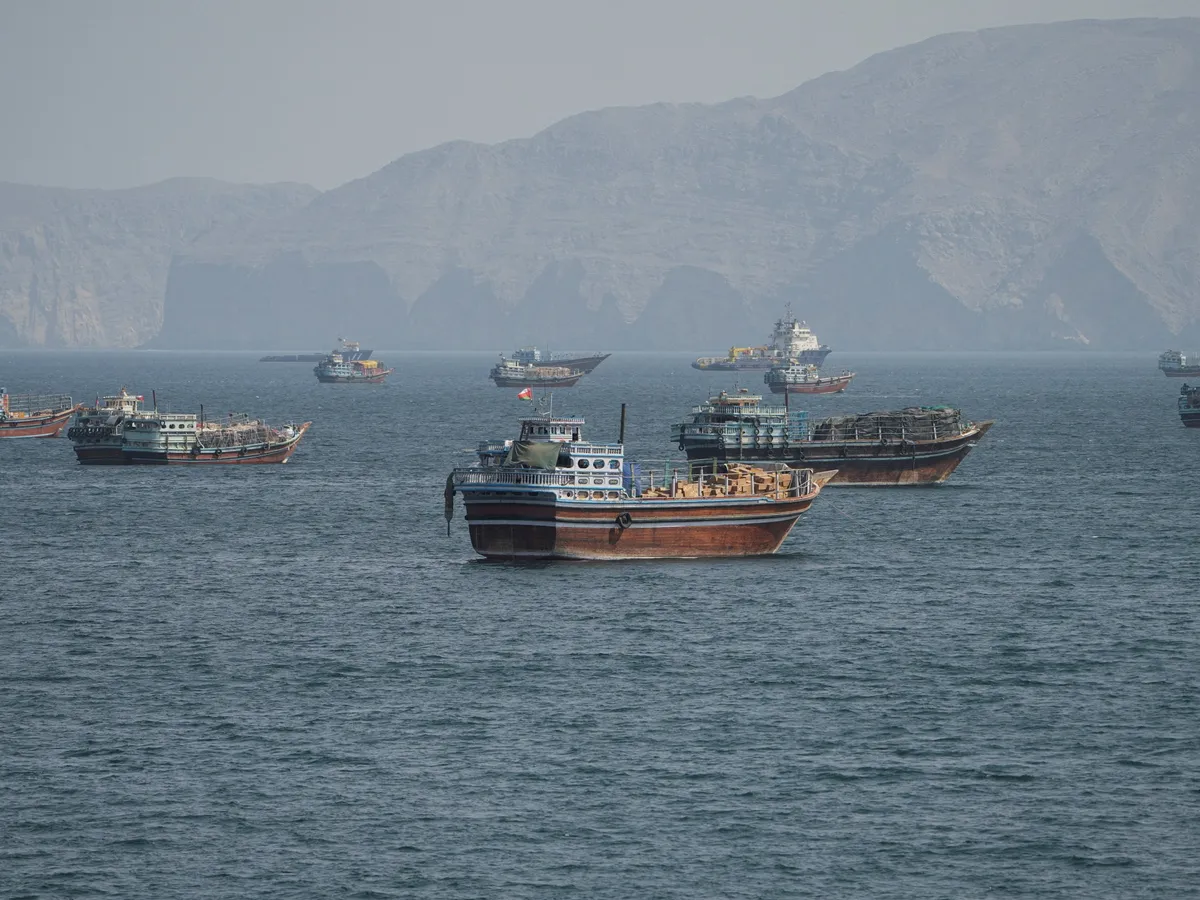
EXPLAINERShips in the Strait of Hormuz have been experiencing the worst spate of attacks since the start of the US-Israel war on Iran.Vessels in the Strait of Hormuz, as seen from Musandam, Oman [File: Stringer/Reuters]Published On 14 Oct 2026Iran’s military said it has expanded its surveillance of the Strait of Hormuz by deploying new units to target ships, amid a desperate tussle between Tehran and Washington to control the waterway, among the world’s most important passages for energy transport.With the United States naval blockade of Iran’s southern ports in place and sanctions tightening, Tehran has repeatedly said it will pursue military and diplomatic efforts to put pressure on Washington to submit to its demands regarding reopening the strait.Recommended Stories list of 3 itemslist 1 of 3Trump says Houthis trying to increase oil prices before US electionslist 2 of 3How Israel’s ‘Yellow Line’ is reshaping southern Lebanonlist 3 of 3How do Iranians move money abroad to avoid US sanctions?end of listTehran’s latest announcement coincides with a surge in attacks in the waterway and a fall in oil transit after crude flows had risen back to pre-war levels in September.Chris Featherstone, a political scientist at the University of York in the United Kingdom, told Al Jazeera the increased attacks and their impact on energy flows demonstrate the fragility of the strait as a key pathway for oil exports.So, what’s going on and who controls the Strait of Hormuz now?Here’s what we know:What has Iran said about expanding its presence in Hormuz?Iran’s Navy said it has deployed operational units in a new formation “east of the Strait of Hormuz and across the Sea of Oman and the Arabian Sea, after identifying a tanker that sustained damage and caught fire”, according to a report by the Iranian news and documentary network Press TV on Tuesday.The navy said these units would maintain “real time surveillance of enemy activities and maritime traffic in the region”.It also warned vessels not to switch off their transponders and urged them to coordinate with Iranian armed forces for safe passage through the area.Separately, an Iranian official told the Reuters news agency that Tehran had started using different offensive tactics against vessels it considered in violation of its restrictions about 10 days ago, adding that this had led to an increase in attacks on such ships.The strategy includes a change in the type as well as the pace of attacks, with one goal being to influence the outcome of the November midterm elections in the US, according to the official.Attacks in Hormuz rise to record levelsShips in the Strait of Hormuz have been experiencing the worst spate of attacks since the start of the US and Israel’s war on Iran in late February.According to maritime tracking firm Kpler, 10 tankers were struck in the strait between September 28 and October 4, followed by another strike on October 5.The UK Maritime Trade Operations (UKMTO) centre has separately recorded 15 other attacks between October 6 and October 14, with 11 of them occurring in just the past four days. They include a container ship and a tanker hit by unknown projectiles in the Strait of Hormuz on Tuesday, UKMTO said.Iran maintains that its attacks and restrictions in the waterway are a matter of national security and self-defence in response to the US-Israel war. Iranian authorities have also signalled they intend to disrupt a US-assisted shuttle system that has enabled more energy exports through the strait during the war.In its latest report on Sunday, the US Navy-led Joint Maritime Information Center (JMIC) noted that the threat to merchant shipping in the Strait of Hormuz remained “severe”, the second-highest level.Attacks by Iran’s Islamic Revolutionary Guard Corps (IRGC), “attempted attacks, and/or harassment activity persisted including UAV overflight, targeted surveillance of merchant shipping, and occasional VHF hailing,” JMIC said.UAV stands for unmanned aerial vehicle, or drone, while VHF hailing refers to Iranian forces using standard marine radio to verbally contact, track, and intimidate passing merchant ships on international communication channels.How have attacks affected oil flows?Before the US-Israel war on Iran began on February 28, the Strait of Hormuz typically handled about 125 large commercial vessels a day and shipments through it accounted for about 20 percent of global crude and liquefied natural gas supplies.In retaliation for the US-Israeli attacks, Iran effectively closed the strait and has stepped up attacks on vessels trying to break its regulations. Meanwhile, Washington has also maintained a blockade on Iranian ports.In September, however, Gulf oil flows through Hormuz, excluding Iran, recovered to more than 81 percent of pre-war levels, while crude exports from the wider Middle East exceeded pre-war levels on 14 days during the month, Kpler reported. Shepherded by the US Navy, more and more oil tankers had started passing through.The Iranian threat meant ship crew were being paid hefty bonuses, insurance rates remained very high, and some analysts suspect that Gulf nations may also have been paying off Iran to allow tankers to transit. This means that while more oil was being exported from the region, crude prices remained high.But the surge in Iranian attacks in recent days has changed the equation. According to Kpler, only 2.9 million barrels of oil were carried through the waterway on October 11, the lowest level this month. As recently as October 8, nearly 20.8 million barrels of oil passed through the strait. The pre-war average was 17.1 million barrels a day.Oil prices continued to climb on Wednesday morning, with Brent crude futures gaining 89 cents, or 0.8 percent, to $106.58 a barrel as of 00:30 GMT. Brent futures had closed at $105.69 a barrel on Tuesday, while West Texas Intermediate settled at $94.14.What is the US saying?On Wednesday, a US military official confirmed to Reuters that Iran had changed tactics in the Strait of Hormuz in one significant way.The official noted that after Washington destroyed much of Iran’s radar capabilities, the IRGC had started using unarmed spotters in small boats to identify potential targets, including US naval vessels.The US military determined that Iranian spotters were operating from dhows, calling in targets to the IRGC, the official said, adding that US forces confronted one such vessel, told its occupants to abandon ship and then destroyed it.US Central Command (CENTCOM) has also rejected assertions by the commander of the IRGC that Tehran controls the Strait of Hormuz and would sink approaching US warships.“IRGC’s navy commander has no navy. American forces and regional partners clearly control the Strait of Hormuz,” CENTCOM said on X.The military command added that US forces assisted Gulf partners to ship more than 19 million barrels of crude oil through the strategic chokepoint on Monday.So, who controls Hormuz?Since Iran effectively closed the Strait of Hormuz after the war began, the US Navy has reportedly opened up a route so Gulf states can export oil and other commodities amid the energy crisis caused by Iran’s attacks on ships.On Sunday night, Iran’s security chief, Mohsen Rezaei, claimed that US Central Command, with the assistance of the United Arab Emirates military, was using smaller vessels to transfer oil to larger tankers.He said this US shuttle system was an explicit target for Tehran, and that Iran has been striking five or six participating vessels nightly for weeks.“You are smuggling, but the strait is under Iran’s control, and we manage it,” he asserted.This appeared to be a taunt aimed at US President Donald Trump, who has hailed energy exports at times reaching pre-war levels over recent weeks.
SRCAl Jazeera
LANGEN
LEANCenter
WORDS1 240
ENT12
WED · 2026-10-14 · 11:16 GMTBRIEF NSR-2026-1014-118870
NSR-2026-1014-118870News Report·EN·Conflict
Iran steps up Hormuz surveillance: Attacks soar, oil flows crash again
Iran has intensified its surveillance and deployed new units in the Strait of Hormuz and surrounding waters, citing national security and self-defense in response to the US-Israel war on Iran. This comes amid a significant increase in attacks on ships in the strait, reaching the worst levels since the war began.
Priyanka ShankarAl JazeeraFiled 2026-10-14 · 11:16 GMTLean · CenterRead · 5 min
Al JazeeraFIG 01
Reading time
5min
Word count
1 240words
Sources cited
3cited
Entities identified
12entities
Quality score
100%
§ 01
Briefing Summary
AI-generatedNEWSAR · AI
Iran has intensified its surveillance and deployed new units in the Strait of Hormuz and surrounding waters, citing national security and self-defense in response to the US-Israel war on Iran. This comes amid a significant increase in attacks on ships in the strait, reaching the worst levels since the war began. These attacks, along with a US naval blockade of Iranian ports, have led to a recent decline in oil transit through the waterway, which is crucial for global energy transport. Iran has stated its intention to disrupt a US-assisted system enabling energy exports and suggested its offensive tactics are aimed at influencing upcoming US midterm elections. The US Navy has assessed the threat to merchant shipping in the Strait of Hormuz as severe.
Confidence 0.90Sources 3Claims 5Entities 12
§ 02
Article analysis
Model · rule-basedFraming
Conflict
Political Strategy
Tone
Mixed Tone
AI-assessed
CalmNeutralAlarmist
Factuality
0.70 / 1.00
Factual
LowHigh
Sources cited
3
Well sourced
FewMany
§ 03
Key claims
5 extracted01
10 tankers were struck in the strait between September 28 and October 4, followed by another strike on October 5.
statisticKpler
Confidence
0.95
02
Iran's military has expanded its surveillance of the Strait of Hormuz by deploying new units.
factualIran's military
Confidence
0.90
03
Iran has started using different offensive tactics against vessels it considers in violation of its restrictions.
factualan Iranian official
Confidence
0.85
04
Vessels in the Strait of Hormuz have experienced the worst spate of attacks since the start of the US-Israel war on Iran.
factualarticle
Confidence
0.80
05
One goal of Iran's new tactics is to influence the outcome of the November midterm elections in the US.
predictionan Iranian official
Confidence
0.70
§ 04
Full report
5 min read · 1 240 words§ 05
Entities
12 identifiedKey playerOppositionContextPositiveNeutralNegative
Locations8
§ 06
Keywords & salience
8 termsstrait of hormuz
1.00
iran surveillance
0.90
ship attacks
0.80
oil transport
0.70
us-iran tensions
0.60
energy flows
0.50
naval blockade
0.50
maritime traffic
0.40
§ 07
Topic connections
Interactive graph Network visualization showing 51 related topics
View Full Graph Person Organization Location Event|Click node to navigate|Edge numbers = shared articles