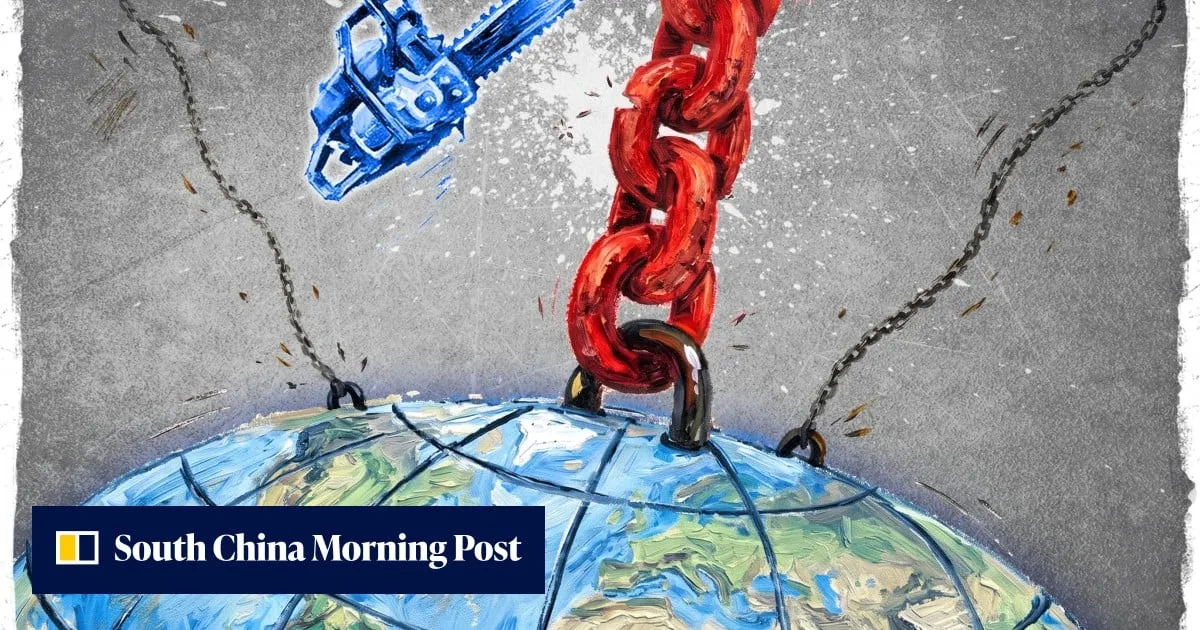
Talk of global decoupling from China has persisted for years, as has speculation that emerging economies such as India and Vietnam could soon replace it as the “world’s factory”. But for Indian hardware engineer Neeraj Arora, the growth of India’s electronics manufacturing industry has not eliminated the need to source components from China. Instead, it has changed the nature of those imports. A decade ago, Arora imported finished phone chargers from the world’s second-largest economy. Today,...
SRCSouth China Morning Post
LANGEN
LEANCenter-Right
WORDS76
ENT5
THU · 2026-10-15 · 22:00 GMTBRIEF NSR-2026-1016-119333
NSR-2026-1016-119333Analysis·EN·Economic Impact
The China decoupling paradox: why the world still needs its manufacturing machine
Despite years of discussion about global decoupling from China and speculation that countries like India and Vietnam could replace it as the "world's factory," China's manufacturing role remains significant. For Indian hardware engineer Neeraj Arora, the growth of India's electronics manufacturing has not reduced the need to import from China, but rather altered the type of goods imported.
Sylvia Ma,Mia NurmamatSouth China Morning PostFiled 2026-10-15 · 22:00 GMTLean · Center-RightRead · 1 min
South China Morning PostFIG 01
Reading time
1min
Word count
76words
Sources cited
1cited
Entities identified
5entities
Quality score
100%
§ 01
Briefing Summary
AI-generatedNEWSAR · AI
Despite years of discussion about global decoupling from China and speculation that countries like India and Vietnam could replace it as the "world's factory," China's manufacturing role remains significant. For Indian hardware engineer Neeraj Arora, the growth of India's electronics manufacturing has not reduced the need to import from China, but rather altered the type of goods imported. Previously, Arora imported finished products like phone chargers from China. Now, the nature of these imports has shifted, indicating a continued reliance on Chinese manufacturing, albeit in a different form. This suggests that while manufacturing may be diversifying, China's foundational role in global supply chains persists.
Confidence 0.70Sources 1Claims 4Entities 5
§ 02
Article analysis
Model · rule-basedFraming
Economic Impact
Technology
Tone
Measured
AI-assessed
CalmNeutralAlarmist
Factuality
0.60 / 1.00
Mixed
LowHigh
Sources cited
1
Limited
FewMany
§ 03
Key claims
4 extracted01
The nature of imports from China has shifted from finished goods to components for Indian manufacturing.
quoteNeeraj Arora
Confidence
0.95
02
Global decoupling from China has been discussed for years, with speculation about India and Vietnam replacing it as the 'world's factory'.
factual
Confidence
0.90
03
Despite India's growing electronics manufacturing, the need to source components from China persists.
factual
Confidence
0.85
04
Emerging economies like India and Vietnam are considered potential replacements for China as the 'world's factory'.
factual
Confidence
0.80
§ 04
Full report
1 min read · 76 words§ 05
Entities
5 identifiedKey playerOppositionContextPositiveNeutralNegative
Topics1
§ 06
Keywords & salience
7 termschina decoupling
1.00
manufacturing machine
0.90
world's factory
0.80
india manufacturing
0.70
vietnam manufacturing
0.60
component sourcing
0.50
electronics manufacturing
0.40
§ 07
Topic connections
Interactive graph Network visualization showing 51 related topics
View Full Graph Person Organization Location Event|Click node to navigate|Edge numbers = shared articles