Chinese fintech giant Ant Group has open-sourced its first artificial intelligence models for robotics, as it steps up efforts to build machine intelligence capable of handling complex real-world tasks.The move signals a deeper push by the Hangzhou-based Ant into embodied intelligence – AI systems designed to perceive, reason and act in physical environments rather than purely digital settings. The company is the fintech affiliate of Alibaba Group Holding, owner of the South China Morning Post.Ant’s robotics arm, Ant Lingbo Technology, also known as Robbyant, said its latest releases include LingBot-VLA, a vision-language-action (VLA) model aimed at supporting what it described as a “universal brain” for robots, allowing more scalable and practical deployment across industries.“For embodied intelligence to achieve large-scale adoption, we need highly capable and cost-effective foundation models that run reliably on real hardware,” said Robbyant CEO Zhu Xing. “Our goal is to accelerate the integration of AI into the physical world so it can deliver practical value sooner.”China already leads the world in the deployment of industrial and humanoid robots.However, many high-profile humanoids – including those developed by Unitree Robotics – that can dance and perform flips still rely on preprogrammed routines, limiting their autonomy and ability to generalise across tasks.Chinese AI experts and investors have pointed to these limitations as a crucial obstacle to turning the new wave of robots into economically productive machines, making the development of a more powerful robotic “brain” a pressing priority for the global robotics industry.
SRCSouth China Morning Post
LANGEN
LEANCenter-Right
WORDS243
ENT5
FRI · 2026-01-30 · 13:00 GMTBRIEF NSR-2026-0130-11949
NSR-2026-0130-11949News Report·EN·Technology
Ant Group’s open-source push aims to move robots from lab demos to real-world work
Ant Group, Alibaba's fintech affiliate, is open-sourcing its first AI models for robotics, specifically a vision-language-action model called LingBot-VLA. This move by Ant Lingbo Technology (Robbyant) aims to advance embodied intelligence and create a "universal brain" for robots, enabling them to handle complex, real-world tasks.
Vincent ChowSouth China Morning PostFiled 2026-01-30 · 13:00 GMTLean · Center-RightRead · 1 min
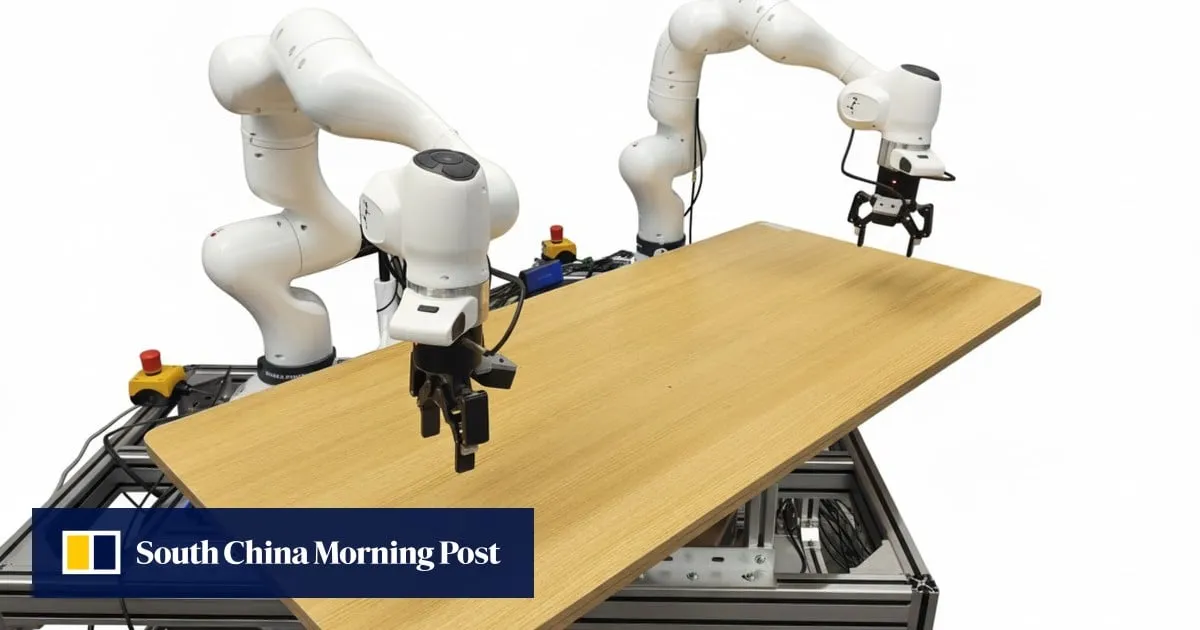
South China Morning PostFIG 01
Reading time
1min
Word count
243words
Sources cited
2cited
Entities identified
5entities
Quality score
100%
§ 01
Briefing Summary
AI-generatedNEWSAR · AI
Ant Group, Alibaba's fintech affiliate, is open-sourcing its first AI models for robotics, specifically a vision-language-action model called LingBot-VLA. This move by Ant Lingbo Technology (Robbyant) aims to advance embodied intelligence and create a "universal brain" for robots, enabling them to handle complex, real-world tasks. The goal is to move beyond preprogrammed routines and facilitate the scalable deployment of robots across various industries. Robbyant's CEO emphasized the need for cost-effective foundation models to reliably integrate AI into the physical world. This push addresses a critical obstacle in the robotics industry: turning robots into economically productive machines by improving their autonomy and ability to generalize across tasks.
Confidence 0.90Sources 2Claims 5Entities 5
§ 02
Article analysis
Model · rule-basedFraming
Technology
Economic Impact
Tone
Measured
AI-assessed
CalmNeutralAlarmist
Factuality
0.70 / 1.00
Factual
LowHigh
Sources cited
2
Limited
FewMany
§ 03
Key claims
5 extracted01
For embodied intelligence to achieve large-scale adoption, we need highly capable and cost-effective foundation models.
quoteZhu Xing, Robbyant CEO
Confidence
1.00
02
LingBot-VLA is a vision-language-action (VLA) model aimed at supporting a “universal brain” for robots.
quoteAnt Lingbo Technology
Confidence
1.00
03
Ant's robotics arm is called Ant Lingbo Technology, also known as Robbyant.
factualnull
Confidence
1.00
04
Ant Group has open-sourced its first AI models for robotics.
factualnull
Confidence
1.00
05
China already leads the world in the deployment of industrial and humanoid robots.
factualnull
Confidence
0.80
§ 04
Full report
1 min read · 243 words§ 05
Entities
5 identifiedKey playerOppositionContextPositiveNeutralNegative
Organizations3
§ 06
Keywords & salience
10 termsrobotics
1.00
artificial intelligence
0.90
embodied intelligence
0.80
real-world tasks
0.70
open-source
0.70
machine intelligence
0.60
ant group
0.60
robot deployment
0.50
vision-language-action model
0.50
robbyant
0.40
§ 07
Topic connections
Interactive graph Network visualization showing 3 related topics
View Full Graph Person Organization Location Event|Click node to navigate|Edge numbers = shared articles