A desperate effort to avert war between the US and Iran is once again under way, but trying to locate common ground between the two countries over Tehran’s nuclear programme has been made more difficult by escalating US demands, and by Iran’s ideological, deeply nationalist attachment to the right to enrich uranium.Iran’s ambitions to run its own nuclear programme pre-date the arrival of the theocratic state in 1979, and can be traced back to the mid-1970s when the shah announced plans to build 20 civil nuclear power stations. This prompted an undignified scramble among western nations to be part of the action, with the UK energy secretary at the time, Tony Benn, having more than a walk-on part.At the heart of the programme was a desire for national sovereignty and power, symbolised by the ability to enrich uranium. But the exorbitant price Iran has paid to exercise that right subsequently in terms of US sanctions, economic misery and now political instability raises questions as to Iran’s true motives.Asked by the Guardian in November in Tehran what cost benefit analysis could possibly conclude that the nuclear programme was a worthwhile project, the foreign minister, Abbas Araghchi, referred to Iran’s sovereign right under the nuclear non-proliferation treaty, the medical benefits, and the blood of past assassinated Iranian nuclear scientists. He suggested a compromise whereby a consortium including possibly the US could enrich uranium in Iran, but insisted the principle that uranium would be enriched inside Iran remained sacrosanct.Ali Khamenei: ‘In this jungle-like world, if the Islamic Republic … has no defence power, won’t even small countries dare threaten Iran?’ Photograph: APSo seeking a rationale is difficult. Indeed, Ali Ansari, a professor of modern history at St Andrews University, says: “Those people looking for a rational explanation for Iran’s attachment to nuclear enrichment are not going to find it. It is deeply ideological, almost an obsession with national prestige. It is about making a point and riding the crest of an ultra-nationalist wave.“It also serves a political purpose, including highlighting the unfairness of the west and so nursing a grievance. But the refusal to compromise means that the Iranian economy is being run into the ground for no practical purpose.“The government tries to argue that what is being pursued is a national right, but this is incongruous because it is being pursued at the expense of other civil and human rights that Iranians could enjoy, including better schools and hospitals.”Iran first became seriously embroiled in nuclear power in 1974 when a steep rise in oil prices turned Iran into a wealthy nation, and the shah drew up plans for 24,000MW of electrical energy to be supplied by 20 nuclear power plants by 1994. With oil expected to decline by the mid-1990s, energy self-sufficiency was the goal, both in terms of the supply of energy, but also technical ability. That meant Iran leaned towards Europe, and not the US or Russia, for investment.The shah’s nuclear experts proposed that Britain and Iran set up a joint nuclear company combining Iranian capital with British technical expertise to oversee the development of the nuclear industry in Iran and the UK. Benn, as energy secretary, became a great fan of the idea, as did Sir William Marshall, the chief scientist at the energy department,As part of the plan, in which both sides would be treated as equals, the UK recognised it would have to help Iran to master the full enrichment cycle, something Henry Kissinger, the US secretary of state, was to come to regret.Ever since Iran started to enrich uranium in 2006, Iran’s relations with the west have turned on the nuclear programme and what was its ultimate purpose, and the conditions with which Iran could be entitled to enrich uranium, including determining the purity levels and stockpile size.There have been moments of breakthrough. In 2013, Iran suspended the right to enrich. And there have periods of confrontation. Between 2005 and 2013, the Iranian president, Mahmoud Ahmadinejad, spoke of Iran’s inalienable right to “industrial scale enrichment under the NPT”. He denounced the west’s hypocrisy in trying to hold Iran back. “That means you [the west] have to climb down from your ivory towers and put aside your arrogance,” he used to say.By the time of the 2015 nuclear deal, Iran’s mastery of civil nuclear technology, including the enrichment of uranium on Iranian soil, had been elevated to “the absolute right of Iran”, according to Iran’s foreign minister, Javad Zarif. Iran’s president, Hassan Rouhani, declared domestic enrichment to be a “red line”.Ansari says: “Iran’s civil nuclear power is still being projected as a symbol of Iran’s modernity, but the nuclear programme is largely inherited from the shah in the 1970s and is not that modern. Even with full investment by the west, it is 10 years away, so it is not going to contribute greatly to Iran’s energy needs. Instead Iran is sitting on a massive alternative energy source in the form of solar.”He adds: “It leads one to conclude there are some that want the option of a nuclear weapon, but that the option is there for diplomatic leverage – to be able to say we warrant another meeting, and if they are given another meeting they can say we are still relevant and legitimate.”But matters have been made more intractable by the US apparently adding fresh demands, including restrictions on the range of Iran’s missile programme and an end to support for proxy groups in the region, such as the Houthis.Missiles have alway been the backbone of Iranian defence. Any commitments by Iran not to arm the Houthis look inherently unenforceable.It is true that Hashemi Rafsanjani, a former president and reformist, once said: “Tomorrow’s world is the world of dialogue not missiles.”But for that he was immediately rebuked by the supreme leader, Ali Khamenei, who said: “In this jungle-like world, if the Islamic Republic seeks negotiations, trade and even technology and science, but has no defence power, won’t even small countries dare threaten Iran? Our enemies are constantly enhancing their military and missile capabilities, and given this, how can we say the age of missiles has passed?”That remains the dominant ideology within which Araghchi is working.
SRCThe Guardian - World News
LANGEN
LEANCenter-Left
WORDS1 030
ENT6
FRI · 2026-01-30 · 15:31 GMTBRIEF NSR-2026-0130-12002
NSR-2026-0130-12002Analysis·EN·Political Strategy
‘Deeply ideological’: the rationale behind Iran’s insistence on uranium enrichment
Negotiations between the US and Iran regarding Iran's nuclear program are complicated by Iran's insistence on uranium enrichment. While Iran's nuclear ambitions date back to the 1970s, the current government views uranium enrichment as a matter of national sovereignty and prestige.
Patrick Wintour Diplomatic editorThe Guardian - World NewsFiled 2026-01-30 · 15:31 GMTLean · Center-LeftRead · 5 min
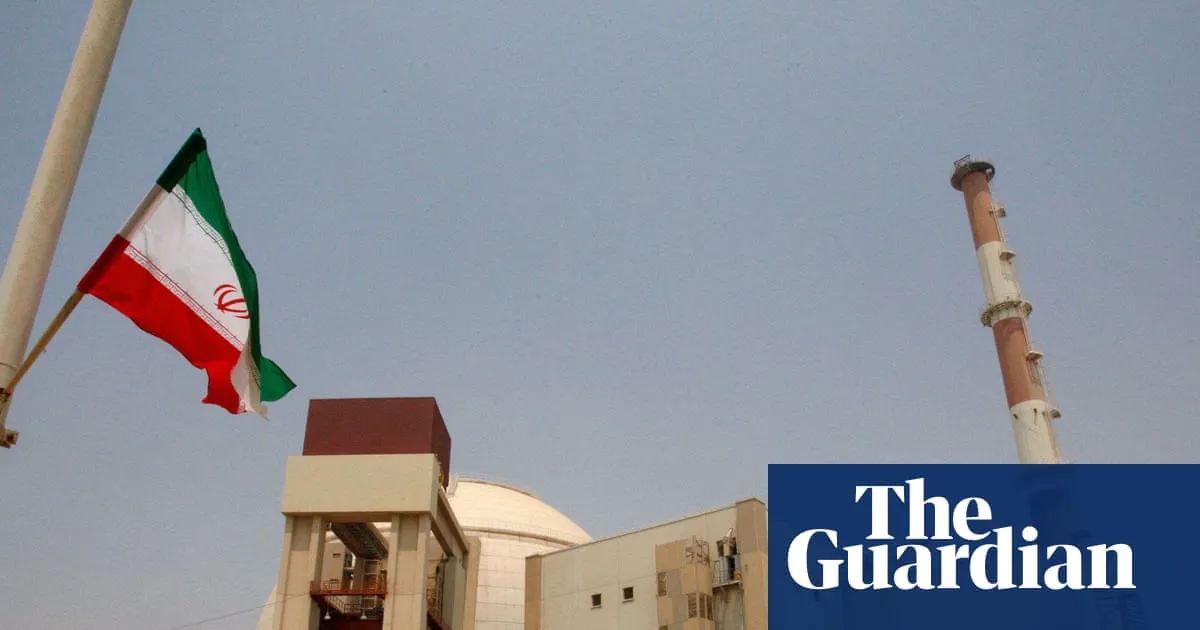
The Guardian - World NewsFIG 01
Reading time
5min
Word count
1 030words
Sources cited
3cited
Entities identified
6entities
Quality score
100%
§ 01
Briefing Summary
AI-generatedNEWSAR · AI
Negotiations between the US and Iran regarding Iran's nuclear program are complicated by Iran's insistence on uranium enrichment. While Iran's nuclear ambitions date back to the 1970s, the current government views uranium enrichment as a matter of national sovereignty and prestige. Despite the economic consequences of US sanctions and political instability, Iran's leaders maintain that they have a right to enrich uranium under the nuclear non-proliferation treaty. Some experts argue that Iran's attachment to nuclear enrichment is deeply ideological and serves a political purpose, highlighting perceived unfairness from the West. This stance makes finding a compromise difficult, as Iran prioritizes the principle of domestic uranium enrichment, even at a significant economic cost.
Confidence 0.90Sources 3Claims 5Entities 6
§ 02
Article analysis
Model · rule-basedFraming
Political Strategy
National Security
Tone
Measured
AI-assessed
CalmNeutralAlarmist
Factuality
0.60 / 1.00
Mixed
LowHigh
Sources cited
3
Well sourced
FewMany
§ 03
Key claims
5 extracted01
The foreign minister, Abbas Araghchi, referred to Iran’s sovereign right under the nuclear non-proliferation treaty.
quoteAbbas Araghchi
Confidence
1.00
02
Those looking for a rational explanation for Iran’s attachment to nuclear enrichment are not going to find it.
quoteAli Ansari, professor at St Andrews University
Confidence
1.00
03
Iran's ambitions to run its own nuclear programme pre-date the arrival of the theocratic state in 1979.
factualArticle's own claim
Confidence
0.90
04
Iran first became seriously embroiled in nuclear power in 1974 due to a steep rise in oil prices.
factualArticle's own claim
Confidence
0.80
05
The government tries to argue that what is being pursued is a national right.
factualArticle's own claim
Confidence
0.70
§ 04
Full report
5 min read · 1 030 words§ 05
Entities
6 identifiedKey playerOppositionContextPositiveNeutralNegative
Organizations1
§ 06
Keywords & salience
10 termsuranium enrichment
1.00
iran
0.90
nuclear program
0.80
ideology
0.70
national sovereignty
0.70
nationalism
0.60
us sanctions
0.60
nuclear non-proliferation treaty
0.50
political instability
0.50
economic misery
0.40
§ 07
Topic connections
Interactive graph Network visualization showing 51 related topics
View Full Graph Person Organization Location Event|Click node to navigate|Edge numbers = shared articles