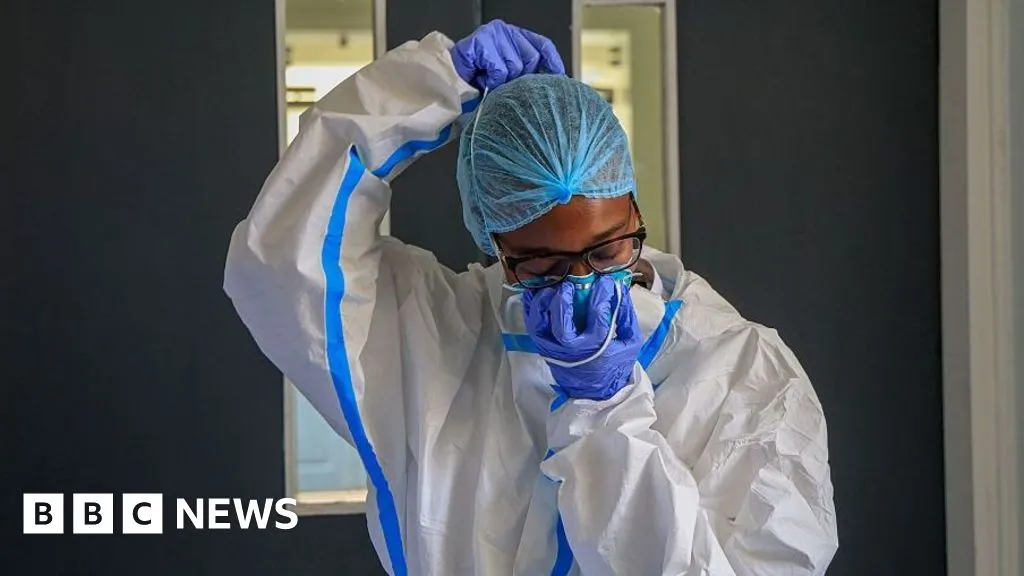
Is Ebola under control in Kenya after nine cases confirmed? 19 minutes ago Share Save Add as preferred on Google Basillioh RukangaNairobi Anadolu via Getty Images Nearly 5,000 healthcare workers have been trained to deal with Ebola Kenya is grappling with its first ever outbreak of Ebola, a disease which neighbouring countries, such as Uganda and Democratic Republic of Congo, are used to dealing with. Nine cases have now been confirmed including its first patient, who travelled from DR Congo and died two weeks ago. Four relatives of the first victim, three health workers and a hospital cleaner have now tested positive, meaning they are all linked to him. But concerns are rising that the virus could start spreading further, even as the government has sought to assure citizens. The US has warned it citizens against travelling to Kenya, while neighbouring countries such as Uganda, Ethiopia and Somalia are also on alert. More than 4,000 people have died since Ebola was confirmed in DR Congo in May, making it the second most deadly outbreak of the disease. With more than 9,500 cases in DR Congo, Kenya faces a steady risk of new cases arriving across borders, according to the International Rescue Committee, which has been working alongside both governments to contain the spread. The latest outbreak has been caused by the Bundibugyo species, which is relatively rare, with no approved vaccine or treatment - though trials are under way. Kenyans raised questions from the outset, about how the first patient was able to spend time in the region worst-affected by Ebola, then travel to two more countries before his illness was identified. He died days after his arrival in Kenya. As a regional transport hub, the risk of the outbreak spreading is a big concern. The doctors' union in Kenya has expressed concerns at "lapses" at various border points, including with neighbouring Uganda and Tanzania, as well as at Kenya's main airport. Dennis Miskellah, the union representative, told the BBC that border and port facilities were grossly understaffed. However, Health Director-General Patrick Amoth on Tuesday evening sought to reassure people, saying that the eight patients were all improving and responding well to treatment. When the first case was announced, the authorities urged people not to panic, assuring them of heightened surveillance at airports and border crossings. Kenya has since introduced enhanced screening for travellers arriving from 10 countries it considers to be at high risk: DR Congo, Uganda, Tanzania, Rwanda, Burundi, Angola, Zambia, Ethiopia, South Sudan and the Central African Republic. Travellers arriving from those countries are required to complete a digital surveillance form before boarding their flights, and to present a QR code to port health officials on arrival. Kenya also ordered enhanced public health screening of aircraft arriving from those countries, as authorities seek to prevent further imported cases. Within the country, the government has been sharing public messages to create awareness about Ebola, including encouraging people to promptly report any suspected cases and seek care at a hospital. It has also focused on hygiene and safety measures, such as washing hands and avoiding close contact with sick people. The government has additionally designated treatment and isolation facilities across the country, and health workers have been trained to deal with the disease. Amoth also said that a dedicated laboratory had been set up at the Kenyatta National Hospital Infectious Disease Unit to handle Ebola tests, to ensure that the hospital's laboratory was not contaminated. AFP via Getty Images Kenya has increased screening at border points In Kenya, 134 out of 135 people listed as contacts of the first patient remain in quarantine. That means about 99% of the contacts have been traced and isolated, in order to prevent Ebola from spreading to the wider population. That all of those infected so far had links to the first victim shows Kenya's early response is working, according to the International Rescue Committee. The government is also working with international partners, including Africa CDC and the World Health Organization (WHO), to support its response, including surveillance, communication and community engagement. A toll-free emergency hotline, 719, has been provided to the public to report suspected symptoms. Is Kenya prepared in case it starts spreading further? Amoth said that none of the contacts of the first patients had showed symptoms before going into quarantine "and therefore the potential to spread to another person is very minimal, literally non-existent". The incubation period for Ebola ranges from two to 21 days, meaning those exposed to the virus may not become ill for several weeks. The Ebola virus spreads through contact with infected bodily fluids such as blood or vomit. Despite that, Kenya's health ministry says nearly 5,000 healthcare workers have been trained to deal with Ebola at the national and local levels, besides the facilities that have been designated to handle the virus. The ministry has urged people to remain calm and vigilant. It has also asked Kenyans not to stigmatise people identified as contacts of Ebola cases. The ministry, along with the WHO, have produced posters to help people understand Ebola and support its containment. One message reads: "Stop stigma, choose support. Stigma can discourage people from reporting symptoms or cooperating with response teams." In addition, the government has procured supplies of protective equipment. Not according to the Kenya Medical Practitioners and Dentists Union (KMPDU). With three health workers and a hospital cleaner among those infected, questions have been asked as to whether the government could do more to protect workers. Health workers and carers can face a higher risk of Ebola infection because caring for infected patients may bring them into contact with blood and other bodily fluids. Questions remain over Ebola patient who travelled across three nations undetected What is Ebola and why is stopping the latest outbreak so difficult? Dennis Miskellah, the KMPDU deputy secretary general, told the BBC that protective equipment must be provided to hospitals so that they are fully protected, especially in case patients with symptoms do not declare that they have been in areas with Ebola. He suggests the government ought to conduct proper health education to destigmatise the virus, so that people do not seek to hide their symptoms. The International Rescue Committee has also called for continued funding for contact tracing, border screening and training of frontline health workers in Kenya. Will there be any restrictions, like a travel ban? Kenya remains open with no restrictions on travel, trade or public gatherings. Despite confirming the eight cases, the authorities have explicitly ruled out a national lockdown or general travel ban for Kenyans. The US on Monday issued an advisory asking citizens to reconsider travelling to the country over Ebola concerns. Other countries have issued health alerts, including the UK, which warned its citizens that they may encounter enhanced health screening, and Canada, which has asked citizens to monitor their health for 21 days. No country has issued an outright ban against their nationals visiting Kenya, nor have Kenyans been blocked from entering other countries over Ebola fears. AFP via Getty Images Kenyan authorities have ruled out travel restrictions Has business and tourism been affected? Analysts have raised concerns over the potential impact of public health fears on international travel and tourism but there is no evidence this has happened yet. But the situation could change if the outbreak were to spread into the wider population. The exact number of Kenyans living in the DR Congo is not clear. A report authored last year by the Centre for Strategic and International Studies (CSIS) think-tank put the number of Kenyans living in eastern DR Congo at about 2,500, including about 50 investors. It also noted that there were about four times as many Congolese living in the Kenyan capital, Nairobi, alone. The Kenyan embassy in the Congolese capital, Kinshasa, which represents Kenya's interests in four countries - DR Congo, Central African Republic, Congo-Brazzaville and Gabon - has in the past urged Kenyans living in the region to formally register so that it is able to serve them better. Several countries in the region have announced tightening of surveillance measures and enhanced screening for visitors. One man who came into contact with the man who died in Kenya is under quarantine in Somalia and samples have been sent to Kenya for testing. Somalia has also said it was taking precautionary measures, including enhancing surveillance measures at border points "given the evolving regional situation and the movement of people between countries". The suspected case in Somalia had travelled through Ethiopia, which has also said it had tightened surveillance to prevent an outbreak In Tanzania, visitors are expected to undergo daily health monitoring for 21 days, through an automated tracking system, which was announced after Kenya confirmed multiple cases of Ebola infections. Uganda said after Kenya's first Ebola case that it was continuing to "maintain strong surveillance measures to protect public health". The Kenyan businessman had travelled through Uganda on his way home from DR Congo. Uganda had reported two Ebola deaths shortly after the outbreak was reported in DR Congo, but the WHO has since declared it to be free of the disease. You may also be interested in: Why Uganda is winning the battle against Ebola as virus spreads in DR Congo 'They said it isn't real': Ebola rumours fuel attacks on health workers 'I buried my parents one day after the other' - Ebola mourners learn how to grieve safely Go to BBCAfrica.com for more news from the African continent. @BBCAfrica, on Facebook at BBC Africa or on Instagram at bbcafrica BBC Africa podcasts Focus on Africa This Is Africa Africa Democratic Republic of Congo Kenya Ebola virus
SRCBBC News - World
LANGEN
LEANCenter
WORDS1 611
ENT11
TUE · 2026-10-20 · 23:41 GMTBRIEF NSR-2026-1021-120579
NSR-2026-1021-120579News Report·EN·Public Health
Is Ebola under control in Kenya after nine cases confirmed?
Kenya is experiencing its first Ebola outbreak, with nine confirmed cases linked to an initial patient who traveled from the Democratic Republic of Congo and died two weeks ago. The confirmed cases include relatives of the first victim, healthcare workers, and a hospital cleaner.
BBC News - WorldFiled 2026-10-20 · 23:41 GMTLean · CenterRead · 7 min
BBC News - WorldFIG 01
Reading time
7min
Word count
1 611words
Sources cited
3cited
Entities identified
11entities
Quality score
100%
§ 01
Briefing Summary
AI-generatedNEWSAR · AI
Kenya is experiencing its first Ebola outbreak, with nine confirmed cases linked to an initial patient who traveled from the Democratic Republic of Congo and died two weeks ago. The confirmed cases include relatives of the first victim, healthcare workers, and a hospital cleaner. The US has advised its citizens to reconsider travel to Kenya, while neighboring countries are on alert. The Kenyan government is reassuring the public, stating that eight of the nine patients are improving and responding to treatment. Enhanced screening measures have been implemented at airports and border crossings for travelers from high-risk countries, and nearly 5,000 healthcare workers have been trained to manage the disease. The International Rescue Committee notes that the isolation of nearly all contacts of the first patient indicates an effective initial response.
Confidence 0.90Sources 3Claims 5Entities 11
§ 02
Article analysis
Model · rule-basedFraming
Public Health
National Security
Tone
Mixed Tone
AI-assessed
CalmNeutralAlarmist
Factuality
0.70 / 1.00
Factual
LowHigh
Sources cited
3
Well sourced
FewMany
§ 03
Key claims
5 extracted01
The outbreak has been caused by the Bundibugyo species of Ebola, which is relatively rare and has no approved vaccine or treatment.
factual
Confidence
1.00
02
Nine cases of Ebola have been confirmed in Kenya, including the first patient who traveled from DR Congo.
factual
Confidence
1.00
03
Eight of the nine Ebola patients in Kenya are improving and responding well to treatment.
quotePatrick Amoth (Health Director-General)
Confidence
0.90
04
The doctors' union in Kenya has expressed concerns about 'lapses' at various border points and port facilities being understaffed.
quotedoctors' union in Kenya
Confidence
0.90
05
Kenya faces a steady risk of new cases arriving across borders due to its proximity to DR Congo, a regional transport hub.
factualInternational Rescue Committee
Confidence
0.90
§ 04
Full report
7 min read · 1 611 words§ 05
Entities
11 identifiedKey playerOppositionContextPositiveNeutralNegative
People1
Organizations1
Locations7
Events1
Topics1
§ 06
Keywords & salience
9 termsebola outbreak
1.00
kenya
0.90
disease control
0.80
public health
0.70
dr congo
0.60
border security
0.50
healthcare workers
0.50
bundibugyo species
0.40
travel restrictions
0.40
§ 07
Topic connections
Interactive graph Network visualization showing 51 related topics
View Full Graph Person Organization Location Event|Click node to navigate|Edge numbers = shared articles