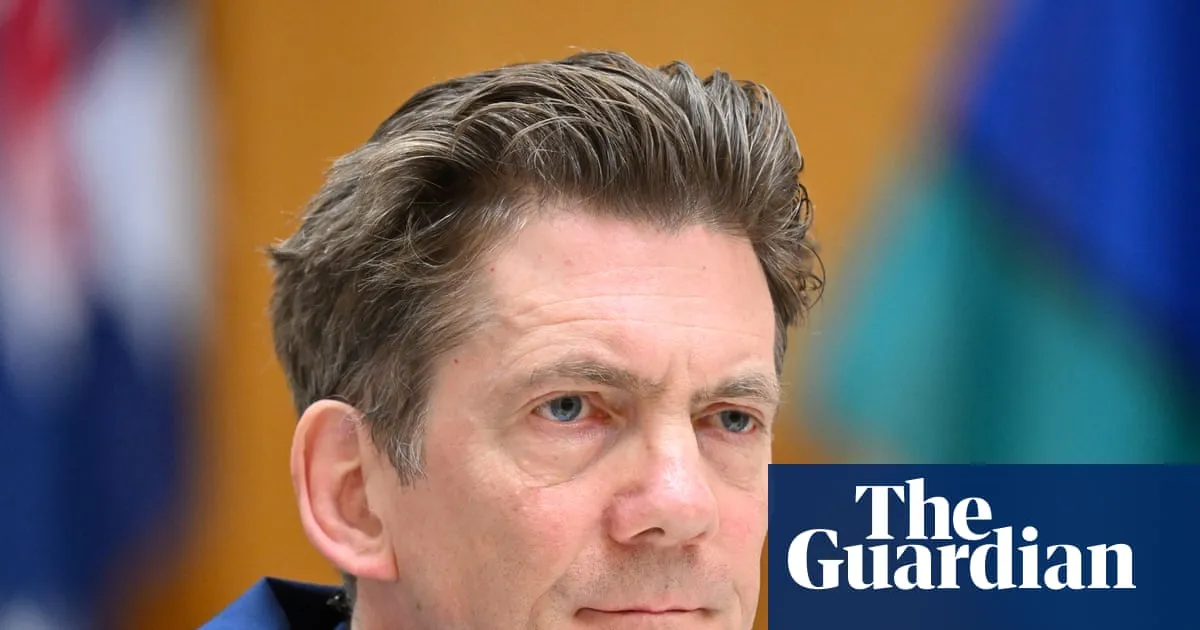
Australia" class="entity-link entity-organization" data-entity-id="3046" data-entity-type="organization">Reserve Bank of Australia deputy governor Andrew Hauser has warned that Australians are losing faith in the central bank’s ability to control inflation. Photograph: Lukas Coch/AAP View image in fullscreen Australia" class="entity-link entity-organization" data-entity-id="3046" data-entity-type="organization">Reserve Bank of Australia deputy governor Andrew Hauser has warned that Australians are losing faith in the central bank’s ability to control inflation. Photograph: Lukas Coch/AAP Odds of fifth interest rate hike this year likely to shorten as RBA deputy warns inflation outlook ‘worsening’ Andrew Hauser says central bank faces ‘hard choices’ as it looks to balance risks of entrenched inflation with desire to protect labour market Get our breaking news email, free app or daily news podcast Andrew Hauser, the Reserve Bank’s deputy governor, has reignited talk of a fifth interest rate hike on Melbourne Cup day, warning of “hard choices” ahead in response to an inflation outlook that “looks materially worse” than the central bank had expected two months ago. Hauser, speaking at an investment bank conference in Sydney on Wednesday morning, said the RBA monetary policy board members were juggling a slowing economy with fears that Australians were starting to lose faith in the central bank’s ability to bring inflation back to the 2.5% target. The deputy governor sits on the RBA’s monetary policy board, which begins its next two-day meeting on 2 November. Financial markets earlier on Wednesday morning were pricing in a nearly one-in-three chance of a hike to 4.85% but those odds are likely to shorten after Hauser’s comments. “The basic fact [is] that inflation has been high for a very long time now, and we are beginning to see some signs that some people in the community are not sure if we’re going to bring inflation back into target at all, or certainly not for an extended period,” he said. Businesses were starting to see 3.5% inflation as the “new normal”, Hauser said. Removing an entrenched inflation psychology could require higher interest rates, he warned. Hauser said while inflation was clearly too high, the picture for the economy was “more mixed”. “Clearly, we need a period of below-trend growth to bring inflation down, and we’re seeing that happening,” he said. High interest rates and high petrol prices were weighing on activity, Hauser said. Last week’s jobs figures – which showed unemployment reaching a five-year high of 4.7% – were “a little bit weaker than people had expected”. But Hauser pointed to surprisingly strong economic growth among Australia’s major trading partners in Asia, and the boom in datacentre investment. Oil prices were about a third higher than the bank had predicted in August. This created the difficult trade-offs facing the RBA’s rate-setting board, he said. “Do you do more to tackle higher inflation, recognising that that means weaker activity, a weaker labour market? “Or do we hold our horses to protect the labour market … mindful of the potential that there may be more downside momentum of the economy, but accept the risks in so doing that this upside inflation risk embeds [into Australians’ expectations], and that becomes more expensive to deal with?” He added: “Those are hard choices. They’re not where we’d like to be ideally as the central bank, but I think that’s the that’s what we’re facing into as we as we meet the week after next.” Explore more on these topics Australia" class="entity-link entity-organization" data-entity-id="3046" data-entity-type="organization">Reserve Bank of Australia Interest rates inflation Australian economy unemployment Business news Share Reuse this content
SRCThe Guardian - World News
LANGEN
LEANCenter-Left
WORDS567
ENT10
TUE · 2026-10-20 · 23:19 GMTBRIEF NSR-2026-1021-120581
NSR-2026-1021-120581News Report·EN·Economic Impact
Odds of fifth interest rate hike this year likely to shorten as RBA deputy warns inflation outlook ‘worsening’
Reserve Bank of Australia Deputy Governor Andrew Hauser has indicated that a fifth interest rate hike this year is increasingly likely, citing a worsening inflation outlook. Speaking at a conference in Sydney, Hauser warned that the central bank faces "hard choices" in balancing the need to curb entrenched inflation with protecting the labor market.
Patrick Commins Economics correspondentThe Guardian - World NewsFiled 2026-10-20 · 23:19 GMTLean · Center-LeftRead · 3 min
The Guardian - World NewsFIG 01
Reading time
3min
Word count
567words
Sources cited
1cited
Entities identified
10entities
Quality score
100%
§ 01
Briefing Summary
AI-generatedNEWSAR · AI
Reserve Bank of Australia Deputy Governor Andrew Hauser has indicated that a fifth interest rate hike this year is increasingly likely, citing a worsening inflation outlook. Speaking at a conference in Sydney, Hauser warned that the central bank faces "hard choices" in balancing the need to curb entrenched inflation with protecting the labor market. He noted that Australians are beginning to doubt the RBA's ability to return inflation to its target. Financial markets are now expected to price in a higher probability of a rate increase following his comments. Hauser highlighted that inflation has remained high for an extended period, with businesses starting to perceive 3.5% inflation as the "new normal." The RBA's monetary policy board will consider these factors at its upcoming meeting.
Confidence 0.90Sources 1Claims 5Entities 10
§ 02
Article analysis
Model · rule-basedFraming
Economic Impact
Human Interest
Tone
Mixed Tone
AI-assessed
CalmNeutralAlarmist
Factuality
0.70 / 1.00
Factual
LowHigh
Sources cited
1
Limited
FewMany
§ 03
Key claims
5 extracted01
Unemployment reached a five-year high of 4.7% last week.
statisticarticle
Confidence
1.00
02
Australians are beginning to lose faith in the RBA's ability to control inflation.
quoteRBA deputy governor Andrew Hauser
Confidence
0.90
03
Inflation outlook looks materially worse than expected two months ago.
quoteRBA deputy governor Andrew Hauser
Confidence
0.90
04
Businesses are starting to see 3.5% inflation as the 'new normal'.
quoteRBA deputy governor Andrew Hauser
Confidence
0.80
05
Odds of a fifth interest rate hike this year are likely to shorten.
predictionRBA deputy governor Andrew Hauser
Confidence
0.80
§ 04
Full report
3 min read · 567 words§ 05
Entities
10 identifiedKey playerOppositionContextPositiveNeutralNegative
Organizations1
§ 06
Keywords & salience
10 termsinflation outlook
1.00
interest rate hike
1.00
reserve bank of australia
0.90
monetary policy
0.80
inflation control
0.80
economic growth
0.70
labor market
0.60
interest rates
0.50
inflation psychology
0.50
unemployment
0.40
§ 07
Topic connections
Interactive graph Network visualization showing 51 related topics
View Full Graph Person Organization Location Event|Click node to navigate|Edge numbers = shared articles