Modi’s government presents annual budget, focusing on sustaining growth despite volatile financial markets and trade uncertainty.Published On 1 Feb 2026Indian Prime Minister Narendra Modi’s government has unveiled its annual budget, aiming for steady growth in an uncertain global economy rocked by recent tariff wars.Finance Minister Nirmala Sitharaman presented the budget for the 2026-2027 financial year in Parliament on Sunday, prioritising infrastructure and domestic manufacturing, with a total expenditure estimated at $583bn.Recommended Stories list of 3 itemslist 1 of 3Trump says India will start buying oil from Venezuela ‘as opposed to Iran’list 2 of 3Who was Ajit Pawar, the Indian politician killed in plane crash?list 3 of 3What will be the impact of the EU-India trade pact?end of listIndia’s economy has so far weathered punitive tariffs of 50 percent imposed by United States President Donald Trump over New Delhi’s imports of Russian oil. The government has sought to offset the impact of those duties by striking deals, such as its trade agreement with the European Union.Despite the past year’s challenges, the Indian economy has remained one of the world’s fastest growing.The budget for the new financial year, which starts on April 1, projects gross domestic product (GDP) growth in the range of 6.8 to 7.2 percent, according to the government’s annual Economic Survey presented in Parliament. It is a shade softer than this year’s projected 7.4 percent but still outpaces estimates by global institutions such as the World Bank.To keep growth strong, the government said it will spend 12.2 trillion rupees ($133bn) on infrastructure in the new fiscal year, compared with 11.2 trillion rupees ($122bn) last year. It will also aim to boost manufacturing in seven strategic sectors, including pharmaceuticals, semiconductors, rare-earth magnets, chemicals, capital goods, textiles and sports goods while stepping up investments in niche industries like artificial intelligence.
SRCAl Jazeera
LANGEN
OutletState media · Qatar
WORDS299
ENT12
SUN · 2026-02-01 · 11:34 GMTBRIEF NSR-2026-0201-12395
NSR-2026-0201-12395News Report·EN·Economic Impact
India’s budget bets on infrastructure, manufacturing amid global trade war
In February 2026, India's government, led by Prime Minister Modi, presented its annual budget for the 2026-2027 financial year, prioritizing infrastructure and domestic manufacturing amid global trade uncertainties. Finance Minister Nirmala Sitharaman unveiled the $583 billion budget, aiming to sustain economic growth despite challenges like US tariffs on Indian imports of Russian oil.
Al Jazeera StaffAl JazeeraFiled 2026-02-01 · 11:34 GMTOutlet · State media · QatarRead · 2 min
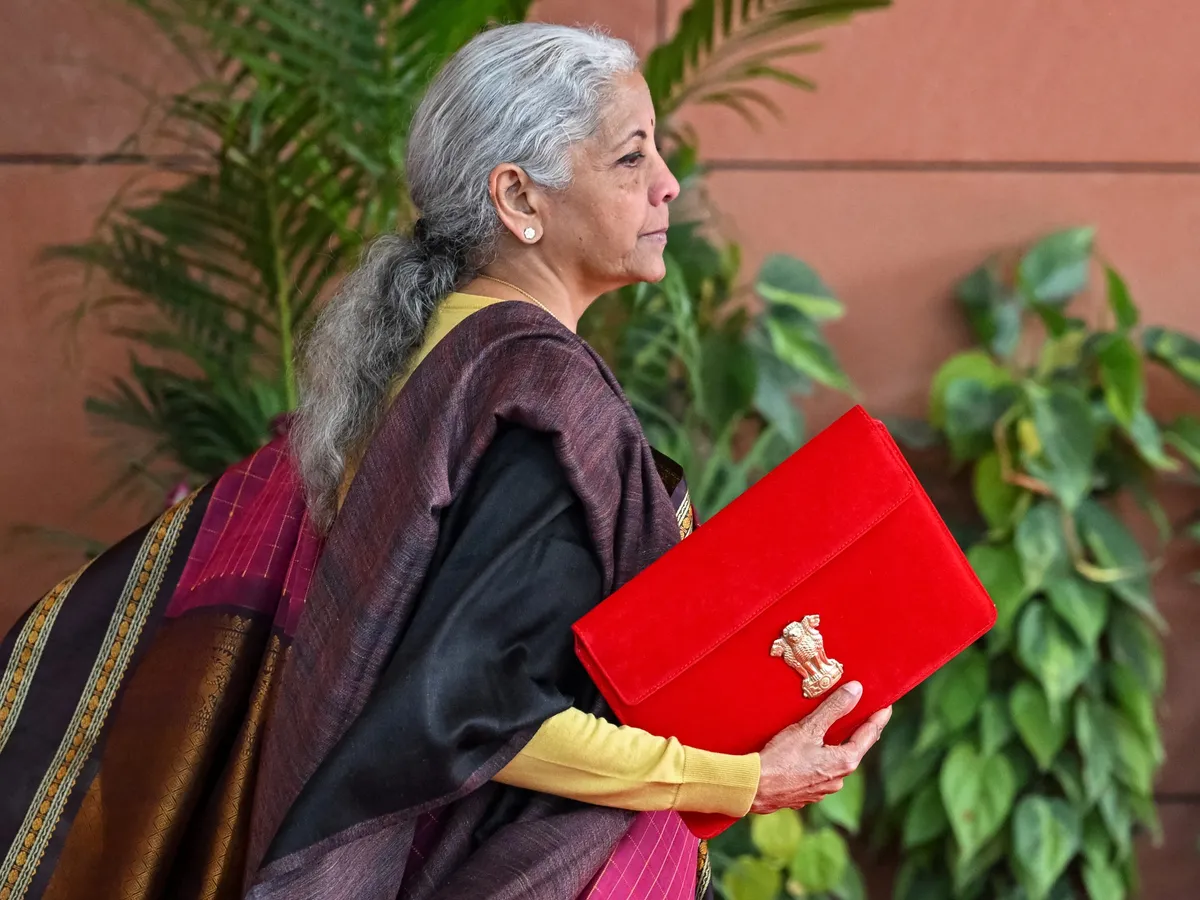
Al JazeeraFIG 01
Reading time
2min
Word count
299words
Sources cited
1cited
Entities identified
12entities
NEWSAR · AI
In February 2026, India's government, led by Prime Minister Modi, presented its annual budget for the 2026-2027 financial year, prioritizing infrastructure and domestic manufacturing amid global trade uncertainties. Finance Minister Nirmala Sitharaman unveiled the $583 billion budget, aiming to sustain economic growth despite challenges like US tariffs on Indian imports of Russian oil. The budget projects GDP growth between 6.8 and 7.2 percent, supported by a 12.2 trillion rupee investment in infrastructure. The government also intends to boost manufacturing in strategic sectors like pharmaceuticals and semiconductors, as well as invest in artificial intelligence. The budget seeks to offset the impact of trade disputes through new agreements, such as the one with the European Union.
Confidence 0.90Sources 1Claims 5Entities 12
Framing
Economic Impact
Political Strategy
Tone
Measured
AI-assessed
CalmNeutralAlarmist
Factuality
0.80 / 1.00
Factual
LowHigh
Sources cited
1
Limited
FewMany
01
The government will aim to boost manufacturing in seven strategic sectors.
factualnull
Confidence
1.00
02
The government will spend 12.2 trillion rupees ($133bn) on infrastructure.
factualnull
Confidence
1.00
03
Total expenditure in the budget is estimated at $583bn.
statisticnull
Confidence
1.00
04
India's budget for 2026-2027 prioritises infrastructure and domestic manufacturing.
factualnull
Confidence
1.00
05
The budget projects GDP growth in the range of 6.8 to 7.2 percent.
predictiongovernment's annual Economic Survey
Confidence
0.90
§ 04
Full report
2 min read · 299 wordsKey playerOppositionContextPositiveNeutralNegative
People3
Organizations4
annual budget
0.90
infrastructure
0.80
manufacturing
0.80
global trade war
0.70
economic growth
0.70
gdp growth
0.60
trade agreement
0.50
financial markets
0.50
artificial intelligence
0.40
tariffs
0.40
§ 07
Connections
Who appears together in the newsIn this articleWider coverageLine weight = articles in common
Laying out network…
Strongest ties articles in common
- 15,001
- 12,267
- 7,768
- 1,548
- 1,185
- 1,175
Recurring context not named in this article
- LChinalinks 11
- LRussialinks 11
- LWashingtonlinks 10
- LUnited Kingdomlinks 10
- LIsraellinks 10
- LMiddle Eastlinks 10
- LFrancelinks 10
- LUkrainelinks 10