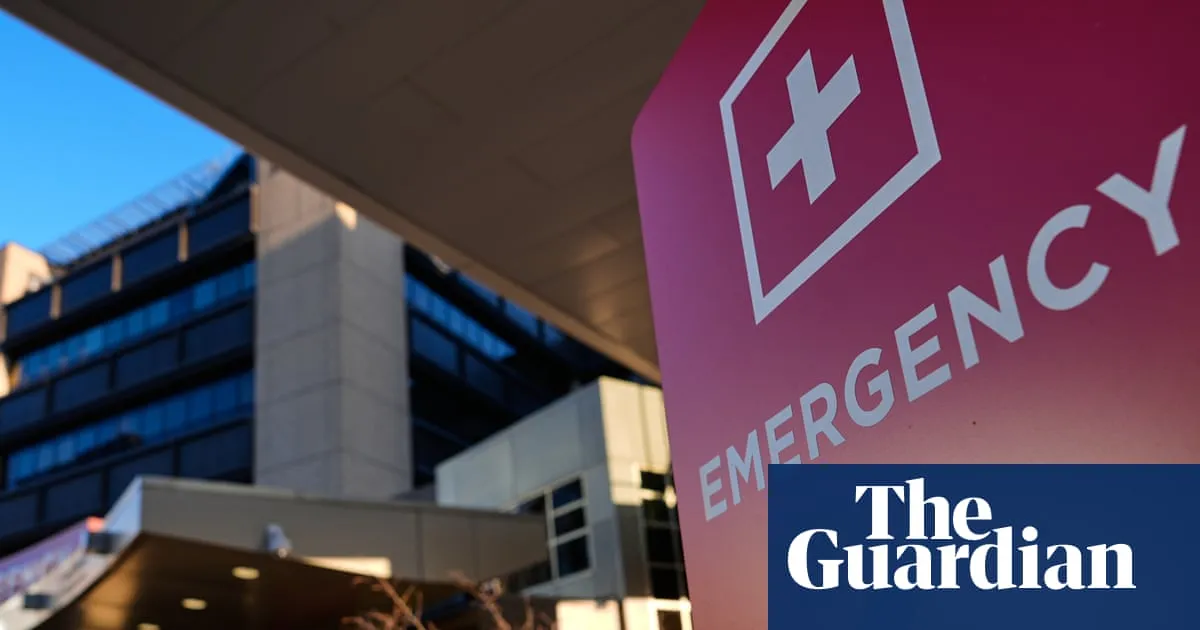
A public health crisis is unfolding in Minnesota as people targeted by federal agents are afraid to seek healthcare while some healthcare staff are also fearful for their safety at work.Community organizations and health providers are now arranging home visits, telehealth appointments and other alternate care.“We’re seeing residents not wanting to leave their homes, not go to work, not go to their doctor appointments, not going to their regularly scheduled checkups, postponing surgeries, postponing care,” said Angela Conley, Hennepin County commissioner for district 4, where Renee Good was killed.People who have been targeted by federal agents because of the color of their skin, their accent or their immigration status are now avoiding leaving their homes to seek routine or even emergency healthcare. They fear unfamiliar cars idling outside clinics and in hospital parking garages. Pregnant patients are laboring at home; diabetic patients are diluting or forgoing their insulin; injured and sick people are avoiding the hospital and postponing surgeries.“They are afraid of being pulled out of their car and taken to the Whipple building and sent on a flight to Texas, even our legal permanent residents, United States citizens. Everybody is afraid,” Conley added.Munira Maalimisaq, founder and CEO of the Inspire Change Clinic in Minneapolis, noted that “even people who are documented are not going to their doctor’s appointments People who have their citizenship are not coming in.”“It is a health issue. When people are too afraid to seek care, diseases worsen and emergencies increase and people die unnecessarily,” Maalimisaq said.Providers said that there are immediate and long-term health dangers from the federal occupation of Minnesota, including clashes with agents, stress, food insecurity, exacerbation of chronic illness and acute emergencies.“If people aren’t getting their medications and they’re not getting their treatments, they will die,” said Mary Turner, president of National Nurses United (NNU) and an ICU nurse in the Minneapolis area. “I dread the day that the stories start to come out about finding people dead in their homes because they’re afraid to seek medical care … We’re going to start to find dead bodies.”Many organizations, including NNU, are calling for the abolition of US Immigration and Customs Enforcement (ICE).“All they’ve become now is a violent, racist, lawless agency, and you can see that in our streets. And we’re saying as a nursing organization: not one more penny goes to ICE,” Turner said.Community organizations, local programs and volunteers have quickly pivoted to arranging home visits for medical care and offering telehealth where it’s appropriate. Neighbors are arranging rides to clinic visits and hospitals and picking up prescriptions, groceries, formula and diapers.“We are all working very diligently to make sure hospitals are as safe as they possibly can be, and that we can amplify existing systems for alternative care like telehealth and home health and prescription delivery,” said Erin Stevens, a physician in Minneapolis and member with the Committee to Protect Health Care.As patients began canceling appointments or failing to show up at all, Maalimisaq decided to create a rapid response unit at her clinic in December. Soon, she received a call from a stranger, someone who had heard of her work in the community and wanted to know whether she could check on a church member who was nine months pregnant. Maalimisaq and an OB-GYN visited the woman’s home and discovered she was 8cm dilated, nearly ready to deliver the baby. But the woman refused to go by ambulance to the hospital.“She was so fearful that they were going to take her away while she was in labor,” Maalimisaq said. She called ahead to the hospital and arranged to meet in a safe place, and Maalimisaq and the physician drove the laboring woman to the hospital, where she safely delivered her baby.Doctors began calling Maalimisaq to see whether the rapid response unit could deliver seizure medications and check on pregnant patients. The requests flooded in, but they didn’t have enough staff at the clinic, so they put out a call to local providers. More than 150 providers answered: emergency physicians, cardiologists, pediatricians, “everything that you could think of”, Maalimisaq said. They take care of wounds and sprains, administer medications, drop off food and sometimes serve as a shoulder to cry on.Officials are urging people to continue receiving healthcare. “Go to the hospital if you’re sick, please go to the clinic, go to your appointment,” Conley emphasized, but added that, for those who cannot leave, “we will come to you”.Immediately after Good’s killing, Hennepin County and the city of Minneapolis created a program called Operation Reconnect, a kind of incident command center available 24 hours a day, seven days a week, for public health during this crisis. They have also partnered with neighborhood organizations on food drives, clothing swaps and transportation for medical visits.“It’s a public health crisis because people don’t have access to what they typically would, whether it is baby formula, whether it is getting for their mental health visits or picking up prescriptions that they need,” Conley said.Most areas of clinics and hospitals are considered private property, which federal agents need signed judicial warrants to enter. Hospital staff have also been trained on what to do if agents appear.“They’re going to places where people are vulnerable,” Conley said of federal agents. But she hasn’t heard of any instances of agents camping out in the lobby or other public areas of hospitals: “I want to be very clear: our hospital is a safe space where people who are in need of emergency care can go get care.”These health issues accumulate atop the immediate dangers of the clashes: car crashes, teargas and pepper spray, rubber bullets and actual bullets. Detainees report poor conditions and a lack of adequate medical care. Liam Conejo Ramos, the five-year-old asylum seeker detained in Minneapolis who became ill with fever, vomiting, and lethargy, was held until Saturday at Dilley Immigration Processing Center in Texas, where a measles outbreak was detected on Friday. There were 32 deaths in ICE custody last year.Health providers, including doctors, nurses, aides and workers in housekeeping and food service, are also fearful of being detained. The Department of Homeland Security is auditing at least one hospital’s employment records.At Turner’s hospital, workers under threat are leaving their contact information and other details – whether they have family members and pets at home – in sealed envelopes with their union representatives.“If they all of a sudden don’t show up, their information is sealed somewhere safely,” Turner said.Maalimisaq, who is Somali, says she and her staff “show up” and do the work, but she battles the daily fear that they will be targeted next.“I’ve never felt this vulnerable,” Maalimisaq said, but added: “There is no way I would ever sit back and not do something because it puts me in harm’s way. Their lives would be in danger if we didn’t provide the care that they needed.”Many of her patients are not able to speak up for themselves right now, which is why “we as healthcare providers are using our voice ,Maalimisaq said. “Healthcare needs to remain safe and accessible for everyone. We will do anything it takes to do that.”
SRCThe Guardian - World News
LANGEN
LEANCenter-Left
WORDS1 187
ENT8
MON · 2026-02-02 · 12:00 GMTBRIEF NSR-2026-0202-12683
NSR-2026-0202-12683News Report·EN·Public Health
Public health crisis unfolding in Minneapolis as residents avoid healthcare
A public health crisis is unfolding in Minneapolis as residents, particularly those targeted by federal agents due to their race, accent, or immigration status, are avoiding healthcare. This avoidance stems from fear of encountering federal agents at clinics and hospitals, leading to postponed appointments, surgeries, and even emergency care.
Melody SchreiberThe Guardian - World NewsFiled 2026-02-02 · 12:00 GMTLean · Center-LeftRead · 5 min
The Guardian - World NewsFIG 01
Reading time
5min
Word count
1 187words
Sources cited
4cited
Entities identified
8entities
Quality score
100%
§ 01
Briefing Summary
AI-generatedNEWSAR · AI
A public health crisis is unfolding in Minneapolis as residents, particularly those targeted by federal agents due to their race, accent, or immigration status, are avoiding healthcare. This avoidance stems from fear of encountering federal agents at clinics and hospitals, leading to postponed appointments, surgeries, and even emergency care. Healthcare providers and community organizations are responding by offering home visits and telehealth services. The situation is causing concern among healthcare professionals who warn of worsening conditions, increased emergencies, and potential deaths due to lack of treatment. Organizations like National Nurses United are calling for the abolition of ICE, citing its impact on public safety and healthcare access.
Confidence 0.90Sources 4Claims 5Entities 8
§ 02
Article analysis
Model · rule-basedFraming
Public Health
Human Rights
Tone
Mixed Tone
AI-assessed
CalmNeutralAlarmist
Factuality
0.60 / 1.00
Mixed
LowHigh
Sources cited
4
Well sourced
FewMany
§ 03
Key claims
5 extracted01
Even documented people are not going to their doctor’s appointments.
quoteMunira Maalimisaq, founder and CEO of Inspire Change Clinic
Confidence
0.90
02
Diseases worsen and emergencies increase when people are too afraid to seek care.
quoteMunira Maalimisaq, founder and CEO of Inspire Change Clinic
Confidence
0.80
03
Residents are avoiding healthcare due to fear of federal agents.
quoteAngela Conley, Hennepin county commissioner
Confidence
0.80
04
People will die if they aren’t getting their medications and treatments.
quoteMary Turner, president of National Nurses United (NNU)
Confidence
0.70
05
People targeted by federal agents are afraid to seek routine or emergency healthcare.
factualArticle's own claim
Confidence
0.70
§ 04
Full report
5 min read · 1 187 words§ 05
Entities
8 identifiedKey playerOppositionContextPositiveNeutralNegative
Organizations2
§ 06
Keywords & salience
10 termspublic health crisis
0.90
avoiding healthcare
0.80
fear of seeking care
0.70
federal agents
0.70
immigration status
0.60
health dangers
0.60
emergency healthcare
0.50
routine care
0.50
ice
0.40
chronic illness
0.40
§ 07
Topic connections
Interactive graph Network visualization showing 51 related topics
View Full Graph Person Organization Location Event|Click node to navigate|Edge numbers = shared articles